


American Airlines Flight AA719 Makes Emergency Landing After Cabin Crew Medical Incident
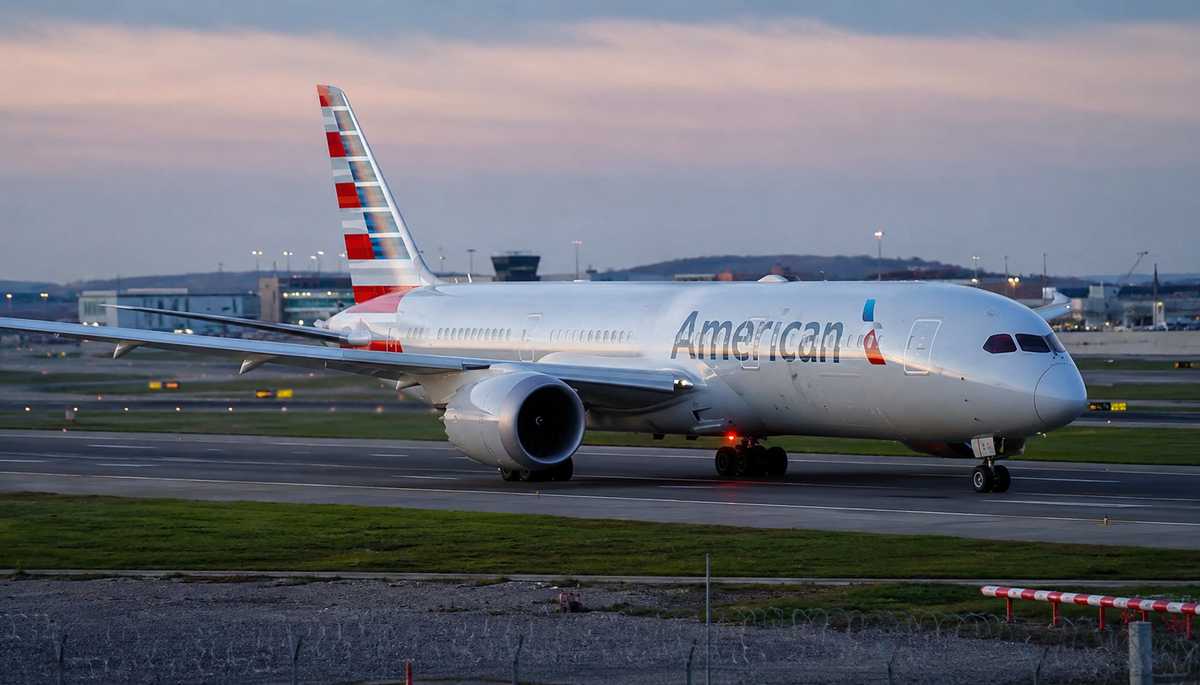
An American Airlines (AA) Boeing 787-9 Dreamliner flying from Rome to Philadelphia made an emergency diversion to Dublin on Saturday after several flight attendants reported feeling ill while the aircraft was crossing the Atlantic Ocean.
The aircraft, operating Flight AA719 from Rome Fiumicino Airport (FCO) to Philadelphia International Airport (PHL), was carrying up to 284 passengers when pilots declared a medical emergency approximately three hours into the scheduled transatlantic journey.
The aircraft landed safely in Dublin Airport (DUB), where the flight was unable to continue after the airline reportedly could not provide a replacement cabin crew.
Flight Changed Course Midway Across the Atlantic
Flight tracking data indicates the seven-year-old Boeing 787-9 departed Rome shortly before 1 p.m. local time on July 25 for what was expected to be an approximately eight-and-a-half-hour flight to Philadelphia.
After climbing to a cruising altitude of about 38,000 feet and proceeding over France before entering Atlantic airspace, the aircraft abruptly altered course toward Ireland.
Air traffic control was advised that the aircraft was diverting because of a medical emergency. Officials have not publicly disclosed the specific nature of the onboard medical issue.
Reports circulating within the aviation community suggested that several members of the cabin crew began experiencing symptoms including dizziness and illness during the flight.
According to aviation insider JonNYC on X, six flight attendants reportedly became ill while the aircraft was over the Atlantic. However, the report was described as unconfirmed, with the source emphasizing that the information had not been independently verified. The post also referenced six of nine flight attendants being affected, while other reports indicated the flight was staffed by eight cabin crew members.
Despite the illnesses, there have been no indications that any crew members became completely incapacitated. Nonetheless, the number of affected flight attendants prompted the flight crew to divert the aircraft as a precaution.
Flight to Philadelphia Cancelled After Landing
The Boeing 787 landed safely in Dublin without further incident.
No Replacement Crew Available
Following the diversion, American Airlines reportedly did not have a standby cabin crew available in Dublin to continue operating the flight to Philadelphia.
With the cause of the crew illnesses still undetermined, the airline cancelled the remainder of the journey, requiring passengers to make alternative travel arrangements.
The airline has not publicly released additional details regarding the health of the affected crew members or when the aircraft would return to service.
Possible Causes Under Review
Although no official explanation has been released, aviation experts point to several possible causes that could explain why multiple flight attendants became ill at nearly the same time.
Why a Traditional Fume Event Appears Less Likely
One commonly discussed cause in similar incidents is a so-called toxic fume event, sometimes referred to by airlines as an odor event.
However, experts note that such an explanation appears less likely aboard the Boeing 787 Dreamliner because the aircraft uses a different cabin air system than most commercial jets.
Unlike traditional airliners, the 787 does not rely on engine bleed air to supply fresh cabin air. Conventional aircraft route compressed air from engine compressors into the environmental control system, a process that has occasionally been linked to concerns about potential contamination from engine oil or other substances.
Because the Dreamliner employs an electrically driven air supply system rather than engine bleed air, that specific source of contamination is generally considered less probable.
Air Conditioning System Could Be a Factor
Another possible explanation involves the aircraft’s environmental control or air conditioning packs.
If one of these systems experiences a malfunction, cabin oxygen availability may decline enough to produce early symptoms associated with mild hypoxia. Such symptoms can include dizziness, lightheadedness, reduced coordination, and a feeling of euphoria.
These effects may be more noticeable among flight attendants, who are typically moving throughout the cabin during meal and beverage service, increasing their oxygen demand compared with seated passengers.
Experts note that such conditions would not necessarily trigger a cabin depressurization emergency but could still prompt pilots to divert the aircraft if multiple crew members became affected.
Previous American Airlines Incident Highlights Another Possibility
A separate American Airlines incident in October 2018 demonstrates another, although uncommon, scenario.
During a flight from London Heathrow to Philadelphia, several flight attendants became ill after exposure to fumes from an industrial cleaning solution that had accidentally been left inside an aircraft lavatory.
According to American Airlines, a bottle of cleaning product identified as CH2200D tipped over during takeoff, soaking into the carpet and releasing chemical vapors into the cabin.
In that incident, two flight attendants briefly lost consciousness, prompting the aircraft to divert to Shannon, Ireland.
While investigators have not suggested any connection between the 2018 event and the latest diversion, the earlier case illustrates that chemical exposure remains one of several possible explanations when multiple crew members develop symptoms simultaneously.
Investigation Expected
American Airlines has not yet announced the official cause of the medical incident aboard Flight AA719, and no evidence has been released linking the illnesses to a specific mechanical or environmental issue.
An inspection of the aircraft and further evaluation of the affected crew members are expected to determine what caused the sudden illnesses. Until those findings are available, the exact reason behind the diversion remains under investigation.
