


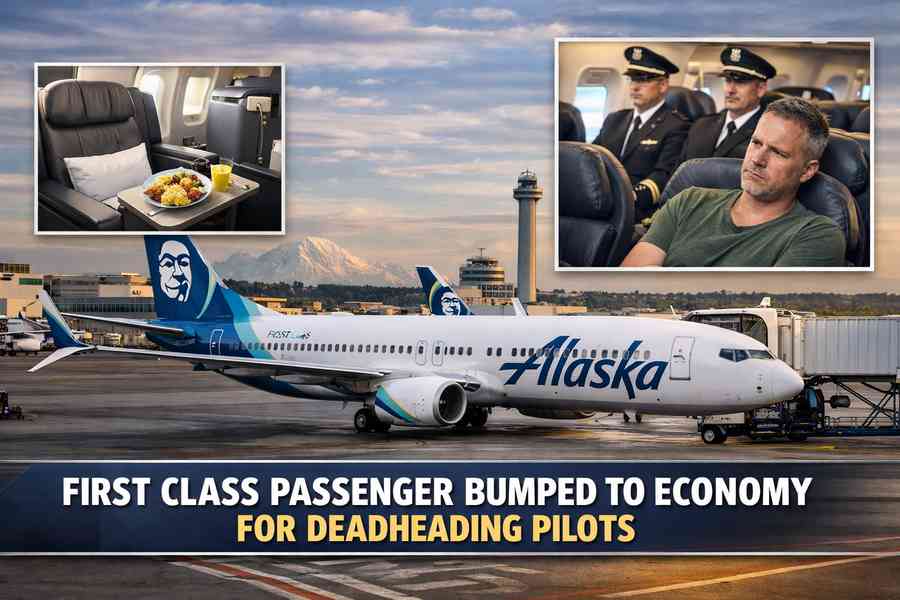
SEATTLE — A confirmed, paid First Class passenger on an eight-hour international flight operated by Alaska Airlines was downgraded to economy shortly before departure to accommodate two deadheading pilots, highlighting how labor agreements can supersede customer bookings and disrupt premium travel experiences.
The incident occurred on a flight from Daniel Oduber Quirós International Airport in Liberia, Costa Rica, to Seattle–Tacoma International Airport. According to a report first noted by View from the Wing, the downgrade was contractually permitted under Alaska Airlines’ pilot labor agreement, even though such forced downgrades of revenue First Class passengers are uncommon across U.S. carriers.
A Last-Minute Downgrade on a Full Flight
The passenger had purchased a Class C First Class return ticket for the long-haul segment from Daniel Oduber Quirós International Airport to Seattle–Tacoma International Airport. After completing online check-in and checking a bag at the airport without issue, the traveler was called to the gate desk during boarding.
There, a gate agent informed the passenger that two pilots needed to deadhead in First Class and that the flight was completely full, leaving no alternative premium seating. The agent cited the passenger’s relatively low elite status as the reason they were selected for the downgrade.
The change occurred moments before departure, effectively eliminating any opportunity to rebook, change flights, or secure comparable seating. Despite holding a confirmed paid First Class ticket and having selected meals in advance, the passenger was moved to a regular economy seat.
Service Disruptions and Missed Amenities
Once onboard, the downgrade carried immediate service consequences. The passenger asked whether their preselected First Class breakfast would still be available and was told it was not. A request to purchase a Mediterranean snack pack was also denied because it had not been pre-ordered.
The only remaining food option was a ham box, which the passenger could not eat because they are vegetarian. Over the course of the eight-hour flight, the traveler received only one Biscoff cookie and was not offered a special drink, alternative snack, or service recovery gesture.
The passenger had planned to enjoy a First Class experience that included a shakshouka breakfast and a mimosa, but instead spent the flight hungry. They later explained that the trip was their first major vacation in years, taken after an accident to celebrate medical recovery following a period of working two jobs and saving specifically for the journey.
Inside Alaska Airlines’ Deadheading Rules
At Alaska Airlines, pilot labor agreements specify when premium cabin seating is mandatory for deadheading crew. The contract requires First Class seating when any single deadhead segment exceeds five hours, as well as First Class for all segments when consecutive deadhead segments exceed five hours total and the pilot operates a flight in the same duty period.
For segments under five hours, First Class is offered when available, and revenue passengers are typically not displaced. What distinguishes Alaska’s policy is that it explicitly allows downgrading a paid First Class passenger to accommodate a pilot when required by the contract.
While pilot deadheading in premium cabins has become more common amid pilot shortages and rising wages, such forced downgrades remain rare in the U.S. airline industry.
How Other Major Airlines Handle Deadheading
Practices vary widely among large carriers. United Airlines expanded First Class deadheading during the COVID-19 pandemic and codified the priority in its 2023 labor agreement. On long-haul flights, revenue passengers can be downgraded to accommodate pilots, though most customers never see the process because upgrades clear automatically.
Delta Air Lines differentiates by route type, prioritizing business or First Class for pilots on international and transoceanic flights, while using Comfort Plus or First Class selectively on domestic segments tied to working flights.
At American Airlines, domestic deadheading defaults to coach, with pilots placed at the top of the upgrade list at the gate. The transparency of that system often generates visible customer frustration as upgrades clear in real time.
Balancing Safety, Contracts, and Customer Expectations
Many travelers support premium seating for deadheading pilots on the grounds that well-rested crews enhance safety. However, federal rules already regulate pilot fatigue, and the Federal Aviation Administration classifies deadheading as duty time rather than rest.
The Alaska Airlines case underscores the tension between labor contracts and customer expectations. While the downgrade complied with contractual obligations, the outcome illustrates how legally permissible decisions can still result in significant dissatisfaction—particularly on long international flights purchased specifically for comfort and recovery.
