


Malaysian low-cost carrier revisits aircraft type years after rejecting Bombardier’s original CSeries proposal
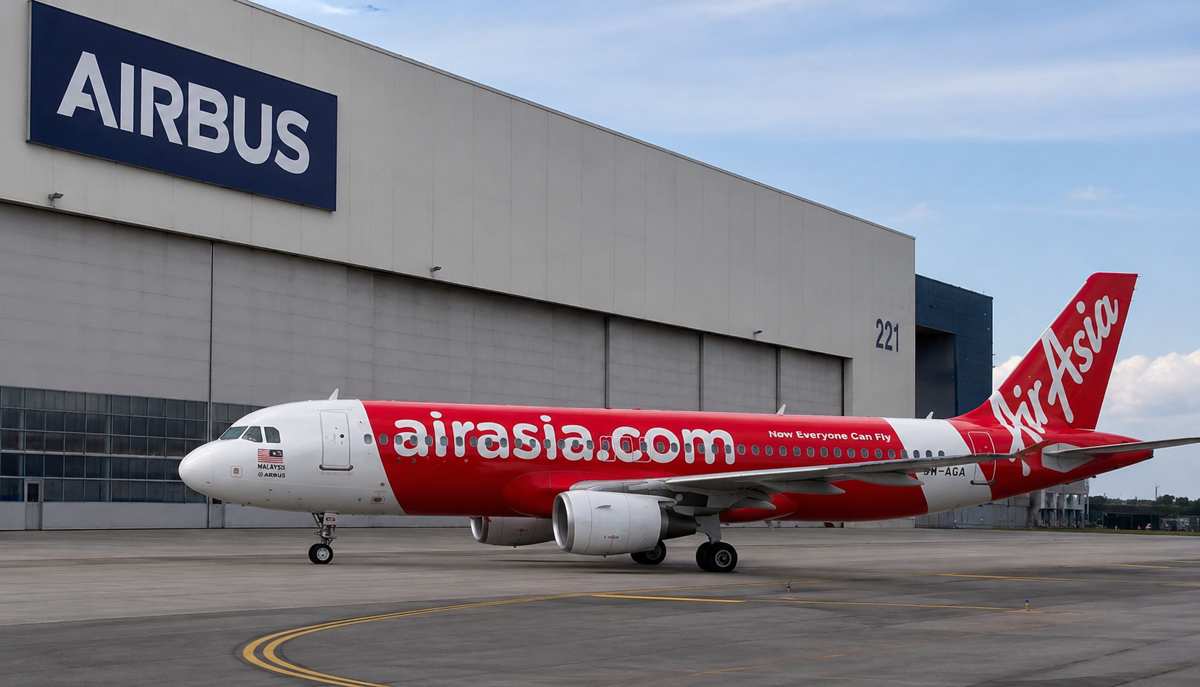
MONTREAL — Airbus is preparing to unveil what it has described as a “historic” announcement for its A220 aircraft programme, with multiple reports indicating that Malaysia-based low-cost airline AirAsia is poised to order as many as 150 A220 jets in a landmark agreement for the European manufacturer.
The announcement is scheduled to take place May 6 at Airbus’ A220 final assembly facility in Mirabel, Quebec, near Montreal. While Airbus has not publicly identified the customer involved, industry reports point to AirAsia as the airline behind the expected order.
If finalized, the agreement would rank among the largest single orders ever placed for the A220 family and would mark a significant commercial victory for Airbus as it seeks to expand the aircraft’s presence in the fast-growing Asian aviation market.
Capital A Chief Executive Tony Fernandes, co-founder of AirAsia, is reportedly traveling to Canada to conclude the agreement, according to Malaysia’s New Straits Times.
Airbus confirmed it will host a customer event at its Mirabel facility but declined to disclose further details. The company described the planned announcement as historic for the A220 programme, fueling speculation over the scale of the order.
AirAsia Expands Fleet Strategy Beyond A320 Family
AirAsia currently operates an all-Airbus narrowbody fleet largely centered on the A320 family of aircraft, which has long formed the backbone of the carrier’s low-cost operations across Southeast Asia and other regional markets.
The addition of the smaller A220 would represent a strategic expansion of the airline’s fleet capabilities. Aviation analysts say the aircraft could allow AirAsia to serve thinner regional routes more efficiently while maintaining lower operating costs.
The A220-300, the larger variant of the aircraft family, is designed for short- to medium-haul routes and is widely viewed as an efficient option for airlines seeking flexibility in markets with fluctuating demand.
An order of up to 150 aircraft would also significantly strengthen Airbus’ competitive position in Asia’s low-cost travel sector, where carriers are increasingly seeking fuel-efficient aircraft capable of operating both dense urban routes and underserved secondary destinations.
From Bombardier’s CSeries to Airbus’ A220
The prospective deal also marks a notable reversal in AirAsia’s long-running relationship with the aircraft programme.
Before Airbus acquired a majority stake in Bombardier’s CSeries programme in 2018, the Canadian manufacturer had actively courted AirAsia as a potential customer. Bombardier even proposed a high-density version of the CS300 configured with 160 seats specifically tailored to the airline’s low-cost business model.
AirAsia ultimately declined the proposal at the time.
Following Airbus’ takeover, the aircraft was rebranded as the A220, with the CS100 becoming the A220-100 and the CS300 renamed the A220-300. Since then, Airbus has leveraged its global sales and support network to accelerate commercial adoption of the programme.
The aircraft has steadily gained traction among airlines seeking modern, fuel-efficient narrowbody jets capable of serving lower-demand routes economically.
In 2021, the European Union Aviation Safety Agency approved the A220-300 for a maximum passenger capacity of 149 seats, subject to the installation of a dual-lane overwing evacuation slide. The certification enhanced the aircraft’s appeal to budget airlines seeking higher-density configurations.
Airbus Pushes for A220 Growth and Profitability
The anticipated AirAsia order comes as Airbus continues efforts to scale up A220 production and improve the programme’s profitability.
The manufacturer has set a target production rate of 13 A220 aircraft per month by 2028 as demand for next-generation narrowbody jets continues to rise globally.
All variants of the A220 are powered exclusively by Pratt & Whitney PW1500G geared turbofan engines, which are designed to deliver improved fuel efficiency and lower emissions compared with older aircraft models.
Airbus executives have also repeatedly discussed the possibility of developing a larger stretched version of the A220 to compete more directly in the higher-capacity narrowbody market.
However, Airbus Chief Executive Guillaume Faury said on April 28 that conditions for launching such a project were “not yet there” and that the company was “not close” to committing to the development.
Industry observers say a major commitment from AirAsia could strengthen Airbus’ long-term business case for further A220 expansion while reinforcing confidence in the programme’s growth trajectory.
For Airbus, the potential agreement would not only provide a substantial order boost but also secure a high-profile low-cost operator in one of the world’s fastest-growing aviation regions.
