


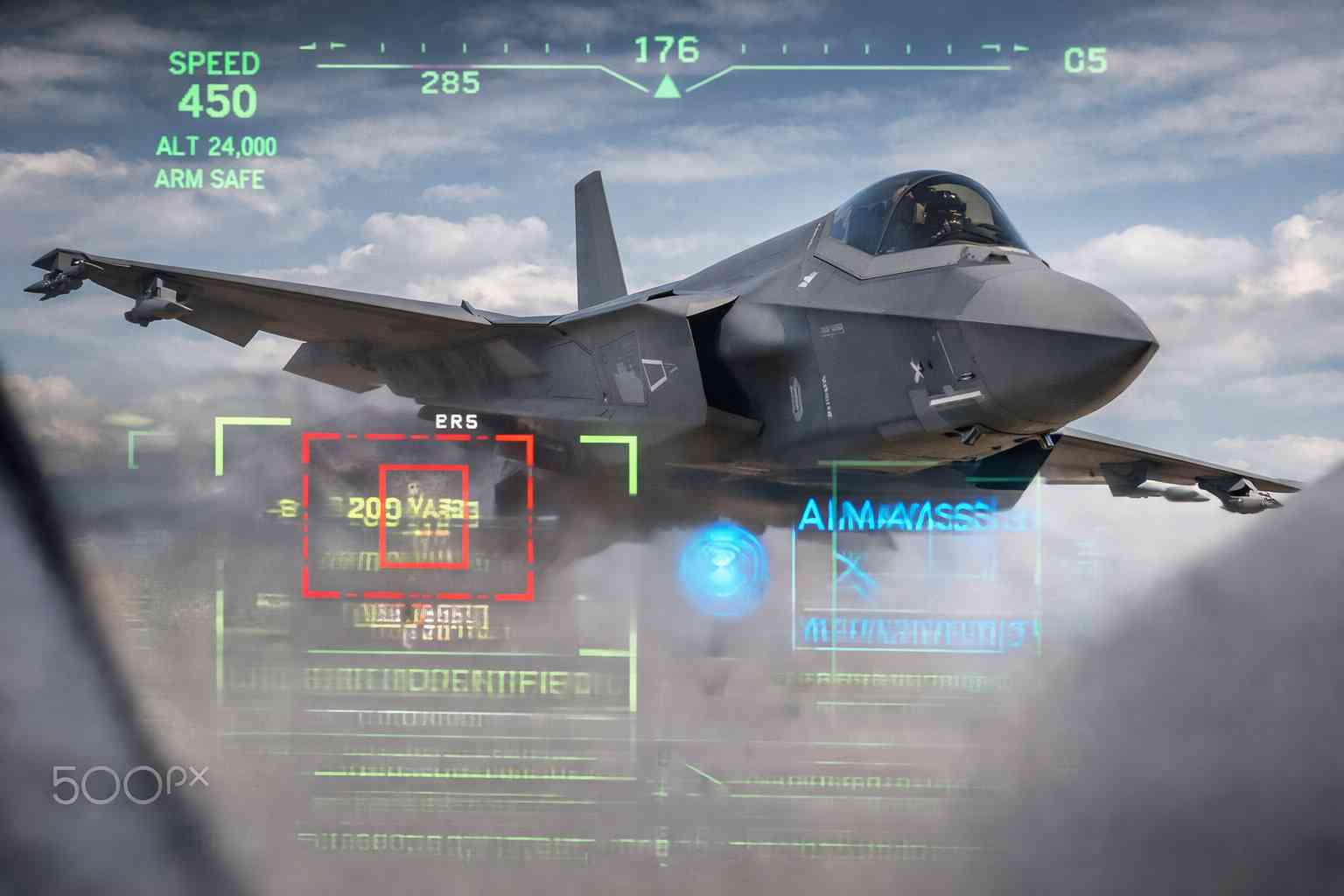
Lockheed Martin has successfully flight tested a new artificial intelligence-enabled combat identification capability on its F-35 Lightning II fighter jet, marking a significant step forward in how military aircraft detect and classify hostile radar signals. The demonstration represents the first time a tactical AI model independently generated combat identification during an active flight, highlighting the growing role of machine learning in advanced defense systems.
The test took place at Nellis Air Force Base in Nevada, one of the U.S. Air Force’s premier training and evaluation centers for advanced aerial warfare technologies. The development comes as Lockheed Martin continues modernization work tied to the F-35’s Block 4 upgrade program, which is expected to enhance the aircraft’s electronic warfare capabilities.
Project Overwatch Demonstrates In-Flight AI Integration
The AI test was conducted under Lockheed Martin’s Project Overwatch initiative, which focuses on accelerating the integration of machine learning into operational combat systems. Engineers embedded a company-developed and trained machine learning model directly into the F-35’s sensor fusion architecture.
During the test flight, the AI system analyzed radiofrequency emissions and produced its own combat identification assessment. That information was displayed directly to the pilot through the aircraft’s helmet-mounted display and cockpit interface, alongside identification data generated by the F-35’s existing threat recognition system.
Unlike traditional fighter jets that rely on heads-up displays, the F-35 presents flight data and threat intelligence through an advanced helmet visor and panoramic cockpit display, enabling pilots to process information more efficiently.
The AI model’s ability to independently classify signals while the aircraft was in flight demonstrates a shift toward more autonomous threat recognition capabilities.
Accelerating Threat Recognition and Software Updates
One of the most significant advantages of the AI system is its ability to rapidly adapt to unfamiliar signals. Modern air defense radars often change frequencies, waveforms, and operating modes to avoid detection and counter electronic warfare tactics. These variations can prevent traditional systems from immediately identifying threats if signal patterns differ from those stored in the aircraft’s threat database.
Project Overwatch addresses this challenge by dramatically shortening the update cycle. After each flight, mission data can be downloaded, analyzed, and used to retrain the AI model in minutes. Updated software can then be reloaded onto operational aircraft within the same mission planning window.
This compressed timeline reduces the delay between detecting a new threat and equipping pilots with accurate identification tools, improving response times in dynamic combat environments.
Real-World Threat Environment Highlights Need for AI
The need for faster threat identification has been demonstrated in real-world operations. During NATO patrols following Russia’s invasion of Ukraine, F-35 pilots encountered air defense systems operating in configurations that had not previously been cataloged.
In one instance, variants of the Russian-made S-300 missile system emitted radar signals in unfamiliar modes. Although the aircraft detected the emissions, it could not immediately assign a precise identity, forcing pilots to operate with incomplete threat information.
Ground crews later updated the threat library, enabling accurate classification on future missions. AI-driven identification aims to eliminate such delays by enabling faster onboard analysis and adaptation.
Reducing Pilot Workload and Enhancing Survivability
Beyond improving detection speed, the AI capability also reduces pilot workload. Fighter pilots operate in high-stress environments where they must process large volumes of information under intense time pressure. Ambiguous or unidentified signals increase cognitive burden and risk.
By providing faster and clearer threat assessments, AI systems allow pilots to focus more on mission execution and less on interpreting uncertain data.
This capability is particularly important as adversaries increasingly deploy advanced radar systems capable of changing behavior dynamically. Some of these systems also incorporate their own artificial intelligence, creating a technological arms race in electronic warfare.
Toward Cognitive Electronic Warfare
Project Overwatch represents an early step toward what defense experts call cognitive electronic warfare—systems capable of learning, adapting, and responding autonomously.
Future iterations could allow aircraft to analyze unknown signals, determine optimal countermeasures, and share updated threat intelligence with other military platforms in real time.
Lockheed Martin has implemented similar rapid software update approaches in other defense systems, including the Aegis Combat System used by the U.S. Navy, where update timelines have been reduced from months to days.
Aligning With F-35 Block 4 Modernization Goals
The AI combat identification capability aligns closely with the F-35’s Block 4 modernization program, which aims to expand processing power, improve sensor integration, and enhance electronic warfare performance.
While the broader Block 4 effort has faced cost increases and schedule adjustments, the successful AI demonstration shows tangible progress toward making the F-35 more adaptive and resilient against evolving threats.
By integrating machine learning into frontline aircraft, Lockheed Martin is moving the F-35 beyond static threat databases toward dynamic, data-driven threat recognition—an advancement likely to shape the future of aerial combat and defense technology.
