


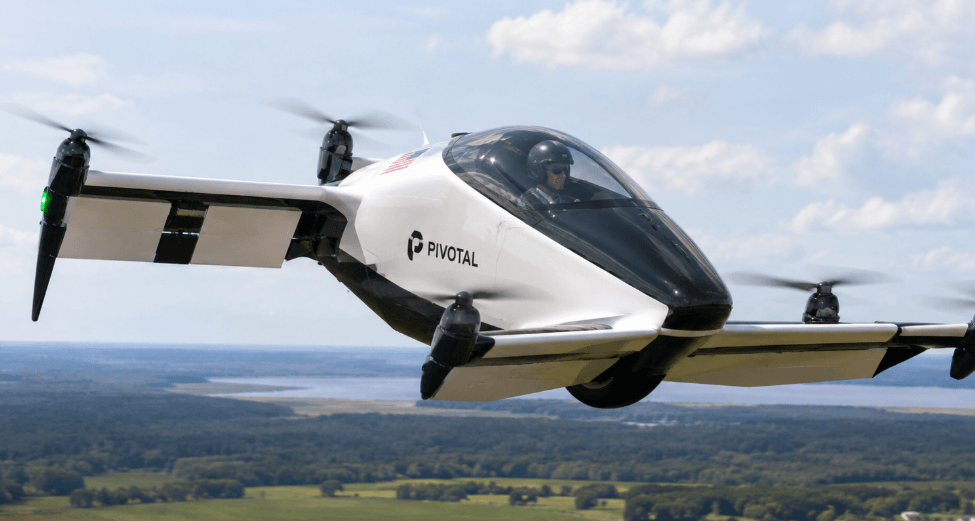
Electric aviation is moving beyond the promise of flying taxis and passenger transportation, with emerging aircraft technologies finding practical applications in emergency medical services and environmental monitoring. From rural communities in North Carolina to high-altitude climate research, electric aircraft are demonstrating how they could transform specialized aviation operations.
Electric Aircraft Help Paramedics Reach Emergencies Faster
In Hyde County, North Carolina, paramedic Quinn Reece recently used a single-seat electric aircraft to respond to an emergency, demonstrating the potential of electric vertical takeoff and landing (eVTOL) technology.
The aircraft, known as the Pivotal BlackFly, measures approximately 14 feet long and features eight propellers. It takes off vertically like a helicopter before transitioning to forward flight.
Traveling at approximately 60 mph, Reece discovered that an emergency dispatch application had provided an incorrect location. Drawing on her knowledge of the area, she identified the correct address and reached the patient 20 minutes before ground-based paramedics arrived.
North Carolina Tests Electric Aircraft for Rural Emergency Services
Hyde County Emergency Medical Services Chief Brook Cox launched a six-month trial with Pivotal in March to evaluate whether electric aircraft could improve emergency response across the county’s 1,459 square miles of land and water.
Before responding to two emergency calls, the county completed more than 300 training flights.
“The aircraft is a breeze,” Cox said. “It really takes the guesswork out of it because you have a screen and you have all these prompts that you have to go through.”
The trial highlights the potential benefits of aircraft capable of reaching remote locations without relying on conventional roads.
Electric Aviation Companies Develop Faster Emergency Aircraft
Pivotal is not the only manufacturer exploring emergency medical applications.
Jump Aero, founded in 2019 by Carl Dietrich, is developing the JA1 Pulse, an electric aircraft designed specifically for rapid emergency response.
The JA1 Pulse is expected to reach speeds of 288 mph, substantially faster than the BlackFly’s approximately 63 mph.
“It shows that other organizations believe that this is a real opportunity,” Dietrich said of Pivotal’s emergency response program.
Unlike traditional helicopters, electric aircraft can deliver immediate power without engine warm-up delays.
“It’s ideal for rapid response missions because you don’t pay any maintenance penalty for going to full power instantly,” Dietrich explained.
Battery Range and Payload Remain Major Challenges
Despite their potential, electric emergency aircraft face operational limitations.
The BlackFly offers approximately 20 miles of range per charge and a payload capacity of 200 pounds. Jump Aero’s JA1 Pulse is designed for a 70-mile range and a 350-pound payload.
Neither aircraft is intended to transport patients. Instead, their primary role is to deliver medical professionals and essential equipment quickly.
During the North Carolina trial, Reece carried a cardiac monitor, airway supplies and emergency medical equipment to begin treatment before an ambulance arrived.
Lower Operating Costs Could Support Electric Aircraft Adoption
Affordability is another factor attracting attention.
Pivotal’s BlackFly is priced at approximately $190,000, while conventional helicopters can cost between $500,000 and $10 million.
According to aviation commercialization consultant Andrew Mearns, operating an electric aircraft could cost approximately 80% less than operating a comparable fossil-fuel-powered aircraft, depending on the model.
April Zhang, director of advanced air mobility at the University of South Florida’s Center for Urban Transportation Research, said rural communities may offer favorable conditions for introducing eVTOL aircraft.
“In the urban area, it’s probably more challenging to find the right landing and takeoff sites,” Zhang said.
The Federal Aviation Administration’s eVTOL Integration Pilot Program is also supporting collaboration between aircraft manufacturers and public agencies.
Solar-Powered Electric Aircraft Advance Climate Research
Beyond emergency services, electric aviation is creating new opportunities for environmental monitoring.
Solar-powered unmanned aircraft operating at altitudes of approximately 65,000 feet can remain airborne for weeks or months.
These aircraft could help researchers monitor wildfires, methane emissions, hurricanes and changes in polar ice.
High-Altitude Aircraft Could Improve Wildfire Detection
Craig Mascarenhas, an aerospace researcher at Harvard University, is helping develop solar-powered aircraft through the Stratospheric Airborne Climate Observing System, working with Electra.Aero, MIT and other partners.
The aircraft could continuously collect environmental data, including soil moisture and vegetation conditions, to improve wildfire risk assessments.
They could also help detect fires earlier and provide detailed information to emergency responders.
“It’s hurricane monitoring and tracking, methane emiss monitoring, understanding ice dynamics across the world,” Mascarenhas said. “The instruments will be swapped, but the topology of the aircraft will remain the same.”
Electric Aviation’s Environmental Benefits Depend on Its Applications
Although electric aircraft eliminate direct combustion emissions during flight, their overall environmental benefits depend on how they are used.
Replacing fuel-powered helicopters could reduce greenhouse gas emissions, but replacing efficient ground transportation may offer fewer advantages.
“Vertical flight is inherently energy-intensive, and an electric aircraft is not necessarily more energy-efficient or lower-carbon per passenger-mile than an electric car, bus, or train,” Mascarenhas said.
Specialized Applications Shape the Future of Electric Aviation
Electric aviation companies continue pursuing broader passenger transportation markets, including urban air taxis. However, emergency response and environmental monitoring are already providing opportunities to demonstrate the technology’s capabilities.
As manufacturers improve battery performance, aircraft range and operating efficiency, these specialized applications could play an important role in expanding electric aviation across the United States.
