


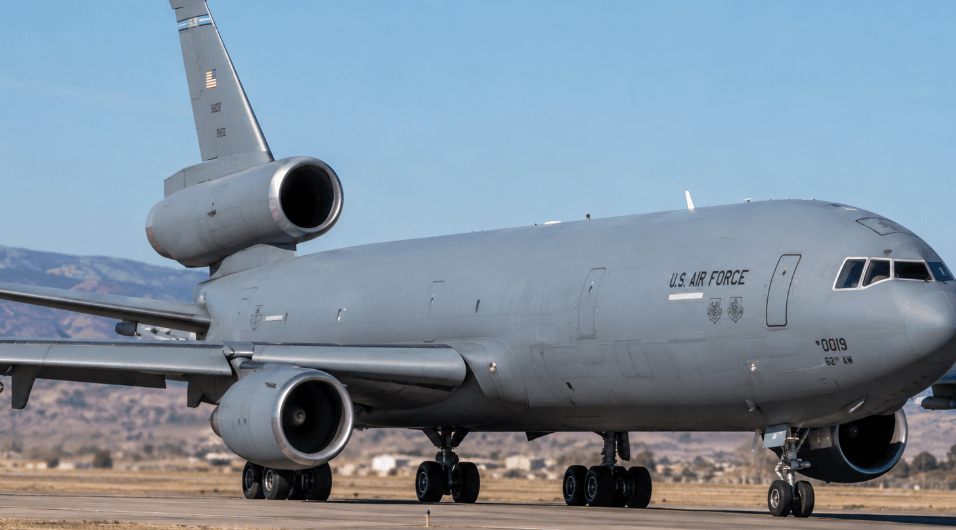
The U.S. Air Force is preparing to transfer four retired Boeing KC-10 Extender aerial refueling aircraft to an unidentified North African partner nation. The proposed transfer would give the recipient access to long-range military refueling capabilities as the United States continues disposing of aircraft from its former KC-10 fleet.
The Air Force Life Cycle Management Center outlined the initiative in an October 7, 2026, announcement seeking information from contractors capable of restoring the aircraft to operational condition and supporting their delivery overseas.
U.S. Air Force Seeks Contractors to Restore KC-10 Aircraft
According to the announcement, the Air Force is conducting market research to identify companies with the technical expertise and resources needed to return four retired KC-10 tankers to service.
The proposed work includes aircraft regeneration, one-time flight clearance, depot-level maintenance, ferry delivery, training, and support services in the receiving country.
The regeneration process would involve inspecting and restoring aircraft that have been withdrawn from active military operations. Contractors would need to address maintenance requirements and obtain the necessary clearances before the tankers could be flown to their destination.
Aircraft to Be Transferred Through Excess Defense Articles Program
The four aircraft would be provided through the U.S. government’s Excess Defense Articles (EDA) program.
The program allows the Department of Defense to transfer military equipment that is no longer required by U.S. forces to eligible foreign partners.
Such transfers can support defense cooperation by allowing allied and partner nations to acquire existing U.S. military equipment rather than purchasing entirely new systems.
For the North African recipient, the KC-10 aircraft could provide an opportunity to expand aerial refueling and military transport capabilities, depending on how the aircraft are configured and operated.
Morocco and Egypt Emerge as Possible Recipients
The Air Force has not publicly identified the North African country expected to receive the four KC-10 Extenders.
However, Morocco and Egypt are considered potential recipients because of their established defense relationships with the United States.
Both countries have longstanding military cooperation agreements with Washington and operate U.S.-supplied defense equipment.
Despite speculation about the possible destination, neither country has been officially confirmed as the recipient.
The October 7 announcement also does not establish a timeline for the proposed transfer.
As of the announcement, there had been no congressional notification concerning a potential Foreign Military Sales transaction involving the aircraft.
Transfer Details and Delivery Schedule Remain Unclear
Several aspects of the proposed arrangement remain unresolved, including the contractor selection process, aircraft restoration costs, and anticipated delivery dates.
The Air Force’s market research effort is intended to determine whether qualified contractors can provide the services required to prepare the retired tankers for international operations.
The receiving country would also require maintenance support and personnel training to operate the aircraft after delivery.
Further information may become available as the Air Force advances its acquisition planning and determines the requirements for transferring the tankers.
KC-10 Extender Fleet Retired After Decades of U.S. Military Service
The KC-10 Extender served as a major component of the U.S. Air Force’s aerial refueling and air mobility operations for decades.
Developed by McDonnell Douglas and based on the commercial DC-10 airliner, the aircraft was designed to refuel military aircraft in flight while also transporting cargo and personnel over long distances.
The Air Force operated a fleet of 59 KC-10 tankers before completing the aircraft’s retirement.
The final KC-10 was flown to an aircraft storage facility in September 2024, marking the end of the type’s operational service with the U.S. Air Force.
Long-Range Refueling and Transport Capabilities
The KC-10 played an important role in extending the operational range of U.S. military aircraft, particularly during overseas deployments and long-distance missions.
Its combination of aerial refueling and cargo transport capabilities made it a versatile platform for military logistics.
The aircraft could support fighter jets, bombers, and other military aircraft requiring fuel during extended operations.
Although the U.S. Air Force has retired the KC-10, some aircraft from the former fleet remain candidates for continued use by other operators.
Omega Air Acquired 10 Retired KC-10 Tankers
The planned North African transfer follows another development involving aircraft from the retired KC-10 fleet.
In May 2026, Omega Air announced that it had successfully bid for 10 former U.S. Air Force KC-10 tankers released through a government auction.
Omega Air provides commercial aerial refueling services, and its acquisition demonstrated continued interest in the retired aircraft for specialized aviation operations.
The company’s purchase and the proposed North African transfer represent separate efforts to extend the usefulness of aircraft that are no longer part of the U.S. Air Force’s active inventory.
Proposed Transfer Could Extend KC-10 Operations Beyond U.S. Service
The potential delivery of four KC-10 Extenders to North Africa would represent another stage in the aircraft’s post-retirement history.
While the U.S. Air Force has ended its use of the tanker, the aircraft’s refueling and transport capabilities may remain valuable to foreign military operators willing to invest in restoration and maintenance.
For now, the identity of the receiving nation, the cost of returning the aircraft to service, and the delivery schedule remain undisclosed.
The Air Force’s contractor research will help determine how the proposed transfer could proceed and whether the four retired tankers can be prepared for further operational service.
