


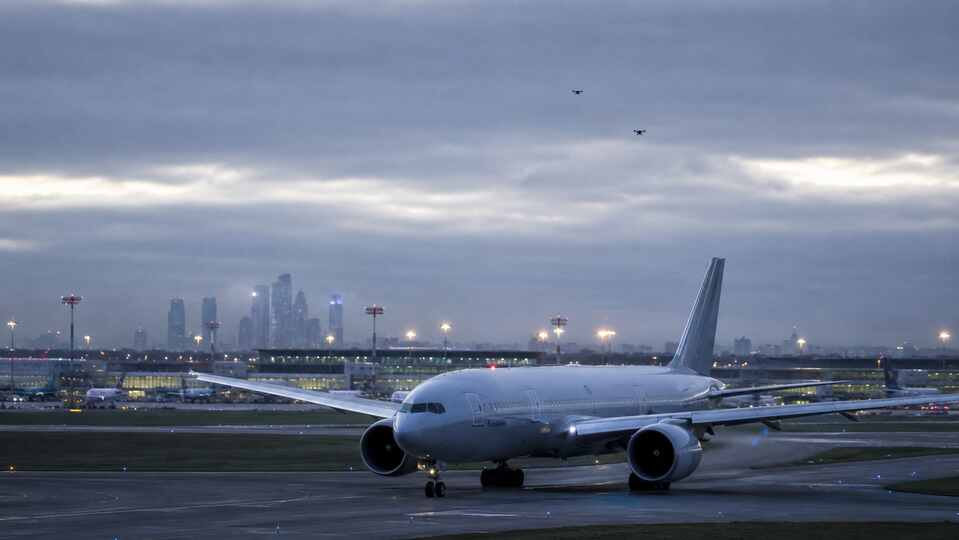
Drone Activity Raises New Risks for Airlines, Airports and Insurers
MOSCOW — Airlines operating through Russian airspace face growing safety, insurance and financial risks as Ukrainian drone activity triggers repeated disruptions at some of the country’s busiest airports, according to a warning from Ukrainian President Volodymyr Zelensky.
In his September 1 evening address, Zelensky cautioned international airlines, aviation insurers and foreign governments that the increasing presence of drones over Russian territory could make civil aviation operations increasingly difficult. He said unpredictable drone activity could effectively restrict commercial flights across parts of the country.
The warning has potential implications for carriers that continue to fly through Russian airspace or operate services to major Russian cities. These include Russia’s Aeroflot, Turkish Airlines and Emirates, along with airlines based in China and other countries that maintain access to Russian routes.
Moscow Sheremetyevo International Airport, Domodedovo Airport, Vnukovo International Airport and St. Petersburg Pulkovo Airport are among the major facilities that have faced operational interruptions associated with drone-related security measures.
Airlines Face Unpredictable Airspace Restrictions
Zelensky said Ukraine does not intend to target civilian aircraft. However, he warned that carriers cannot depend on predictable periods during which flights may safely enter or leave Russian airspace.
Drone alerts can prompt Russian aviation authorities to impose restrictions with little notice, temporarily suspending arrivals and departures around affected airports. Such measures may remain in place for several hours before authorities permit normal operations to resume.
The Ukrainian president also called on aviation insurers to reconsider the level of risk involved in underwriting flights that travel through Russian airspace. Any increase in perceived exposure could result in higher insurance premiums, tighter policy conditions or reduced coverage for airlines continuing to serve the market.
Zelensky urged ambassadors in Kyiv and Moscow to relay the warning to their governments. He said Ukrainian authorities were prepared to provide international aviation organizations with information about the evolving risks.
Ukraine has expanded its capacity to conduct long-range drone operations inside Russia. Aviation risk assessments cited by Reuters indicate that strikes capable of reaching hundreds of kilometers into Russian territory could continue, raising concerns about the potential misidentification of aircraft and the interaction between military drones, air defense systems and civilian flights.
Moscow Airports Experience Repeated Flight Disruptions
Russian airports have already experienced delays, cancellations and temporary shutdowns following reports of approaching drones.
The operational impact has been especially significant around Moscow, where restrictions can affect several airports simultaneously, according to The Insider. Because the Russian capital is the country’s primary aviation hub, interruptions there can spread through airline networks and disrupt domestic and international schedules.
Even when civilian aircraft are not directly targeted, drone alerts can force airlines to hold flights at their departure points, divert aircraft to alternate airports or cancel services altogether. These disruptions can also leave aircraft and crews out of position, creating additional scheduling problems after restrictions are lifted.
For international airlines, the costs can extend beyond an individual delayed flight. Carriers may incur additional fuel expenses, passenger accommodation costs, crew-related charges and compensation obligations, depending on the route and applicable regulations.
Foreign Carriers Remain Exposed to Russian Aviation Risks
Many U.S. and European airlines already avoid Russian airspace because of sanctions, security concerns and restrictions introduced after Russia’s invasion of Ukraine. However, carriers from China, Turkey and Gulf countries continue to operate some routes over Russia or provide direct service to Russian airports.
Those airlines could face greater operational and commercial pressure if drone activity increases or insurance providers impose more restrictive conditions.
Ukraine has informed the International Civil Aviation Organization about the potential risks. Moscow has rejected Kyiv’s assessment and maintains that Russian aviation authorities are capable of protecting commercial flight operations.
Escalation Creates Wider Uncertainty for International Aviation
The latest warning adds to the uncertainty surrounding aviation near the Russia-Ukraine conflict zone. For airlines, the question is no longer limited to whether an aircraft can physically reach a Russian airport safely.
Repeated restrictions can undermine schedule reliability, increase expenses and complicate fleet planning. Insurers must also evaluate the possibility that civilian aircraft could become exposed to military activity even when they are not deliberately targeted.
As drone operations continue, airlines serving Russia will have to balance passenger demand and route economics against growing security and insurance concerns. Further airport disruptions could ultimately determine whether existing services remain commercially viable.
