


ATSB Investigation Finds Breakdown in Tool-Accountability Procedures
A Qantas Airbus A380 completed a round trip between Sydney and Dallas-Fort Worth with a 33-centimeter maintenance light accidentally left inside its wing, prompting the airline to strengthen checks designed to ensure all equipment is recovered before an aircraft returns to service.
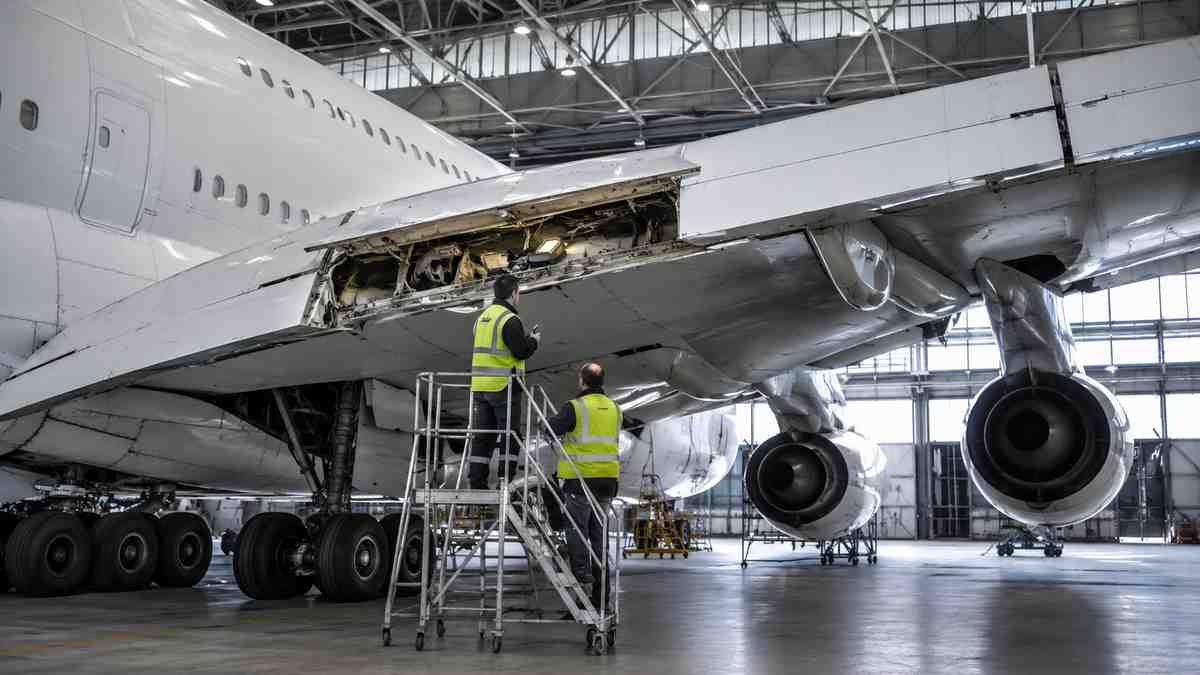
The light was left behind during maintenance on the aircraft’s air-conditioning system at Sydney Airport on January 7. The A380 was subsequently cleared for passenger service and flew to Dallas Fort Worth International Airport before returning to Sydney.
Maintenance personnel identified the missing light after the aircraft’s return and recovered it from the wing two days later, according to findings from the Australian Transport Safety Bureau.
The ATSB determined that the light caused no damage and had no reported effect on the aircraft’s operation. However, investigators said the incident represented a significant safety concern because unsecured foreign objects can move during flight, interfere with aircraft components or damage critical systems.
Tool-Control Process Failed to Detect Missing Equipment
The investigation concluded that the maintenance light remained inside the aircraft because of a breakdown in Qantas’ tool-accountability processes.
Aircraft maintenance is often conducted in demanding environments and under operational time pressures. The ATSB’s findings emphasized that tool-control systems must be capable of detecting errors and locating missing equipment instead of depending entirely on workers remembering and completing every required step.
ATSB Chief Commissioner Angus Mitchell said established maintenance procedures can become vulnerable when they rely heavily on consistent human performance.
The findings placed responsibility on the effectiveness of the overall system rather than treating the event solely as an individual oversight. A reliable tool-control process should flag discrepancies, help staff trace an item’s last recorded use and prevent an aircraft from being released while equipment remains unaccounted for.
Qantas Adds Mandatory Pre-Clearance Check
Qantas voluntarily reported the incident to the ATSB and confirmed that the maintenance light did not affect the A380’s operation.
Following the event, the airline issued a safety directive addressing its tooling-control processes and procedures. It also formed a tooling working group to examine how maintenance equipment is tracked and accounted for across its operations.
The airline has introduced a mandatory pre-clearance check requiring personnel to confirm that all tooling has been accounted for after maintenance and before an aircraft is approved to return to service.
The additional procedure is intended to improve detection of missing equipment and reduce the possibility that tools or other maintenance items could remain inside an aircraft.
Earlier Incident Involved Tool Left in A380 Engine
The case was the second reported incident involving maintenance equipment left inside a Qantas A380.
In December 2023, a Qantas A380 operated multiple international flights before maintenance workers discovered a 1.25-meter nylon turning tool inside one of its outboard engines.
An ATSB investigation found that personnel had lost the turning tool while performing maintenance. The aircraft was then cleared for service and completed several flights between Australia and the United States before the equipment was located.
The two cases involved different maintenance activities and different parts of the aircraft. However, both involved equipment remaining unaccounted for after work was completed.
CQUniversity aviation expert and associate professor Steven Leib said any unsecured and unaccounted-for object inside an aircraft presents a genuine safety concern. The extent of the danger depends on its location and whether it could move or interfere with aircraft systems during flight.
Leib said the two events alone did not demonstrate that Qantas had a systemic maintenance problem. He also pointed to the role of traceable maintenance records, which allowed personnel in the latest incident to determine when the light was last used, when it should have been returned and what work had been performed.
Findings Reinforce Importance of Foreign-Object Prevention
The incidents underscore why aviation maintenance programs require both preventive controls and recovery procedures.
Accurate records can help locate equipment after it goes missing, but safeguards are also needed to stop an aircraft from being released while a discrepancy remains unresolved. Qantas’ new pre-clearance requirement is designed to add that layer of protection.
The latest incident caused no damage and produced no operational consequences for the A380. Nevertheless, the ATSB’s findings demonstrate that even a relatively small maintenance item can present a safety risk when it is left unsecured inside an aircraft.
The effectiveness of Qantas’ revised procedures will ultimately depend on their consistent application throughout the airline’s maintenance operations.
