


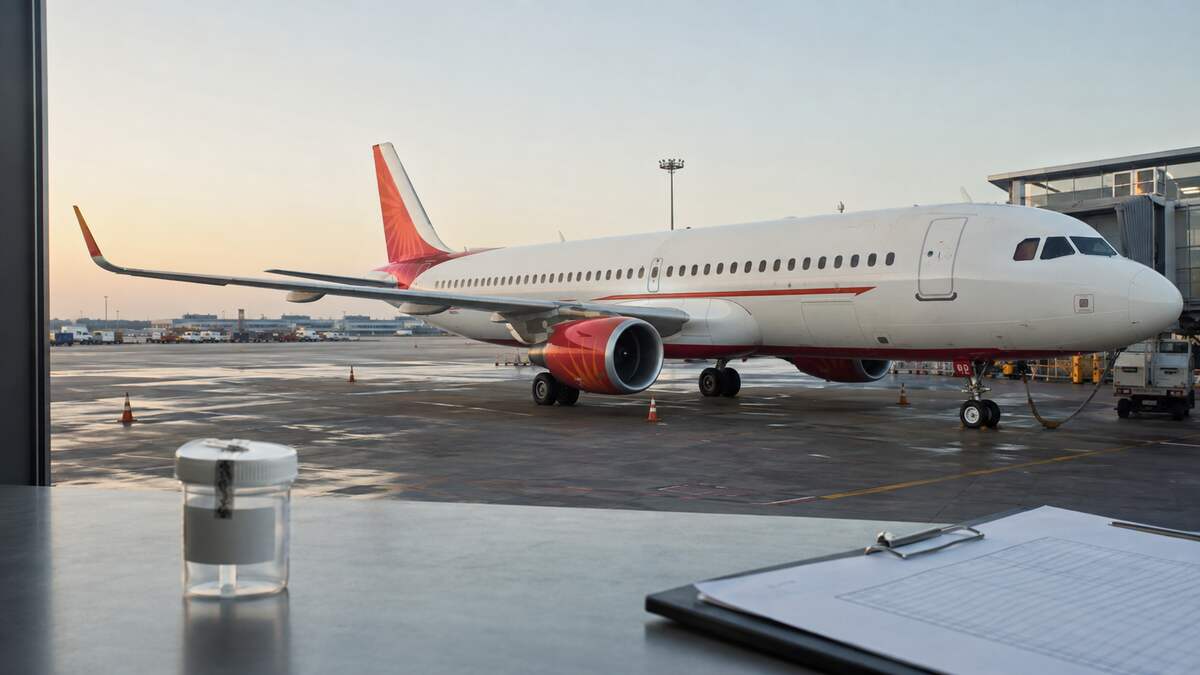
NEW DELHI — Air India has removed two additional pilots from flying duties after they failed preliminary drug screenings conducted under a new airline-wide testing program, according to people familiar with the matter. The expanded safety initiative follows a serious incident aboard a Phuket-to-New Delhi flight that reportedly injured several passengers and raised questions about both crew fitness and aircraft systems.
The Tata Group-owned carrier is awaiting confirmatory laboratory results for the two pilots, which are expected within 24 to 48 hours. Until those findings are available, both pilots will remain off the flight schedule.
Preliminary screening results are not considered conclusive. Air India has not said whether disciplinary measures will be imposed if the results are confirmed.
Air India Expands Drug Testing Across Pilot Workforce
Air India introduced mandatory drug screening for its pilots under a revised standard operating procedure following the incident involving a flight from Phuket International Airport in Thailand to Indira Gandhi International Airport in New Delhi.
More than 300 Air India pilots have reportedly been tested since the procedure took effect. The program is intended to strengthen operational safeguards and ensure compliance with applicable aviation safety requirements.
The initiative began after the captain of the Phuket-to-New Delhi service tested positive for marijuana in two urine screenings performed after the aircraft landed. The airline subsequently broadened testing beyond the crew members directly involved in the flight.
Sources said a cabin crew member had previously filed a complaint alleging that the captain had smoked marijuana. That allegation has not been independently verified, and the available information does not establish when any alleged drug use may have occurred.
Air India has not issued a detailed public statement about the additional pilots or disclosed how many crew members may ultimately be screened. Any employment or disciplinary decisions are expected to depend on the confirmatory laboratory findings and the airline’s internal review.
Phuket Flight Prompts Broader Safety Examination
The Phuket incident has led Air India to examine both human-performance concerns and the technical condition of the aircraft involved.
The flight was operated with an Airbus A320neo that reportedly experienced a significant flight-control malfunction while cruising. According to available information, the aircraft abruptly lost about 300 feet of altitude during a four-second period in which several primary control systems were affected.
Multiple Hydraulic Systems Reportedly Affected
The aircraft’s elevators and ailerons reportedly became temporarily unresponsive after failures involving its three hydraulic systems. The spoilers also lost normal control during the same period.
Hydraulic power is critical to the operation of several flight-control surfaces. Elevators regulate pitch by moving the aircraft’s nose up or down, while ailerons control roll and allow the aircraft to bank. Spoilers reduce lift and increase drag, helping pilots manage descent and speed and assisting with braking after landing.
Reports indicate that the elevators and ailerons moved without pilot input during the brief malfunction. A simultaneous degradation involving multiple hydraulic systems would be considered highly unusual in modern commercial aviation.
The precise connection between the aircraft’s altitude loss, reported passenger injuries and flight-control problems remains subject to investigation. No final technical determination has been publicly released.
Technical and Drug-Test Investigations Continue
Investigators are reviewing the sequence of failures aboard the A320neo to determine why several flight-control surfaces were temporarily affected at the same time. The inquiry is expected to examine the aircraft’s hydraulic components, maintenance history, onboard data and crew response.
Air India is separately continuing its review of pilot drug screening and fitness-for-duty procedures. The preliminary results involving the two newly de-rostered pilots do not constitute confirmed violations unless they are validated through further laboratory analysis.
The two investigations address different safety issues but form part of Air India’s broader response to the Phuket flight. Their conclusions could lead to revised testing practices, additional operational oversight or new maintenance and training recommendations.
