


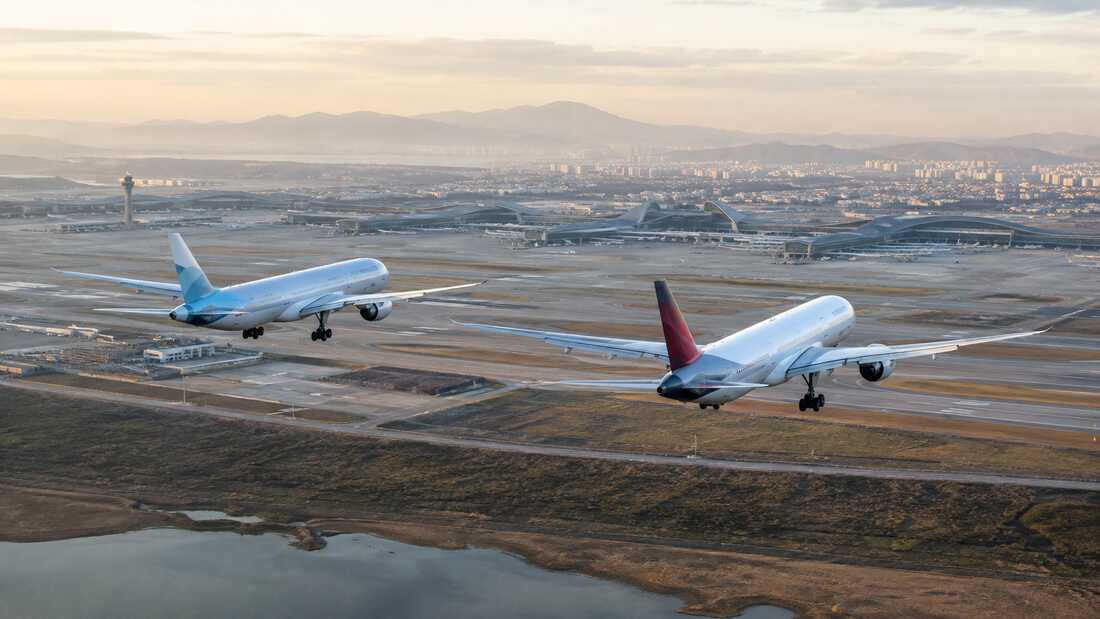
Shareholder Vote Advances South Korea’s Landmark Airline Consolidation
SEOUL — Asiana Airlines shareholders have overwhelmingly approved the carrier’s merger with Korean Air, removing a major corporate obstacle before the planned launch of South Korea’s integrated flag carrier on December 17.
The approval brings the two airlines closer to completing a consolidation process that began in November 2020 and required competition reviews across several international markets. Once the integration is completed, Asiana will be dissolved as a separate company, and its operations, employees and assets will become part of Korean Air.
At an extraordinary shareholders’ meeting in Seoul, investors representing 81.9% of Asiana’s outstanding shares participated. Among the shareholders who voted, 99.3% supported the merger.
The decisive result provides Korean Air with the shareholder backing required to move ahead with the final legal, operational and administrative stages of the transaction.
Korean Air-Asiana Merger Nears Final Stage
Korean Air initially agreed to acquire Asiana in November 2020, beginning a lengthy process shaped by regulatory scrutiny, competition concerns and the operational complexity of combining two major airlines.
Authorities in South Korea and overseas markets reviewed the transaction’s potential effect on passenger and cargo competition. Korean Air secured regulatory clearance after agreeing to several remedies, including transferring certain European routes and selling Asiana’s cargo business.
In December 2024, Korean Air completed its acquisition of a controlling 63.88% stake in Asiana. The carriers nevertheless continued operating separately while management teams prepared their fleets, systems and workforces for full integration.
Under the merger terms, Asiana shareholders will receive 0.2736432 newly issued Korean Air shares for each Asiana share they hold. Korean Air plans to issue approximately 20.34 million new shares as part of the exchange.
The new shares are expected to begin trading on January 4, 2027, completing the financial conversion for Asiana investors after the carrier’s separate corporate identity is dissolved.
Combined Carrier to Operate More Than 230 Aircraft
The merger will create one of Asia’s largest full-service airline groups and establish Korean Air as South Korea’s only full-service carrier.
According to the Korea Times, the combined airline is expected to employ about 28,000 people, operate a fleet of more than 230 aircraft and serve over 120 cities worldwide.
Annual revenue is forecast to exceed 23 trillion won, equivalent to approximately $16.25 billion. The projected scale would give Korean Air a larger platform for competing with major airline groups in Asia, Europe, the Middle East and North America.
Korean Air expects the expanded network to strengthen international connectivity and improve South Korea’s position in the global aviation market. The integration could also provide opportunities to coordinate schedules, consolidate overlapping operations and make more efficient use of aircraft.
For passengers, the transition will eventually mean the disappearance of the Asiana brand. Its routes, aircraft, employees and customer services will be absorbed into the integrated Korean Air operation.
Mileage Programs and Workforce Integration Remain Key Challenges
Frequent-Flyer Conversion Under Regulatory Review
The integration of the airlines’ frequent-flyer programs remains one of the most closely watched parts of the merger.
Asiana is working with South Korea’s Fair Trade Commission on plans intended to protect consumers and limit disruption when the two mileage systems are combined. Customers will be looking for clarity on conversion rates, existing balances, expiration policies and the treatment of elite status.
Beyond loyalty programs, the airlines must align reservation technology, airport procedures, maintenance operations, employee responsibilities and other customer-facing services before the December 17 launch.
Combining the workforces may be equally challenging. Korean Air and Asiana have operated independently for decades, developing different corporate cultures, management structures and working practices.
A smooth transition will depend on how effectively the company integrates employees while maintaining service reliability and operational safety. With shareholder approval secured, Korean Air’s attention now turns to completing those preparations and delivering a unified airline capable of operating at a substantially larger scale.
