


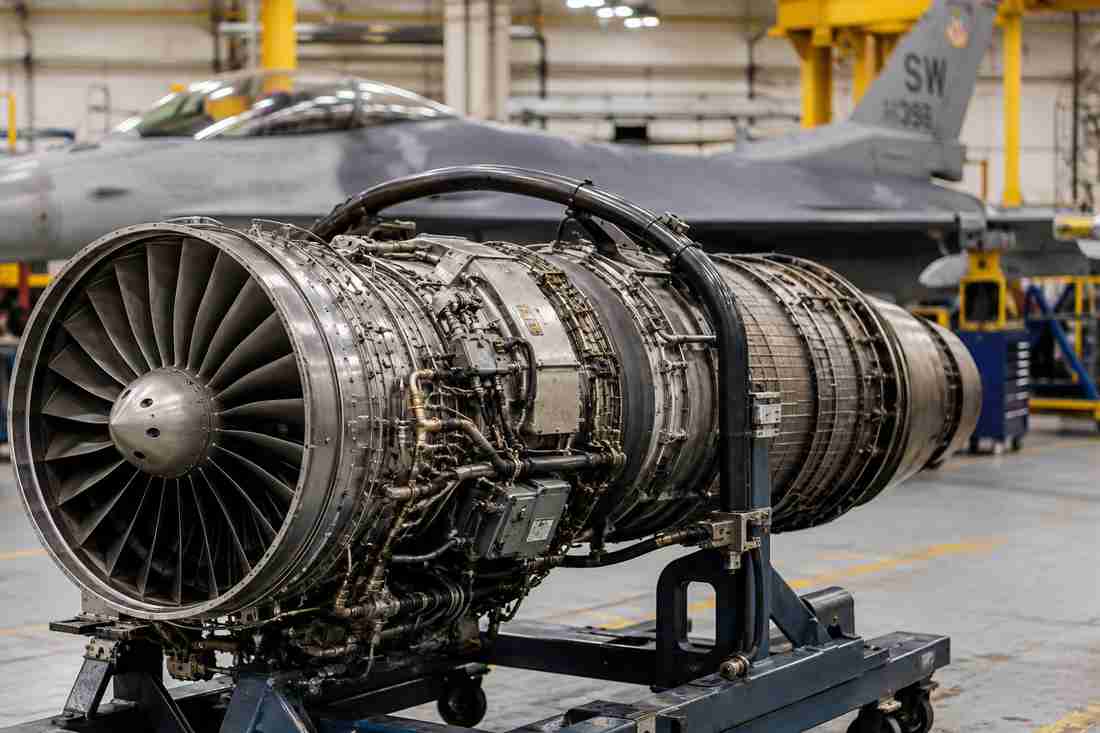
U.S. Air Force Pursues New Procurement Strategy to Strengthen Fighter Engine Supply Chain
ARLINGTON, Virginia — The United States Air Force (USAF) is launching a new procurement strategy aimed at expanding the pool of fighter jet engine manufacturers, addressing long-standing production challenges, and strengthening the resilience of the nation’s defense industrial base.
The initiative comes as the Air Force seeks to overcome persistent issues involving production delays, quality control deficiencies, supply chain disruptions, and rising maintenance costs that have affected existing engine suppliers. By encouraging greater competition and attracting new manufacturers, the service hopes to improve engine availability, reduce long-term operating expenses, and ensure greater readiness across its fighter aircraft fleet.
The effort primarily focuses on engines for the Boeing F-15EX Eagle II and the Lockheed Martin F-16 Fighting Falcon, two aircraft that remain central to U.S. Air Force operations and international defense partnerships through Foreign Military Sales (FMS) programs.
The Air Force has issued a Request for Information (RFI) inviting industry participation, with responses due by August 28, as it evaluates future acquisition strategies for fighter aircraft engines.
Air Force Seeks Broader Industrial Competition
Request for Information Targets Manufacturing Challenges
The Air Force’s newly released RFI outlines concerns over weaknesses within the current industrial base that have increasingly affected engine production and sustainment.
According to the document, existing manufacturers have struggled with production delays, inconsistent quality standards, diminishing manufacturing sources, and shortages of critical materials. These issues have reduced the availability of engines needed to support operational aircraft while increasing maintenance requirements and procurement risks.
Rather than relying on traditional procurement methods alone, the Air Force intends to create a more competitive marketplace by encouraging additional qualified suppliers to enter the sector. Officials believe expanding competition will stimulate innovation, strengthen domestic manufacturing capacity, and improve long-term fleet readiness.
Following the August 28 submission deadline, the Air Force will assess industry feedback to determine potential approaches for future fighter engine acquisition programs.
Engine Reliability Problems Continue Across Major Programs
Delays and Cost Overruns Highlight Industrial Weaknesses
The Air Force’s latest procurement initiative follows years of engine-related challenges affecting several of the military’s most significant aviation programs.
Among the most notable examples is the Lockheed Martin F-35 Lightning II program, where engine production and performance issues have delayed aircraft deliveries and slowed modernization efforts. According to findings from the U.S. Government Accountability Office (GAO), the engine contractor has continued to face difficulties consistently delivering engines that meet contractual performance specifications despite decades of production experience.
Another major example involves the Boeing B-52 Stratofortress modernization program. GAO reporting has linked engine-related complications to roughly $3 billion in additional costs while delaying the bomber’s planned initial operational capability by approximately 15 months.
These setbacks have reinforced concerns that the existing industrial base may not be sufficiently equipped to support future defense requirements efficiently or at the scale required.
Air Force Plans to Acquire More Than 180 Engines Annually
F-15EX and F-16 Fleets Remain Central to Strategy
The Air Force’s long-term planning anticipates the procurement of more than 180 fighter engines annually by 2034.
The RFI specifically identifies future engine requirements for both the F-15EX Eagle II and the F-16 Fighting Falcon, aircraft that continue to play significant roles in domestic operations and overseas security partnerships.
Officials expect a broader supplier base to improve production capacity while ensuring a more stable flow of engines for both U.S. military operations and international customers purchasing aircraft through Foreign Military Sales programs.
Reducing dependence on a limited number of manufacturers is viewed as an important step toward minimizing supply disruptions and improving long-term operational readiness.
Five-Pillar Strategy Focuses on Lifecycle Performance
Procurement Model Extends Beyond Initial Purchase Price
The Air Force said its future acquisition framework will be built around five core pillars intended to reshape how fighter engines are purchased, maintained, and supported throughout their operational lifespan.
Rather than emphasizing only upfront acquisition costs, future contracts will place greater importance on total lifecycle performance. Factors including reliability, maintenance requirements, operational availability, sustainment costs, and long-term durability will play a larger role in evaluating suppliers.
Officials also plan to hold manufacturers more accountable for delivering engines that improve fleet readiness while lowering long-term operating expenses.
The approach is intended to reduce aircraft downtime, simplify maintenance operations, and increase mission availability across active Air Force units.
Supply Chain Resilience Becomes a Strategic Priority
Manufacturers Must Demonstrate Scalable Production
Building a stronger and more resilient supply chain is another central objective of the Air Force’s strategy.
The RFI states that future contractors will be expected to establish dependable manufacturing networks capable of supporting continuous production and long-term availability of replacement parts throughout each engine’s service life.
The Air Force believes stronger supportability will reduce logistics complexity, lessen maintenance burdens, and improve aircraft availability during operational missions.
Manufacturers must also demonstrate the ability to rapidly expand production during periods of increased military demand while maintaining strict quality standards.
The Air Force is additionally seeking industry feedback on potential supply risks involving specialized titanium and nickel alloys, advanced casting technologies, forging capacity, and other manufacturing bottlenecks that could restrict future production growth.
Companies responding to the RFI are being asked to provide detailed information regarding development schedules, manufacturing capacity, investment requirements, factory expansion plans, tooling modernization, and automation strategies. The Air Force hopes these insights will help shape a procurement model capable of lowering long-term production costs while ensuring a reliable supply of fighter engines for both U.S. military operations and allied defense customers.
