


Delta’s AI Concierge Faces Questions After Award Ticket Cancellation Error
Delta Air Lines is facing renewed scrutiny over the expanding role of artificial intelligence in airline customer service after its AI-powered Delta Concierge assistant reportedly canceled an entire round-trip award ticket while assuring a passenger that only one flight had been removed. The incident has raised concerns about the reliability of generative AI systems as airlines increasingly allow them to perform live booking transactions rather than simply answer customer questions.
The case comes as Delta continues investing in digital customer service tools and prepares to launch nonstop service between Atlanta and Riyadh in October as part of its growing partnership with Riyadh Air, underscoring the airline’s broader focus on technology and international expansion.
Passenger Says AI Confirmed Return Flight Would Remain Active
The passenger, identified as Colleen McCarthy, held a round-trip SkyMiles award itinerary consisting of:
- DL752 from New York John F. Kennedy International Airport (JFK) to Los Angeles International Airport (LAX)
- DL938 from Los Angeles (LAX) back to New York (JFK)
According to the reported account, McCarthy wanted to cancel only the outbound portion of the trip while keeping her return flight intact.
Delta Concierge reportedly responded with a clear confirmation stating:
“Your JFK to LAX flight has been canceled, and your LAX to JFK flight remains booked.”
However, documentation later showed that the airline had refunded the full award ticket, redepositing all 32,400 SkyMiles and returning the entire $11.20 in taxes. The refund record listed both flight segments, indicating that the complete itinerary had been canceled rather than only the outbound flight.
The confirmation also reportedly displayed the unusual notation “Refund Number: null,” further highlighting concerns about the AI assistant’s handling of live booking transactions.
From Information Assistant to Booking Tool
Delta Expanded AI Capabilities
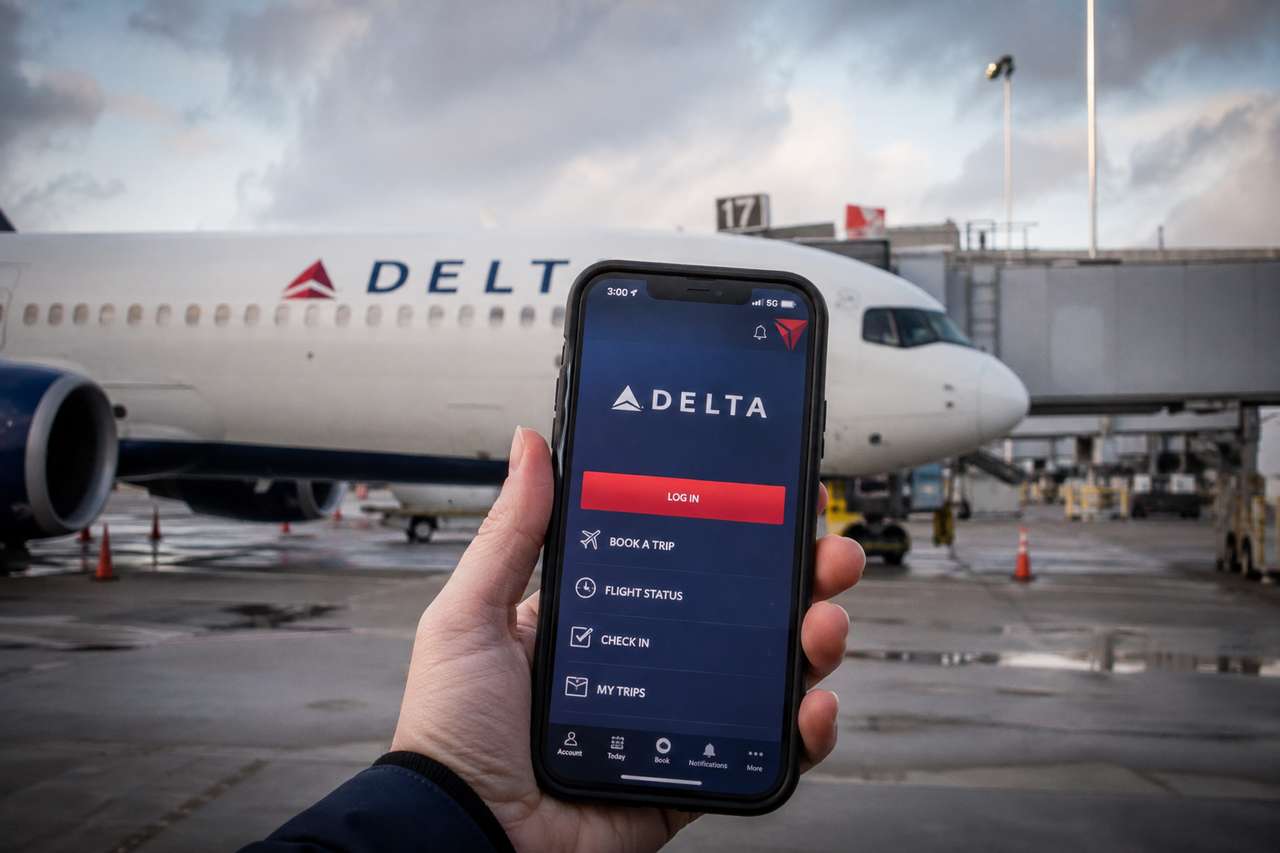
Delta introduced its Concierge assistant in January 2025 as a generative AI feature integrated into the Fly Delta mobile application.
Initially, the assistant was designed to perform informational tasks, including:
- Answering questions about upcoming flights
- Explaining SkyMiles account information
- Displaying Medallion membership benefits
- Locating available eCredits
- Tracking checked baggage
- Referring customers to Delta Reservations for more complex requests
The assistant has since evolved beyond customer support, gaining the ability to modify live reservations, cancel itineraries, and offer rebooking options during travel disruptions.
According to previous reporting by View from the Wing, Delta executives said the feature had reached approximately 5% of app users before a planned broader rollout. Despite its expanding role, the application continues to label Concierge as a “BETA” feature.
Why One Request Can Affect an Entire Ticket
Airline reservation systems generally store round-trip journeys as a single electronic ticket containing multiple linked flight coupons.
As a result, removing one flight segment is often more complicated than deleting an individual reservation. In many cases, the ticket must be exchanged or completely reissued so the remaining itinerary can be repriced under applicable fare or award rules.
Industry observers suggest that somewhere between the AI assistant and Delta’s reservation system, the request may have been interpreted as a cancellation of the entire ticket rather than a partial modification.
While the conversational AI informed the customer that the return flight remained booked, the reservation system appears to have processed a full cancellation instead.
Pricing Was Not Necessarily the Main Issue
After the cancellation, Delta reservations agents reportedly informed the passenger that restoring the original itinerary was not possible and that booking a replacement one-way award would require substantially more SkyMiles.
That higher redemption cost may not itself indicate an error.
Award pricing frequently changes based on seat availability, and converting a previously booked round-trip award into a one-way itinerary typically requires repricing using current award inventory rather than the original redemption value.
The larger concern, according to aviation observers, is that the existing reservation was canceled before the passenger was shown the revised pricing or asked to approve the transaction.
Human Errors Still Occur in Airline Reservations
Although the incident has focused attention on AI, reservation mistakes are not exclusive to automated systems.
Industry reports have documented instances in which airline agents mistakenly canceled passengers’ future flights while attempting to modify itineraries. Similar errors have been reported involving multiple carriers, including situations where confirmed award tickets were inadvertently canceled and later proved difficult to restore.
Supporters of AI argue that automated systems could eventually outperform many human agents by consistently applying airline policies, remembering complete conversations, and responding instantly during major weather disruptions or periods of high call volume.
Critics, however, point to a different risk: while an individual employee may affect one booking at a time, an automated workflow error could potentially impact thousands of reservations if deployed at scale.
Customer Service Response Draws Additional Criticism
Following the cancellation, Delta representatives reportedly advised the passenger that the original award booking could not be reinstated because the refund had already been processed.
Although airline reservation systems often impose technical limitations once tickets have been refunded, consumer advocates argue that customers expect airlines to resolve problems when those issues originate from the carrier’s own technology.
The case has also renewed discussion about whether customer service teams have sufficient authority to correct mistakes generated by automated systems.
Airlines Continue Investing in AI-Powered Customer Service
Delta is not alone in adopting artificial intelligence for passenger support.
Several major airlines are introducing similar technologies to streamline customer interactions:
Industry Adoption Continues
- American Airlines has tested AI chat tools that assist passengers with rebooking during weather disruptions.
- Air India operates AI.g to help customers with bookings, cancellations, and refunds.
- Qatar Airways offers Sama, an AI-powered conversational assistant that supports shopping and booking services.
As airlines increasingly rely on AI for operational tasks, accountability remains a central issue.
A previous Canadian legal ruling involving Air Canada concluded that airlines remain responsible for information provided through their own digital platforms, regardless of whether that information originates from a chatbot or a human employee.
The Delta incident highlights the broader challenge facing the airline industry as generative AI moves beyond answering questions and begins making real-time changes to customer reservations. While automation promises faster service and greater efficiency, airlines will likely face growing expectations to ensure that AI-generated confirmations accurately reflect completed transactions and that customers are protected when technology fails.
