


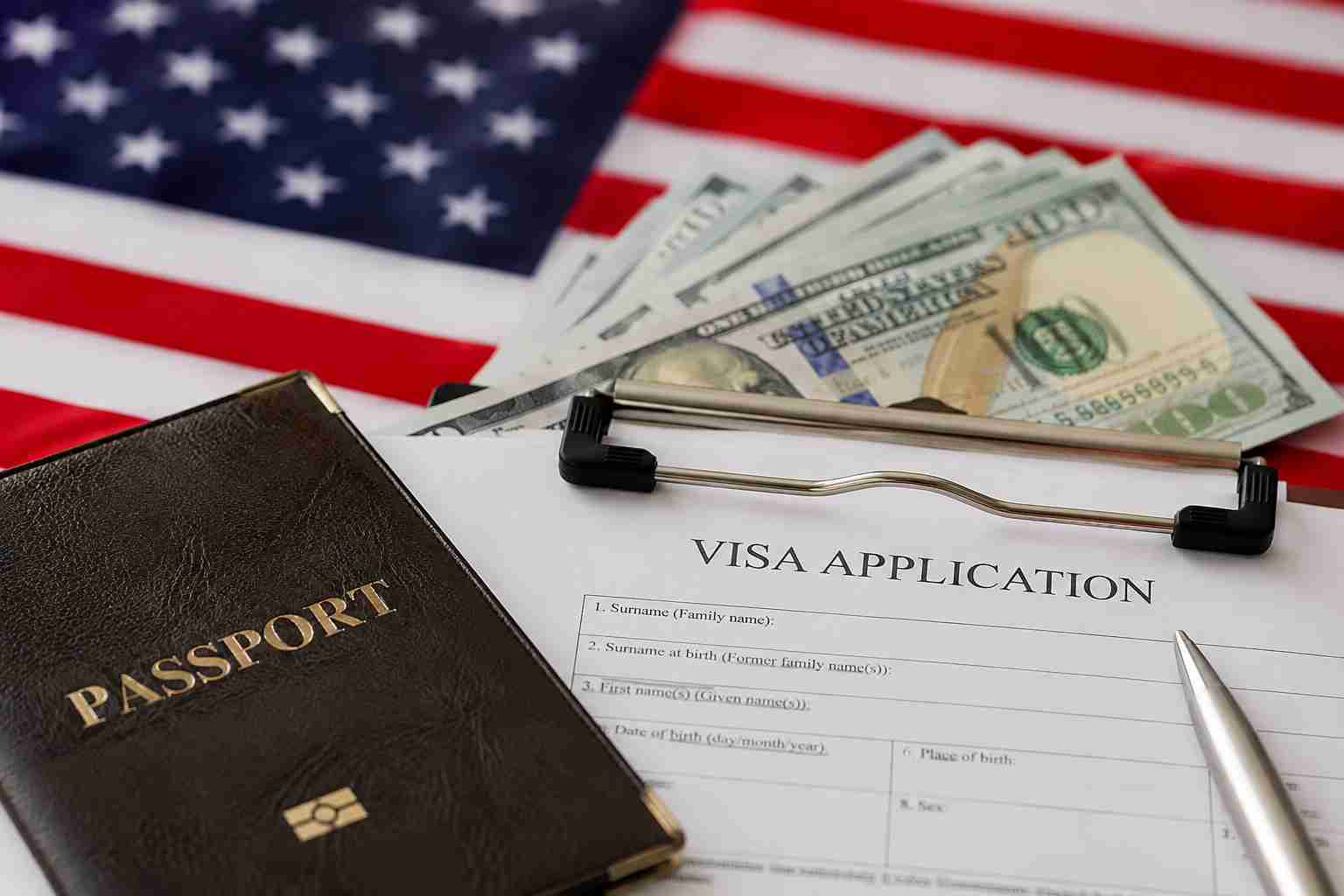
Indian B-1 and B-2 Visa Applicants Remain Unaffected as State Department Finalizes Visa Bond Program
WASHINGTON, D.C. — The U.S. State Department has permanently adopted a visa bond program that allows consular officers to require certain nonimmigrant visa applicants to post a refundable bond of up to $20,000 before receiving a visa. The policy, which takes effect on August 3 after publication in the Federal Register, is designed to reduce visa overstays and currently applies to applicants from 50 designated countries.
India is not included in the list of participating countries, meaning Indian citizens applying for B-1 business visas or B-2 tourist visas will continue to follow the existing application process without being required to pay a visa bond.
The decision follows a year-long evaluation of a pilot program introduced in 2025. According to the State Department, the trial demonstrated that requiring financial bonds encouraged travelers to comply with the terms of their authorized stay in the United States, prompting the agency to make the measure permanent.
Permanent Policy Builds on 2025 Pilot Program
The visa bond initiative was first introduced as a pilot program aimed at discouraging visa overstays by requiring selected applicants to provide a refundable financial guarantee before a visa could be issued.
Following the review period, the State Department determined that the program had achieved its intended objective of improving compliance with U.S. immigration rules. As a result, the agency has incorporated the program into its permanent immigration framework.
The regulation authorizes U.S. consular officers to determine, on a case-by-case basis, whether an eligible applicant must post a bond before receiving a nonimmigrant visa. Under the finalized rule, the bond amount can be as high as $20,000, depending on the applicant’s individual circumstances.
According to the Federal Register notice, covered nonimmigrant visa applicants may be required to post a bond as a condition of visa issuance.
Countries Covered Under the Program
The permanent visa bond requirement is limited to applicants from 50 designated countries seeking B-1 business visas or B-2 tourist visas.
Among South Asian nations included in the program are Bangladesh, Nepal, and Bhutan. India, however, is not part of the current list, leaving Indian applicants exempt from the bond requirement.
The State Department has indicated that the list is subject to future review and may be expanded if officials determine that additional countries should be included. No timetable has been announced for any potential changes.
For now, Indian travelers applying for business or tourist visas will continue using the standard visa application process without any additional financial bond.
Higher Maximum Bond Introduced
The permanent regulation introduces several notable changes compared with the pilot version launched in 2025.
During the trial phase, consular officers could require applicants to post bonds of $5,000, $10,000, or $15,000. Under the new permanent framework, the lowest $5,000 option has been eliminated while the maximum bond amount has increased to $20,000.
The revised structure gives consular officers broader discretion when determining the appropriate bond amount based on an applicant’s individual risk profile and circumstances.
Officials say the financial bond is intended to encourage travelers to depart the United States before their authorized stay expires, thereby reducing instances of visa overstays while allowing legitimate travel to continue.
Immigration Groups Raise Concerns
The decision to make the visa bond program permanent has drawn criticism from immigration advocates and civil rights organizations.
Critics argue that requiring applicants to deposit thousands of dollars before obtaining a visa could discourage legitimate business travelers, tourists, students, and families from visiting the United States. They also contend that the financial burden may disproportionately affect applicants from lower-income countries, creating another obstacle to lawful international travel.
Supporters of the policy, however, maintain that refundable financial bonds provide a practical incentive for travelers to comply with U.S. immigration laws without eliminating legal pathways for obtaining visas.
Part of Broader Immigration Enforcement Strategy
The permanent visa bond rule is part of a broader effort by the administration of President Donald Trump to strengthen immigration enforcement and improve compliance with visa conditions.
U.S. officials have repeatedly identified reducing nonimmigrant visa overstays as a key enforcement priority. While the State Department has not announced plans to immediately expand the program beyond the current 50 countries, officials have confirmed that additional nations could be added through future policy reviews.
At present, Indian citizens applying for B-1 business or B-2 tourist visas remain unaffected by the permanent visa bond program and are not required to post a financial bond as part of the application process.
