


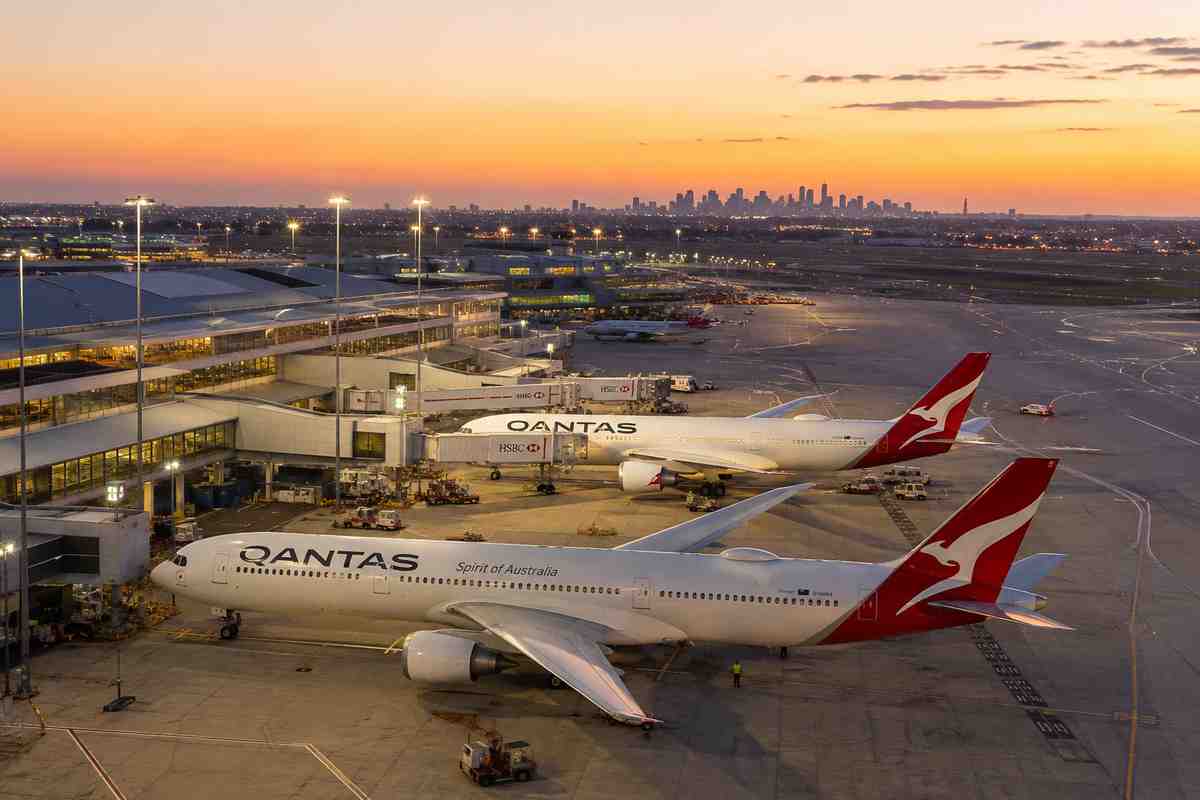
Qantas Partnership Supports New Long-Haul Routes, Terminal Upgrades, and Third Runway Development
MELBOURNE, Australia — Melbourne Airport is moving ahead with a A$4.5 billion redevelopment program that is expected to reshape international travel in Victoria, following a long-term commercial agreement with Qantas. The project combines a major expansion of the airport’s international terminal with plans for a third runway, positioning Melbourne as a stronger global aviation hub while reducing the need for travelers to connect through Sydney for many overseas destinations.
The redevelopment includes five new widebody aircraft gates, expanded passenger processing facilities, advanced baggage technology, and a new Qantas international business lounge. It also supports the airline’s plans to base Airbus A350-1000LR aircraft in Melbourne, opening the door for additional long-haul international services.
While the airport’s third runway is scheduled to become operational in 2031, several terminal improvements are expected to be completed earlier, enhancing the travel experience and increasing capacity for international airlines.
Qantas Expansion to Strengthen Melbourne’s Long-Haul Network
Airbus A350-1000LR Fleet to Support New International Destinations
One of the most significant outcomes of the agreement is Qantas’ decision to station several Airbus A350-1000LR aircraft at Melbourne Airport. The aircraft are separate from the airline’s Project Sunrise fleet and are intended to expand the carrier’s long-haul operations from Victoria.
The additional aircraft will give Qantas greater flexibility to launch nonstop services to destinations that are currently beyond the reach of its Melbourne network. Although the airline has not identified specific routes, the A350-1000LR’s range could support direct flights to cities across North America, South America, Africa, and Asia where nonstop connections are currently limited or unavailable.
The move follows the successful arrival of Qantas’ Airbus A350-1000ULR in Melbourne after a nonstop demonstration flight from Toulouse, highlighting the airport’s readiness to handle ultra-long-haul aircraft ahead of the planned infrastructure expansion.
Industry analysts say the aircraft deployment could strengthen Melbourne’s position as an international gateway and provide Victorian travelers with more direct overseas options without first connecting through Sydney.
Major Terminal Upgrades Designed to Improve Passenger Experience
New Gates, Faster Processing, and Expanded Premium Facilities
The redevelopment extends well beyond runway infrastructure, with substantial investments planned for Melbourne Airport’s international terminal.
The project will introduce expanded premium check-in areas, automated baggage drop systems, baggage tracking technology, and early baggage storage facilities aimed at improving operational efficiency and reducing passenger wait times.
Airport operators also plan to enlarge international check-in and baggage reclaim halls while constructing five additional widebody aircraft gates. The added capacity is expected to ease congestion during peak travel periods and improve flexibility for airlines operating larger, long-haul aircraft.
As part of the agreement, Qantas will build a new international business lounge above Terminal 2. The facility is expected to be significantly larger than the airline’s current lounge and is scheduled to open in 2029 as part of the broader terminal redevelopment.
The upgraded facilities are designed to accommodate growing international demand while supporting faster passenger processing through modernized airport technology.
Third Runway to Support Long-Term Growth
New Infrastructure Expected to Increase Capacity by 2031
The long-term agreement also includes a 15-year commitment from Qantas supporting Melbourne Airport’s third runway, a project that recently received federal approval.
The runway is expected to enter service in 2031 and will enable parallel runway operations, allowing more simultaneous aircraft arrivals and departures. Airport officials expect the additional capacity to reduce delays, improve operational resilience, and create room for both existing airlines and new international carriers to expand services.
The expanded infrastructure is also expected to increase competition among airlines, provide greater scheduling flexibility, and offer Victorian travelers more direct international connections instead of relying on domestic transfers through Sydney.
Together, the new terminal facilities, additional widebody gates, advanced passenger technology, and future runway capacity represent one of the largest aviation infrastructure investments in Australia. The redevelopment is expected to support sustained international growth over the next decade while reinforcing Qantas’ long-term network strategy and strengthening Melbourne Airport’s role as a leading gateway for global travel.
