


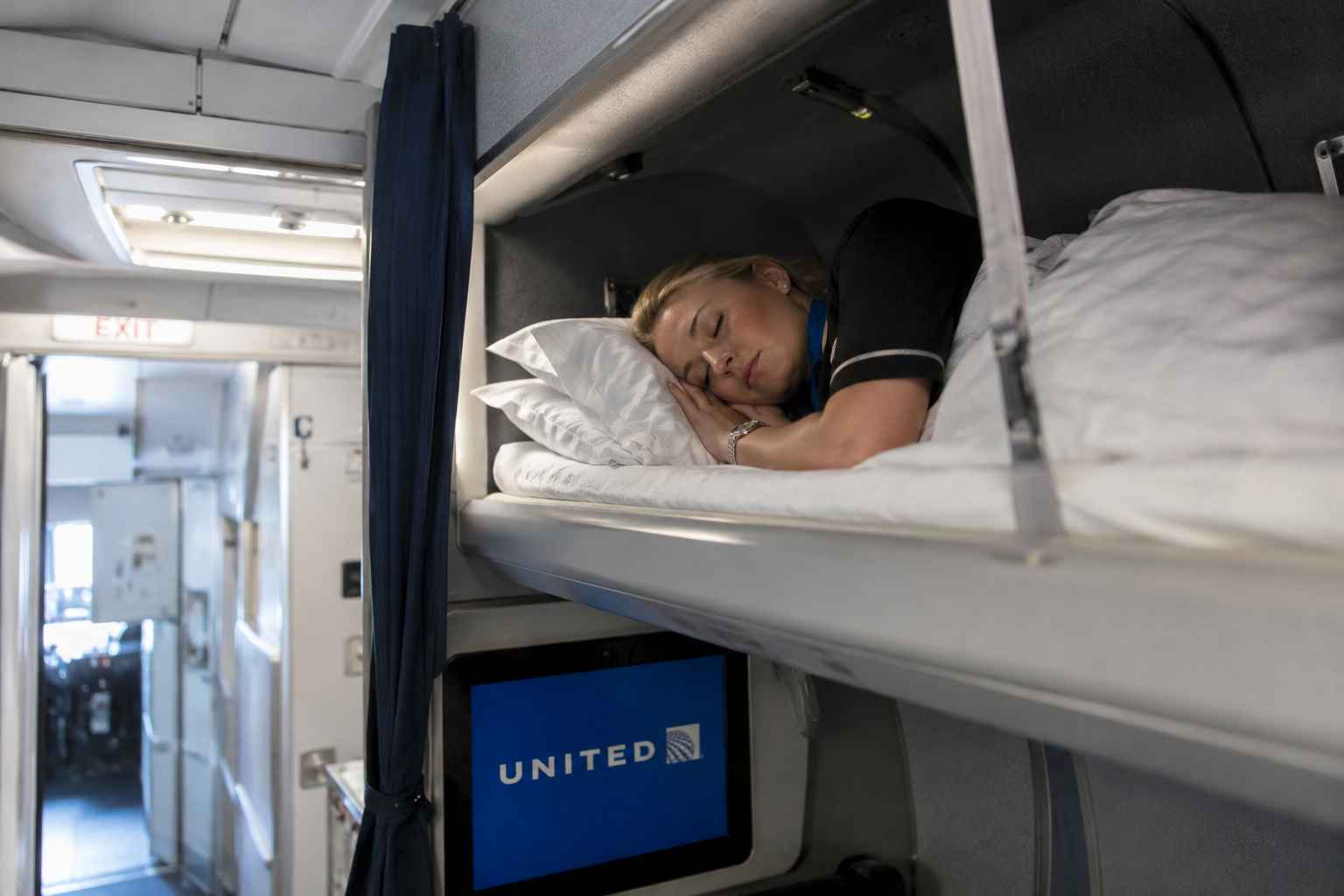
New Policy Allows Qualified Non-Revenue Flight Attendants to Use Crew Bunks Under Specific Conditions
CHICAGO — United Airlines is introducing a new policy that allows eligible flight attendants traveling on non-revenue privileges to use onboard crew rest bunks during certain long-haul international flights, provided specific operational conditions are met. The move is designed to improve rest opportunities for cabin crew members who are assigned jumpseats because all passenger seats on a flight are occupied.
The policy applies to Boeing 777 and Boeing 787 aircraft operating international routes, including flights departing from major hubs such as Chicago O’Hare International Airport. It follows the completion of negotiations between United Airlines and the Association of Flight Attendants (AFA-CWA), establishing formal guidelines for access to overhead crew rest facilities while preserving priority for working cabin crews.
United Finalizes Long-Awaited Crew Bunk Policy
Agreement Establishes Clear Eligibility and Operational Rules
United Airlines has finalized the framework governing access to onboard crew rest bunks for eligible non-revenue, or non-rev, flight attendants.
The benefit was introduced after the airline and the Association of Flight Attendants completed contract negotiations and agreed on procedures for allocating available crew bunk space. While the concept had previously been discussed, implementation was delayed until both sides established rules covering eligibility, operational priorities and access.
The policy is intended to address a common challenge faced by flight attendants traveling on company privileges when flights are completely full. In those situations, non-rev flight attendants may be assigned fold-down jumpseats instead of standard passenger seats, leaving them with limited opportunities to rest during long international flights.
Under the new arrangement, unused crew bunks may be made available when operational requirements allow.
Access Limited to Eligible United Flight Attendants
The policy contains several restrictions that determine who can use the onboard crew rest facilities.
Only United Airlines flight attendants traveling on company privileges who have been assigned a jumpseat are eligible. If a non-revenue traveler receives an available passenger seat, they must remain in that assigned seat for the duration of the flight and cannot move to a crew bunk.
The benefit does not extend to flight attendants from other airlines traveling under reciprocal jumpseat agreements, even if they are qualified to work on the same aircraft type.
Availability also depends on the staffing requirements for each individual flight. Working cabin crew members always receive priority access to the crew rest area, and if every bunk is needed for scheduled crew breaks, no additional space will be offered. Crew bunks are assigned to one individual at a time and cannot be shared.
If more than one eligible non-rev flight attendant is onboard, priority is determined by seniority, with the most senior qualifying employee receiving first access to any available bunk.
Operational Restrictions Govern Crew Bunk Use
Usage Begins Only After Aircraft Reach Designated Altitudes
The agreement also outlines when crew bunks may be occupied during flight.
On Boeing 787 aircraft, eligible non-rev flight attendants may access a crew bunk only after the aircraft has climbed above 15,000 feet. On Boeing 777 aircraft, access begins after reaching 25,000 feet.
During taxi, takeoff, the initial climb, descent and landing, all non-revenue flight attendants must remain secured in their assigned jumpseats.
The policy also requires non-rev flight attendants using crew bunks to avoid interfering with the working crew’s scheduled rest periods or normal cabin operations.
United Airlines managers, including those who previously completed flight attendant training, are excluded from participating in the program under the agreement.
In situations where the operating crew will later require every available bunk, eligible non-rev flight attendants may still use an available bunk temporarily during portions of the flight, such as while meal service is underway, before returning to their jumpseat when scheduled crew rest begins.
Aircraft Design Influences Crew Rest Experience
Crew rest accommodations vary across United’s long-haul fleet.
The Boeing 777-300 is widely regarded by flight attendants as offering one of the airline’s most comfortable Overhead Flight Attendant Rest (OFAR) areas. The bunks provide a consistent layout with reduced cabin noise, creating a quieter environment for rest.
The Boeing 787 also features overhead crew bunks, although flight attendants generally view some bunks as more desirable than others. Certain bunks provide additional privacy, while another offers slightly more space but is located above the aircraft galley, exposing occupants to increased noise during meal preparation and cabin service.
International pursers typically coordinate bunk assignments among working crew members to maintain orderly operations and minimize disruptions during scheduled rest periods.
Policy Reflects Broader Industry Practice
The new benefit brings United Airlines in line with practices already adopted by several other U.S. carriers that permit eligible non-revenue flight attendants to use unused crew rest facilities under controlled conditions.
Although access is limited to specific circumstances, the policy provides a practical solution for flight attendants who might otherwise spend many hours seated in jumpseats during long-haul international flights.
By establishing detailed eligibility requirements and operational procedures, United aims to improve the use of available crew rest facilities while ensuring working cabin crews continue to receive priority access throughout each flight.
