


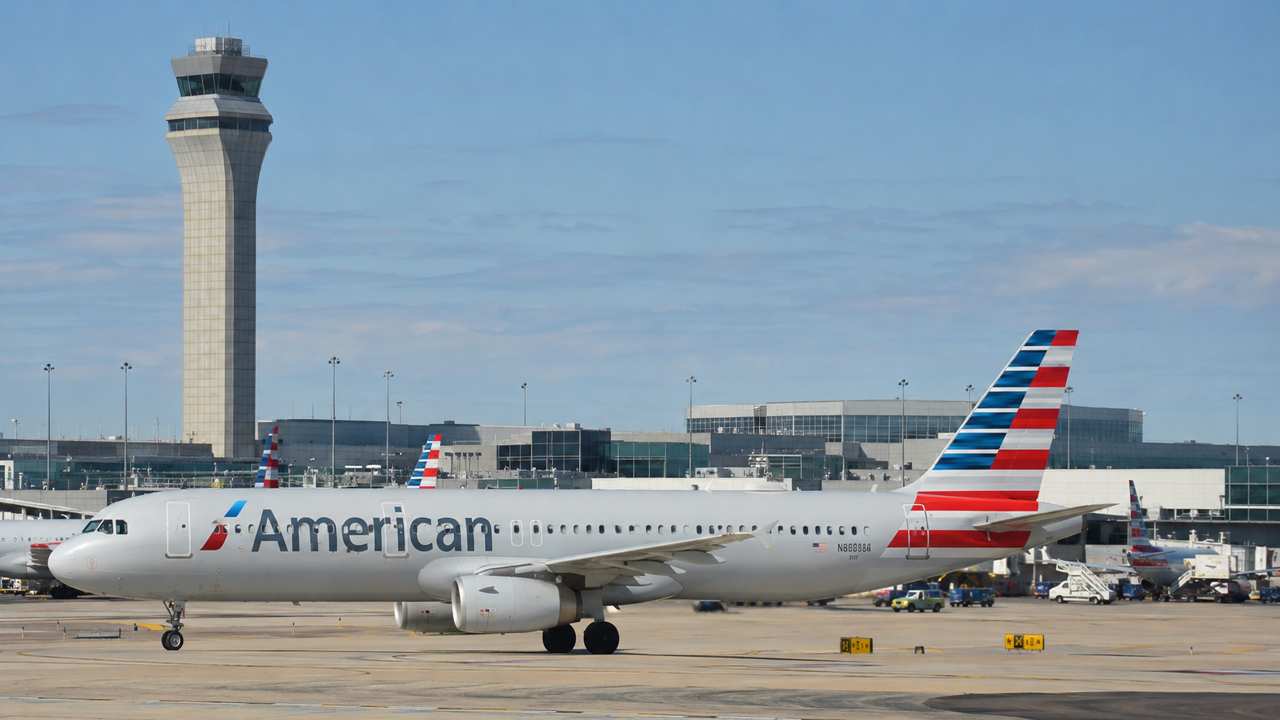
Carrier Expands Aircraft Financing While Advancing Long-Term Fleet Modernization Plans
American Airlines is moving forward with plans to raise $1.325 billion through an aircraft-backed financing transaction that will help fund new aircraft deliveries while reinforcing its long-term fleet modernization strategy. The Fort Worth-based airline intends to secure the debt against a mix of newly delivered aircraft and existing jets, allowing it to continue expanding its premium-focused network without placing additional strain on liquidity.
The financing package is backed by 22 new or recently delivered aircraft and 15 existing Airbus A321 and Boeing 777 aircraft, making it one of the carrier’s largest recent aircraft-backed funding initiatives. Eight of the newly financed aircraft are Embraer E175 regional jets that American will own before leasing them to wholly owned subsidiary Envoy Air for American Eagle operations.
The transaction comes as American continues investing in next-generation aircraft while balancing capital spending against broader financial pressures.
Aircraft Financing Supports Delivery Schedule
Approximately $947 million of the proposed financing is tied to the airline’s 22 new or recently delivered aircraft, while the remaining $377 million is secured against 15 aircraft already in service.
The collateral pool includes:
Aircraft Included in the Financing
According to American’s SEC filings, the financing covers 20 of the airline’s remaining 26 scheduled aircraft deliveries for 2026, including most of its Airbus deliveries, eight Embraer regional jets, and two Airbus deliveries scheduled for early 2027.
The debt offering remains in its preliminary stages, with interest rates and final pricing yet to be determined.
Credit agencies are expected to assign A/A- ratings to the senior tranche and BBB/BBB- ratings to the junior tranche. Those ratings reflect the strength of the aircraft collateral rather than American Airlines’ corporate credit profile, which remains below investment grade with an S&P rating of B+.
The transaction is structured as an Enhanced Equipment Trust Certificate (EETC), a financing mechanism commonly used by airlines that allows lenders to hold aircraft as collateral, reducing borrowing risk and improving bond ratings.
Second Aircraft-Backed Financing This Year
The latest transaction follows another significant financing completed in April, when American raised $1.141 billion through a similar aircraft-backed structure.
That earlier offering, known as the 2026-1 notes, was secured by Airbus A321XLRs, Airbus A321s, Boeing 737 MAX 8s, and Boeing 777-300ERs with a combined collateral value of roughly $1.5 billion.
The April transaction priced at 5.25% for Class A notes and 5.75% for Class B notes, providing investors with a benchmark for the current financing.
Using aircraft as collateral has become an increasingly attractive funding strategy for airlines seeking lower borrowing costs while preserving cash for operations and future investments.
Airbus A321XLR Fleet Continues to Expand
One of the most significant components of American’s fleet strategy is the rapid expansion of the Airbus A321XLR fleet.
The airline operated five A321XLRs as of June and expects five additional aircraft between September 2026 and January 2027, doubling the fleet to ten aircraft if deliveries proceed as scheduled.
The planned delivery schedule includes:
Upcoming A321XLR Deliveries
- One aircraft in September
- One aircraft in November
- Two aircraft in December
- One aircraft in January
The aircraft are expected to support additional premium transcontinental services and expanded transatlantic operations.
American currently has 50 Airbus A321XLRs on order and expects approximately 15 aircraft to be operating by the end of 2026, with most deliveries completed by the end of 2027.
Each aircraft features 20 Flagship Suite business-class seats and 12 Premium Economy seats, making the A321XLR one of the few narrowbody aircraft equipped with enclosed business-class suites.
The aircraft entered domestic service in December 2025 on the New York–Los Angeles route before launching seasonal transatlantic service between New York JFK and Edinburgh in March 2026, making American the first U.S. airline to operate the type across the Atlantic.
Boeing 777-300ER Cabin Upgrades Near Completion
Alongside new aircraft deliveries, American is investing heavily in existing long-haul aircraft.
All 20 Boeing 777-300ERs are undergoing extensive cabin modernization under the airline’s Project Olympus program.
The refurbishment eliminates first class while significantly increasing premium seating capacity. The new configuration replaces the previous layout of 8 first-class, 52 business-class, 24 premium economy, and 216 economy seats with 70 business-class suites, 44 premium economy seats, and 216 economy seats.
The upgraded aircraft will feature the same business-class suites installed on new Boeing 787-9 aircraft and are expected to remain in service into the late 2030s.
American also continues operating 218 Airbus A321-200 aircraft, many of which are expected to remain part of the fleet well into the 2030s and, in some cases, the 2040s.
Fleet Strategy Focuses on Premium Growth and Capital Discipline
Rather than pursuing widespread fleet replacement, American is emphasizing modernization and higher-yield premium travel.
The airline’s long-term strategy centers on six priorities:
Core Fleet Priorities
- Retrofit the Boeing 777-300ER fleet.
- Upgrade Boeing 777-200 and Boeing 787-8 aircraft.
- Extend the operating life of Airbus A321-200 aircraft.
- Expand Airbus A321XLR operations on thinner long-haul routes.
- Increase dual-class Embraer E175 regional flying.
- Finance aircraft deliveries through secured borrowing instead of using cash reserves.
Chief Executive Robert Isom has previously stated that extending the useful life of existing aircraft allows the airline to postpone approximately $7 billion to $9 billion in fleet replacement spending through the end of the decade.
The airline is also evaluating its next widebody aircraft purchase. During the company’s June 2026 annual meeting, Isom said American has issued a request for proposals and is in discussions with both Airbus and Boeing regarding future long-haul aircraft needed to replace Boeing 777s during the 2030s.
American currently has 19 Boeing 787-9 aircraft on firm order, along with 28 purchase options, while its last widebody order was placed in 2018.
Financial Performance Highlights Need for Capital Efficiency
American’s fleet strategy comes as the airline works to improve profitability despite strong revenue growth.
The carrier reported record second-quarter revenue of $16.7 billion, an increase of 16.3% compared with the same period a year earlier. GAAP net income reached $71 million, while adjusted net income totaled $99 million.
However, fuel costs increased by more than $2.2 billion, or 83% year over year, reducing operating margins from 7.9% to 2.7%.
Interest expense also remained significant, totaling $409 million, compared with operating profit of $446 million during the quarter.
American expects full-year adjusted earnings per diluted share to range between a loss of $0.65 and a gain of $0.65, while forecasting third-quarter revenue growth of 16% to 19%.
Chief Financial Officer Devon May said the airline finished the quarter with $11.3 billion in liquidity and expects positive free cash flow for the full year at the midpoint of guidance, while ending 2026 with lower net debt than it carried at the beginning of the year.
Regional Network Continues to Expand
The airline’s regional operation also remains an important part of its network strategy.
Eight Embraer E175 aircraft scheduled for delivery by December will be owned by American and leased to Envoy Air for American Eagle operations.
American’s regional airlines transported 57 million passengers during 2025, with 42% connecting to mainline flights. The remainder traveled exclusively on regional routes.
The regional fleet has steadily shifted toward larger dual-class aircraft. American now operates 508 dual-class regional jets compared with 71 single-class aircraft, a substantial change from 2014, when the fleet included 238 dual-class and 328 single-class regional jets.
The E175 deliveries are part of the airline’s broader 2024 order for 260 aircraft, which included 85 Airbus A321neos, 85 Boeing 737 MAX 10s, and 90 Embraer E175 regional jets, underscoring American’s long-term commitment to expanding both its mainline and regional operations while maintaining financial flexibility.
