


Maiden Test Marks New Milestone for China’s Indigenous Passenger Aircraft Program
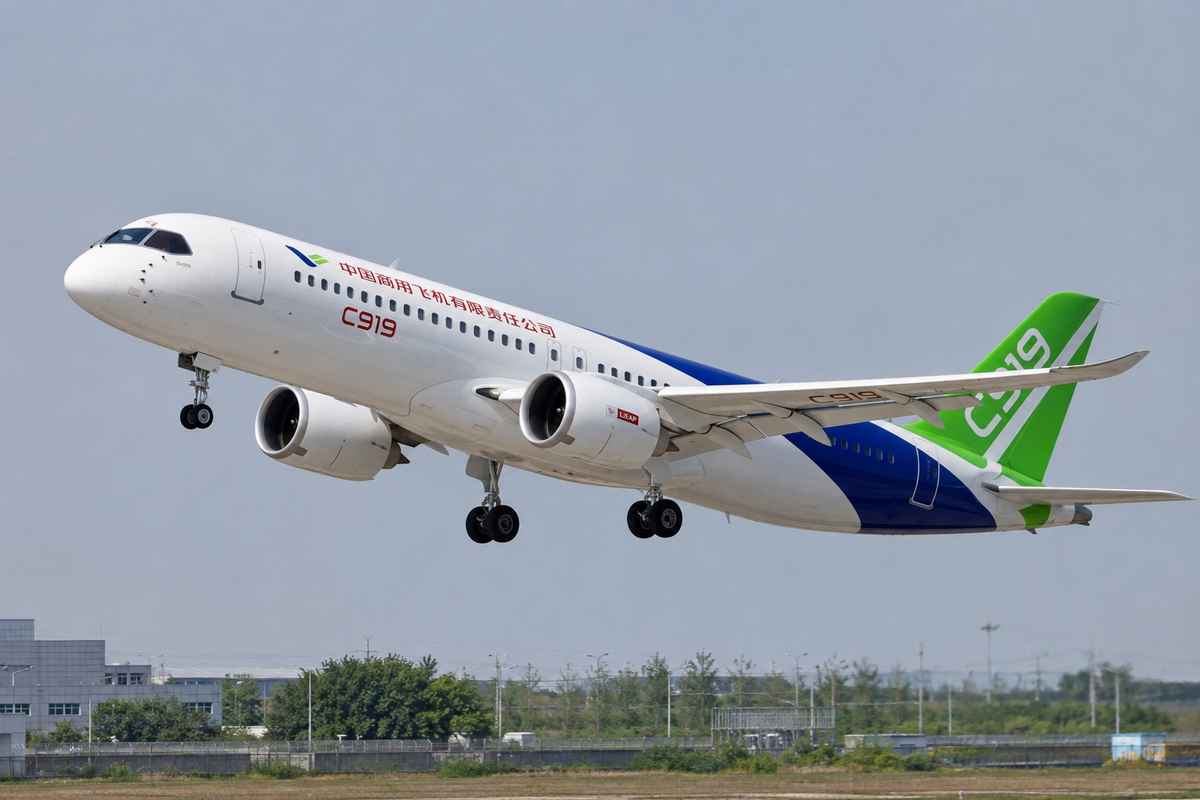
BEIJING — China’s Commercial Aircraft Corporation of China (COMAC) has completed the maiden flight of a specialized high-altitude version of its C919 passenger jet, marking another milestone in the development of the country’s homegrown commercial aircraft program.
The aircraft completed its inaugural test flight on Wednesday, July 29, 2026, departing from and returning to Shanghai Pudong International Airport (PVG). According to COMAC, the aircraft remained airborne for 1 hour and 59 minutes, successfully completing every planned test objective during the flight.
The successful test advances the development of a version of the C919 specifically designed to operate from high-altitude airports, where thinner air presents additional challenges for aircraft performance.
High-Altitude C919 Designed for Challenging Airport Operations
Aircraft Features Structural and System Upgrades
The newly developed aircraft is based on the standard C919 but incorporates several engineering modifications intended to improve performance in mountainous regions and at elevated airports.
According to COMAC, the specialized model features a shortened fuselage along with upgraded onboard systems tailored for high-altitude operations. These enhancements are designed to address the operational demands of airports where reduced air density affects engine thrust, aerodynamic performance, and aircraft takeoff capabilities.
Engineers evaluated the aircraft throughout the nearly two-hour test flight, assessing its handling characteristics and system performance against a planned series of flight objectives. COMAC reported that all scheduled test items were completed successfully, allowing the program to advance to the next stage of flight testing and certification.
Unlike the standard C919, which accommodates between 158 and 192 passengers, the high-altitude version has been optimized for routes serving airports located at significant elevations. The specialized aircraft is expected to support airlines operating in western China and other mountainous regions where airport elevations can exceed 3,000 meters, particularly across the Tibetan Plateau.
The development reflects growing demand for aircraft capable of operating efficiently under the unique environmental conditions found at high-altitude airports, where lower air pressure can reduce engine efficiency and require different aircraft performance characteristics.
C919 Program Continues to Expand
China’s Narrowbody Aircraft Reaches New Development Stage
The C919 is China’s first domestically developed narrowbody passenger aircraft built in accordance with internationally recognized airworthiness standards. The program represents a key component of China’s long-term strategy to establish an independent commercial aircraft manufacturing industry capable of competing in the global aviation market.
Development of the aircraft has progressed steadily over the past decade. Final assembly of the first C919 was completed in November 2015, followed by its maiden flight in May 2017.
A major regulatory milestone came in September 2022, when the aircraft received its type certificate from the Civil Aviation Administration of China (CAAC), clearing the aircraft for commercial operations.
COMAC delivered the first production C919 in December 2022, and the aircraft entered commercial passenger service in May 2023. Since then, several Chinese airlines have incorporated the aircraft into their fleets, operating domestic routes throughout China’s expanding aviation network.
The introduction of a specialized high-altitude variant represents the latest effort to broaden the C919 product family beyond its standard configuration and expand its operational capabilities.
Certification Process and Future Operations
Additional Flight Testing Planned Before Commercial Service
Following the successful maiden flight, COMAC is expected to continue an extensive flight-test campaign to validate the aircraft’s systems, flight characteristics, and operational performance under a variety of conditions before seeking regulatory certification.
High-altitude airports require aircraft to meet unique operational requirements because thinner air reduces lift and engine performance, often necessitating specialized aircraft configurations or operational procedures.
If certified, the high-altitude C919 could provide airlines with an aircraft better suited for serving airports in elevated terrain, improving connectivity for remote regions while expanding the operational flexibility of China’s domestically developed passenger aircraft.
The latest test flight also underscores COMAC’s ongoing efforts to diversify the C919 platform as it continues developing variants tailored to different market segments and operating environments. Successful certification and future commercial deployment of the high-altitude model would further strengthen the manufacturer’s portfolio while supporting airlines operating routes where conventional aircraft performance can be constrained by elevation.
