


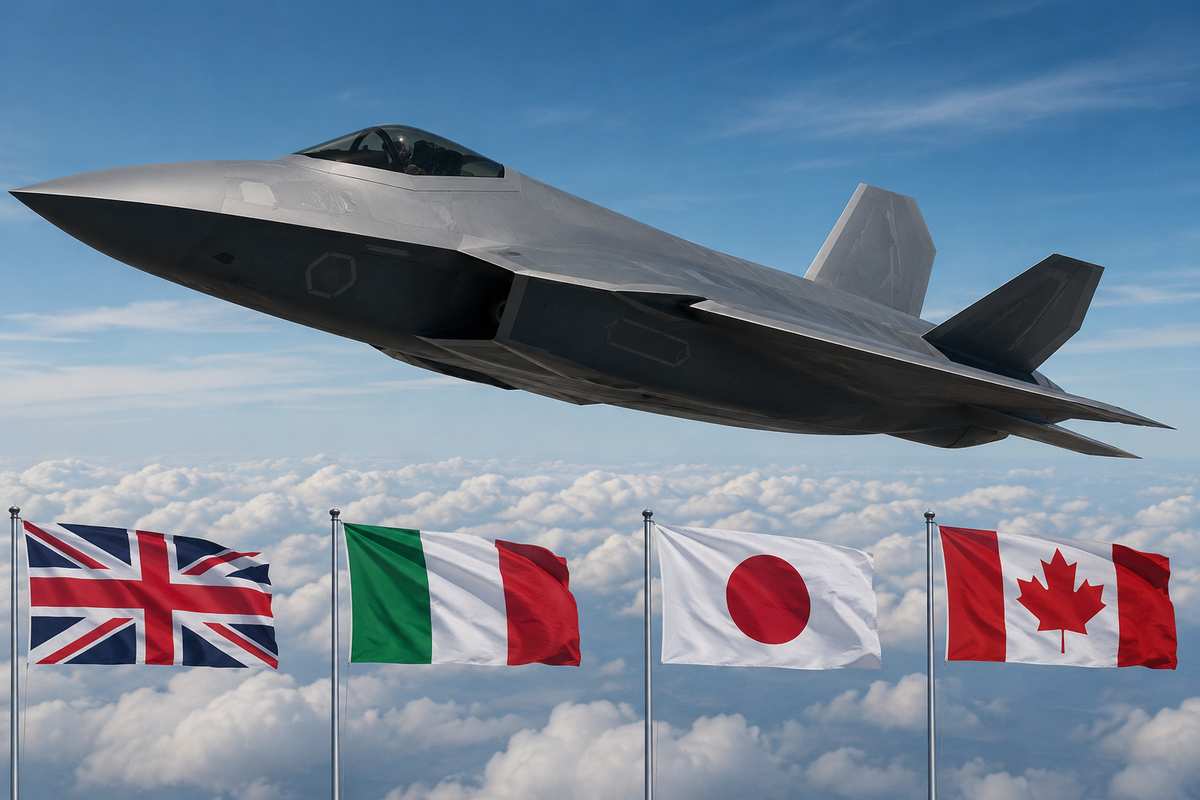
Canada Gains Classified Access to UK, Italy, and Japan’s Next-Generation Combat Aircraft Initiative
FARNBOROUGH, England — Canada has officially become the first observer nation in the Global Combat Air Programme (GCAP), a multinational effort led by the United Kingdom, Italy, and Japan to develop a sixth-generation stealth fighter expected to enter service by 2035.
The announcement was made during the Farnborough International Airshow near London Heathrow Airport, where defense officials from the four countries outlined an expanded framework for cooperation on one of the world’s most advanced military aviation programs.
Canada’s participation provides government and military officials with access to classified technical discussions surrounding the aircraft’s development, marking a significant milestone in the country’s long-term defense modernization strategy. While the observer role stops short of committing Ottawa to purchasing the future fighter, it offers an opportunity to assess the program’s technological, industrial, and operational potential alongside its international partners.
The move comes as Canada continues modernizing its air force through the acquisition of Lockheed Martin F-35 Lightning II fighters, with the first aircraft expected to enter service later this year. Officials say the new observer status allows the country to prepare for the next generation of combat aviation technologies while maintaining flexibility over future procurement decisions.
Canada Evaluates Long-Term Role in Sixth-Generation Fighter Development
Observer Status Opens Door to Future Partnership
Canada’s entry into GCAP follows growing efforts by the federal government to diversify its defense partnerships and participate in emerging military technologies beyond its current procurement programs.
According to reports, the observer role grants Canadian defense officials access to classified discussions involving the design, development, and operational planning of the sixth-generation fighter. It also allows Canada to evaluate potential contributions by its defense industry and military institutions without making an immediate financial or procurement commitment.
Royal Canadian Air Force Commander Lt.-Gen. Jamie Speiser-Blanchet said the new status creates a realistic pathway toward full partnership in the future.
She noted that Canada could eventually contribute to development efforts while operating the aircraft alongside allied nations if the government decides to proceed.
Defence Minister David McGuinty described the decision as a gradual process rather than a commitment to procurement. He said Ottawa intends to evaluate the benefits step by step before making any future purchasing decisions.
The announcement also aligns with Prime Minister Mark Carney’s broader strategy of strengthening defense cooperation with a wider range of international partners while maintaining Canada’s commitments to NATO and North American security.
Sixth-Generation Aircraft Seen as Next Phase of Air Combat Evolution
Program Intended to Complement Existing F-35 Fleet
Canadian defense officials emphasized that participation in GCAP is not intended to replace the country’s existing fighter modernization program centered on the F-35. Instead, the initiative is viewed as a long-term investment in understanding technologies expected to shape military aviation beyond the current generation of aircraft.
Military planners increasingly view sixth-generation fighters as essential to maintaining air superiority against rapidly evolving threats. Future aircraft are expected to feature enhanced stealth characteristics, advanced electronic warfare systems, greater computing power, and seamless integration with autonomous platforms and networked battlefield systems.
As several nations continue developing technologies capable of detecting current fifth-generation aircraft, defense planners believe additional advances in survivability and electronic warfare will become increasingly important over the coming decades.
Canadian officials are also examining opportunities for domestic aerospace companies to participate in the program by contributing engineering expertise, advanced manufacturing capabilities, or specialized components. Such participation could strengthen Canada’s defense industrial base while creating opportunities for future exports and high-value technology development.
In addition, the Royal Canadian Air Force has identified Canada’s Arctic environment as a potential testing location for future combat systems, providing unique operational conditions that could support development and evaluation activities.
Strategic and Industrial Benefits Extend Beyond Aircraft Procurement
Government officials view early involvement in GCAP as an opportunity to secure a position within one of the world’s most ambitious future defense programs. Access to collaborative research, advanced technologies, and multinational industrial partnerships could deliver long-term economic benefits regardless of whether Canada ultimately purchases the aircraft.
Maintaining interoperability with allied forces also remains a key strategic objective. Although the United States is pursuing its own sixth-generation platform, known as the F-47, Canadian defense planners expect future combat aircraft from allied nations to exchange data, coordinate missions, and operate together in increasingly complex multinational operations.
BAE Systems, the United Kingdom’s lead industrial partner for GCAP, has stated that the aircraft is being designed to integrate with both current and future combat aircraft across allied nations.
With observer status now secured, Canada has positioned itself to closely monitor the evolution of one of the world’s most advanced combat aircraft programs while preserving flexibility as it shapes its future air combat strategy through the next decade.
