


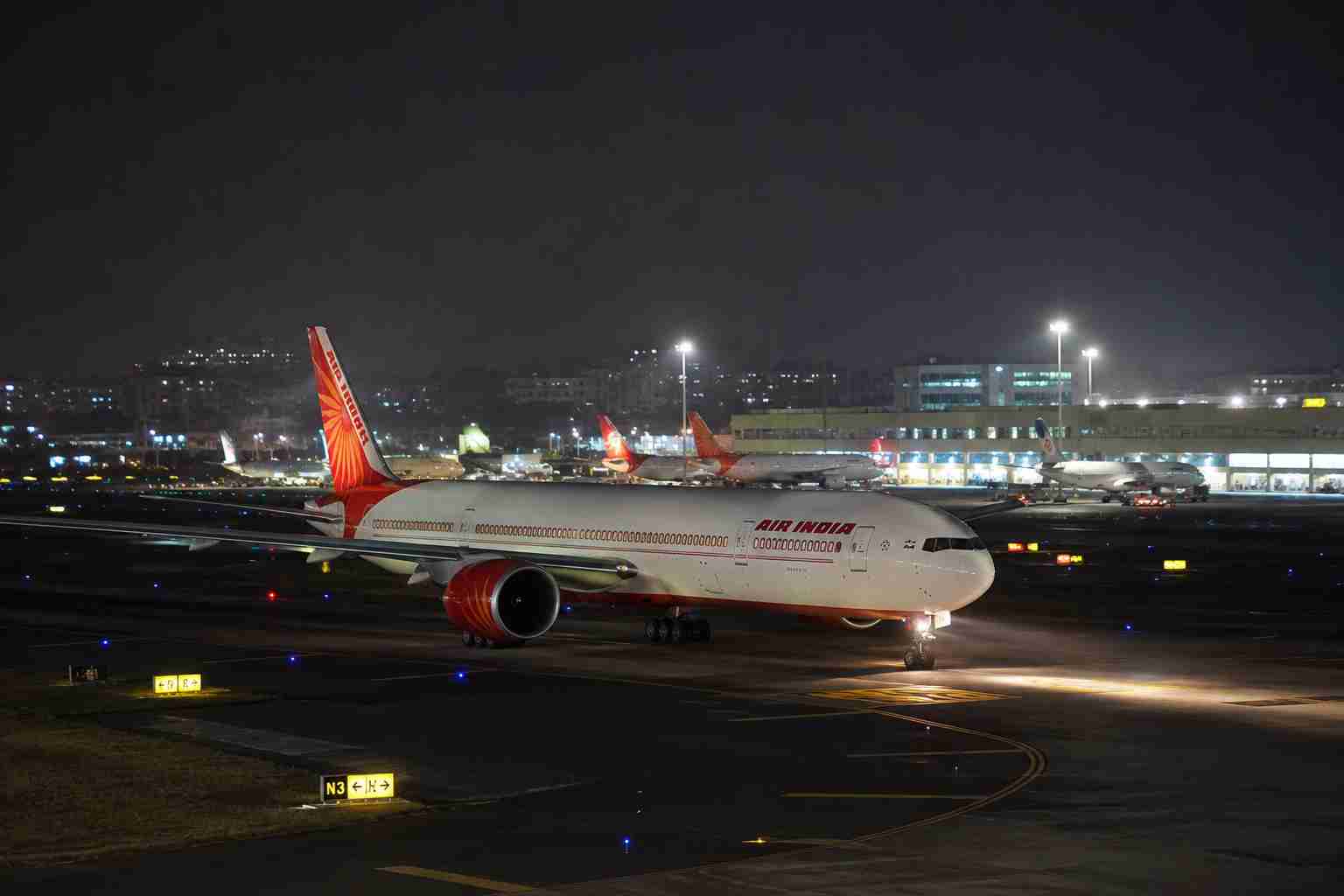
An Air India Boeing 777 bound for New Delhi was forced to abort its takeoff at Mumbai’s Chhatrapati Shivaji Maharaj International Airport on Tuesday evening after air traffic controllers instructed the flight crew to discontinue the departure due to another aircraft remaining on the runway.
The aircraft, operating as flight AI816 from Mumbai to Delhi, had already begun its takeoff roll when air traffic control (ATC) issued the order to stop. The crew immediately complied with the instruction, bringing the aircraft to a halt and returning it to the parking bay for further inspection.
The incident highlights the critical role of air traffic control and established safety procedures in preventing potential runway conflicts at one of India’s busiest airports.
Air India Flight Returns to Bay After Takeoff Is Discontinued
According to Air India, the flight crew halted the takeoff after receiving instructions from air traffic control. The airline confirmed that the aircraft safely returned to the bay following the aborted departure.
While Air India did not initially provide details about the reason behind the ATC instruction, airport sources indicated that an Air India Express Boeing 737 had not yet vacated the runway after landing. The presence of the aircraft on the active runway reportedly prompted controllers to direct the Boeing 777 crew to stop the takeoff immediately.
The action ensured that the departing aircraft did not continue its acceleration while another plane remained on the runway, eliminating any possibility of a runway incursion or collision.
Runway Occupancy Triggers Precautionary Response
Airport sources familiar with the matter said the Air India Express aircraft had landed and was still on the runway when flight AI816 began its departure sequence. Upon recognizing the situation, controllers instructed the Air India flight to discontinue the takeoff.
Commercial aviation procedures require aircraft to maintain clear runway separation at all times. If a runway is occupied or there is uncertainty about its availability, air traffic controllers can direct pilots to reject or abort a takeoff even after the aircraft has started moving down the runway.
Such decisions are considered precautionary measures designed to maintain the highest safety standards and prevent potential operational hazards.
Airline Begins Safety Checks and Passenger Reaccommodation
Following the aborted takeoff, Air India said the Boeing 777 would undergo routine inspections in accordance with the carrier’s standard operating procedures before being cleared for further operations.
In a statement, the airline said: “The aircraft will undergo necessary checks as per standard operating procedures. Meanwhile, alternative arrangements are being made to fly the passengers to their destination at the earliest. At Air India, the safety and wellbeing of our passengers remain top priority.”
The airline did not immediately provide details on the number of passengers affected or the expected timeline for the aircraft’s return to service.
Airlines typically conduct technical and operational inspections after a rejected takeoff to ensure all systems remain fully functional before an aircraft is released for another flight. These checks can include examinations of braking systems, tires, and other components that may have been subjected to additional stress during the maneuver.
Safety Protocols Take Priority During Airport Operations
The incident underscores the importance of coordinated communication between pilots and air traffic controllers in managing airport operations safely. While aborted takeoffs can cause delays and inconvenience for travelers, aviation experts consider them a vital safety tool when conditions on the runway change unexpectedly.
Air India emphasized that passenger safety remained its primary concern throughout the event. By following ATC instructions and established operating procedures, the flight crew ensured that the situation was handled without injury or damage.
The airline continues to arrange alternative travel options for affected passengers while the Boeing 777 undergoes the required inspections before resuming service.
