


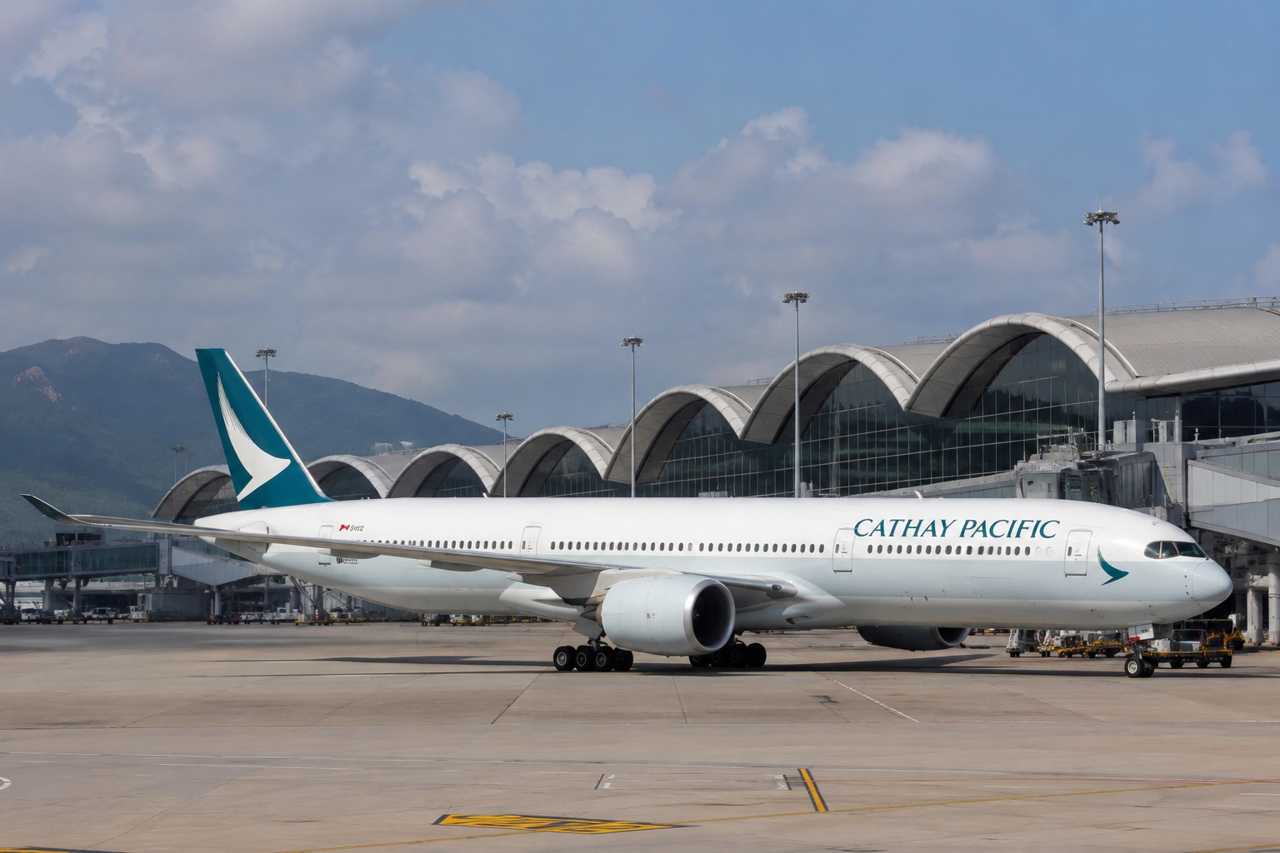
Carrier Plans Further Fleet Growth Beyond Existing 100-Aircraft Backlog
HONG KONG — Cathay Pacific Airways is preparing for another major phase of expansion as the airline evaluates additional aircraft purchases to support long-term growth in both passenger and cargo markets.
The Hong Kong-based carrier said it is considering new aircraft orders and the possible exercise of existing purchase options as it positions itself to take advantage of increased airport capacity and recovering global travel demand.
The expansion plans come as Hong Kong International Airport continues developing its three-runway system, a project expected to significantly boost the airport’s operational capacity and strengthen the city’s role as a major aviation hub in Asia.
Chief Executive Ronald Lam said the airline sees substantial opportunities for growth over the coming decade and intends to continue strengthening its fleet strategy.
Cathay Pacific is already managing an orderbook of more than 100 aircraft, including Boeing 777X widebody jets, Airbus A350 freighters, and Airbus A320neo-family aircraft for its low-cost subsidiary HK Express.
Speaking on the sidelines of an aviation summit in Rio de Janeiro, Lam confirmed the carrier is assessing further investments across widebody, narrowbody, and cargo aircraft categories.
Hong Kong’s Three-Runway Expansion Drives Long-Term Strategy
Cathay Pacific’s latest expansion plans are closely tied to infrastructure developments at Hong Kong International Airport. The airport’s three-runway system is expected to provide airlines with greater scheduling flexibility, increased flight frequencies, and additional route opportunities.
Lam described the next decade as a period of major growth potential for the Cathay Group, noting that the expanded airport infrastructure would allow the airline to scale operations more efficiently.
The airport expansion is considered critical to maintaining Hong Kong’s competitiveness against other major Asian aviation hubs, including Singapore, Seoul, and Dubai. For Cathay Pacific, the added capacity could support stronger passenger connectivity while also enhancing cargo operations, an area that remains strategically important for the airline.
The company’s cargo division has historically played a significant role in Cathay Pacific’s business model, particularly given Hong Kong’s status as one of the world’s busiest air freight centers.
Additional freighter aircraft acquisitions could therefore become an important part of the airline’s broader growth strategy as global trade volumes continue to recover.
HK Express to Maintain All-Airbus Fleet Structure
Lam also reaffirmed HK Express’ commitment to operating an all-Airbus fleet, signaling that the low-cost carrier is unlikely to introduce Boeing single-aisle aircraft in the near future.
HK Express currently operates Airbus narrowbody aircraft and plans to continue expanding with the same manufacturer as it grows its regional route network.
Maintaining a single-manufacturer fleet allows airlines to simplify pilot certification requirements, streamline maintenance operations, and reduce inventory costs related to spare parts and technical support.
The approach has become common among low-cost carriers globally, where fleet commonality is viewed as a key tool for improving operational efficiency and controlling expenses.
As competition intensifies across Asia’s budget airline market, additional Airbus narrowbody aircraft are expected to support HK Express’ efforts to expand frequencies and add destinations across the region.
Cathay Pacific Targets 10% Capacity Growth Despite Fuel Cost Concerns
Cathay Pacific said it remains on track to achieve approximately 10% capacity growth this year, despite concerns surrounding higher fuel prices linked to geopolitical tensions and conflict in the Middle East.
Lam said the airline does not currently expect major disruptions to its summer schedule and plans to operate all scheduled services during the peak July-to-August travel period.
The comments reflect continued confidence in strong travel demand across international markets, particularly in Asia-Pacific routes where passenger traffic has continued recovering following the pandemic-era downturn.
At the same time, the airline acknowledged that it is closely monitoring fuel price developments. If elevated operating costs continue, Cathay Pacific may consider reducing some flight frequencies in September as part of broader cost management efforts.
Even with those potential adjustments, the airline’s long-term outlook remains centered on expansion.
With additional aircraft acquisitions under consideration and expanded airport infrastructure coming online, Cathay Pacific appears to be positioning itself for sustained growth across both passenger travel and air cargo operations in the years ahead.
