


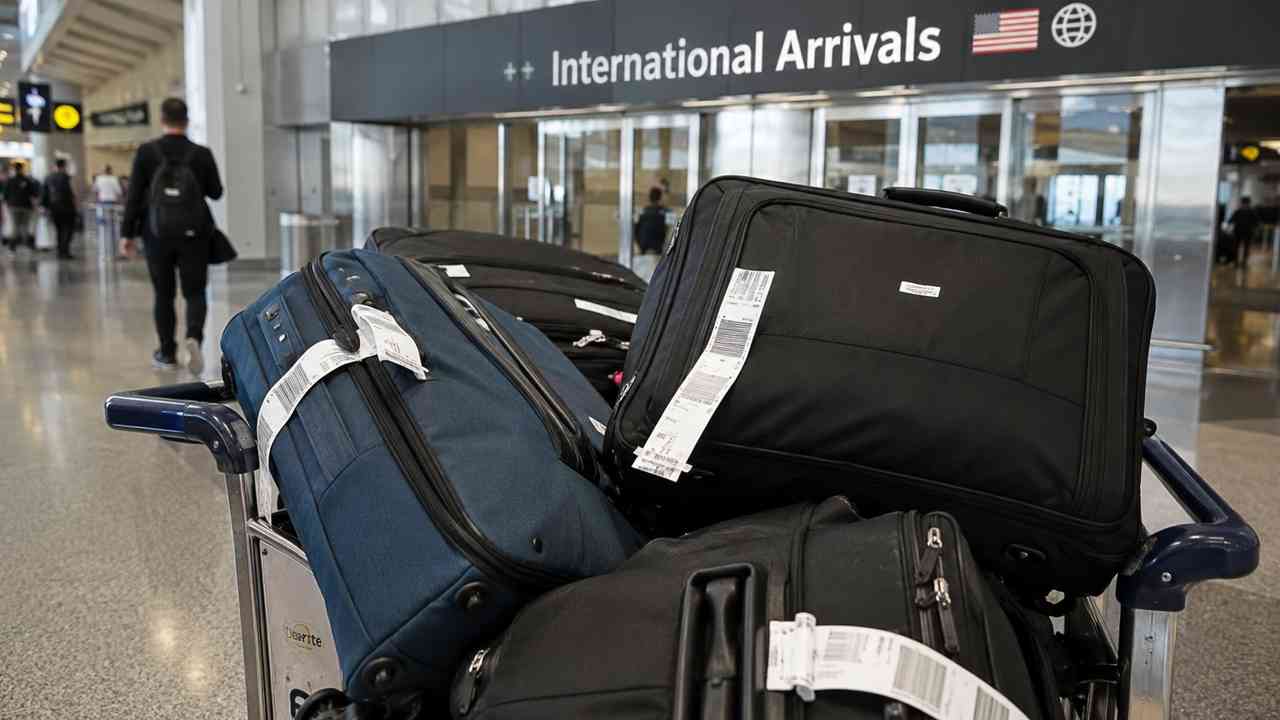
Airport baggage-tag scheme exposes international security vulnerabilities and leaves innocent travelers facing criminal scrutiny abroad
A sophisticated baggage-tag switching operation at Toronto Pearson International Airport has wrongly implicated at least 17 airline passengers in international drug trafficking investigations, according to authorities examining a year-long probe into organized criminal activity inside airport baggage handling systems.
Investigators say travelers departing Canada were unknowingly connected to suitcases loaded with narcotics after baggage tags from their legitimate luggage were allegedly transferred onto drug-filled bags. The incidents have triggered concerns about security weaknesses at one of North America’s busiest airports and the risks posed to unsuspecting passengers traveling internationally.
The cases involve flights departing from Toronto Pearson International Airport, commonly known as YYZ, to destinations including the Dominican Republic, Germany, France, Morocco, Bermuda, the Philippines, and South Korea.
In each instance, authorities initially associated the travelers with illegal narcotics because their names appeared on baggage tags attached to seized luggage. Investigators now believe organized criminal groups exploited airport baggage handling procedures to move drugs across borders while distancing themselves from direct detection.
How the baggage-tag switching scheme works
Authorities say the operation relies on airport insiders with access to restricted baggage handling areas. According to investigators, a corrupt employee removes a baggage tag from a legitimate passenger’s suitcase and attaches it to another bag containing illegal drugs.
If screening systems fail to detect the narcotics, criminal associates can recover the luggage upon arrival at the destination airport while the legitimate traveler remains unaware the baggage swap ever occurred.
The scheme has highlighted vulnerabilities in airport operations despite extensive surveillance systems already in place. Toronto Pearson Airport operates with thousands of security cameras monitoring terminals, baggage facilities, and restricted operational areas. However, investigators believe some sections of the baggage handling network remain susceptible to manipulation.
Law enforcement officials have increasingly focused on insider threats within airport logistics operations, where employees often have access to secure handling zones with limited direct oversight during high-volume baggage transfers.
Innocent travelers detained and investigated
One of the most prominent cases involved a Toronto woman traveling with family members to Auckland through Vancouver International Airport.
According to reports, border officials removed the woman from an aircraft shortly before departure after two suspicious suitcases were allegedly connected to her baggage records. Authorities reportedly discovered more than 20 kilograms of suspected methamphetamine inside the luggage.
Although her name appeared on the baggage tags, the traveler insisted the bags were not hers. She was detained and placed in a holding cell before being released several hours later, according to reporting by CTV News.
After arriving in New Zealand, the woman located her actual luggage in the airport’s unclaimed baggage area. The suitcase reportedly carried replacement handling tags, strengthening suspicions that her original baggage identifiers had been removed and reused in the drug-smuggling operation.
Investigators say several victims in similar cases have discovered tracking devices hidden inside the drug-filled luggage. Authorities believe criminal organizations may use the devices to monitor shipments as they move through international airports and customs systems.
Airport workers arrested in separate investigations
The Royal Canadian Mounted Police has intensified investigations into baggage-tag switching activities over the past year.
Authorities said six baggage and ramp workers connected to separate alleged tag-switching incidents at Toronto Pearson Airport have been arrested as part of ongoing probes into airport-based smuggling networks.
Investigators continue to examine whether the incidents are linked to larger organized crime operations involving international drug trafficking syndicates.
The arrests have renewed scrutiny on airport employee screening procedures and internal monitoring systems designed to detect unauthorized handling of passenger baggage.
Serious consequences for wrongly accused passengers
For innocent travelers, the consequences can be severe and long-lasting, particularly in countries with strict anti-drug trafficking laws.
In one case cited by investigators, three Canadian travelers were jailed in the Dominican Republic after local authorities connected them to suitcases containing dozens of packages of marijuana.
Although officials later determined the luggage did not belong to the travelers, the Canadians reportedly remained stranded abroad for months while the investigation continued.
Legal experts note that international drug trafficking allegations can expose travelers to detention, prolonged legal proceedings, travel restrictions, and reputational damage even when they are ultimately cleared of wrongdoing.
The incidents have intensified calls for stronger baggage verification systems, expanded employee monitoring, and improved coordination between airlines, airport operators, and international law enforcement agencies.
Authorities have not disclosed how many additional cases may still be under investigation, but officials acknowledge the probe into baggage-tag switching operations remains ongoing.
