


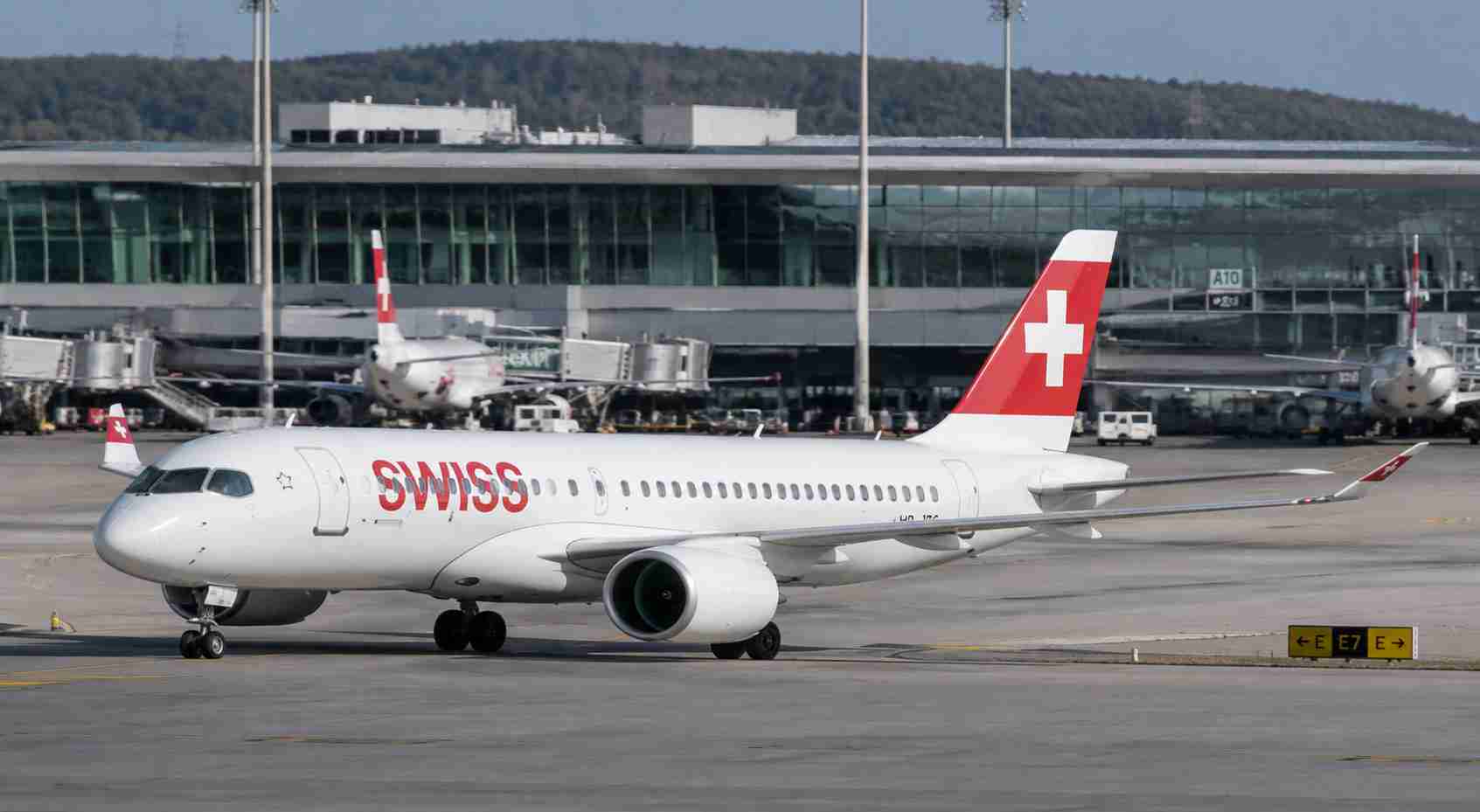
Airline shifts resources to maintain operations as Pratt & Whitney engine supply constraints persist
ZURICH — Swiss International Air Lines is permanently removing two Airbus A220-100 aircraft from its fleet and dismantling them for spare parts and engines, a move aimed at improving the availability and reliability of its larger Airbus A220-300 fleet as industry-wide engine shortages continue to disrupt airline operations.
The carrier confirmed that aircraft registered HB-JBC and HB-JBD, both delivered in 2016, have been placed in storage in Toulouse, France, and will be broken down to provide components and Pratt & Whitney PW1500G engines for use across the airline’s remaining fleet.
The decision underscores the continuing impact of engine supply and maintenance challenges facing airlines worldwide, particularly operators of aircraft powered by Pratt & Whitney’s geared turbofan engine family.
Swiss Prioritizes A220-300 Operations
Swiss became the launch operator of the Airbus A220 program when it introduced the aircraft, then known as the Bombardier CS100, in 2016. Nearly a decade later, the airline is adjusting its fleet strategy to maximize operational efficiency and reduce disruptions caused by limited engine availability.
The two aircraft selected for dismantling were among nine Airbus A220-100 jets that had already been earmarked for temporary withdrawal from service. Rather than returning HB-JBC and HB-JBD to active operations, Swiss will use them as a source of engines and replacement parts for other aircraft.
Internal Parts Supply Seen as Key Advantage
By harvesting components from the retired aircraft, Swiss aims to create a more dependable internal supply of critical parts while reducing the risk of prolonged aircraft groundings.
The airline has indicated that the move is designed to support day-to-day operations and improve fleet reliability rather than signal an immediate end to the Airbus A220-100 fleet. Company officials view the strategy as a practical response to current operational pressures and maintenance constraints affecting the aviation sector.
Engine Shortages Continue to Challenge Airlines
The primary factor behind the decision remains the ongoing shortage of Pratt & Whitney PW1500G geared turbofan engines. The engines power both the Airbus A220-100 and A220-300 and have been subject to extensive inspections and maintenance requirements that have affected operators globally.
Swiss plans to gradually reduce the number of A220-100 aircraft in active service over the coming months. Of the seven remaining aircraft in the subfleet, three are already parked at Toulouse Francazal Airport, while others may be placed into storage for periods of up to 18 months.
Larger Aircraft Offer Better Economics
The redistribution of engines is expected to help keep more Airbus A220-300 aircraft flying. The larger variant seats 145 passengers and delivers stronger operating economics on many of Swiss’ European routes, making it a more attractive option during a period of constrained fleet resources.
Maintaining higher availability of the A220-300 fleet could help the airline preserve schedules and capacity while minimizing the operational impact of engine-related groundings.
Swiss said flight schedules will continue to be adjusted according to aircraft availability and maintenance requirements.
Long-Term Future of A220-100 Fleet Remains Unclear
Despite the dismantling of two aircraft, Swiss has not reached a final decision on the long-term future of the Airbus A220-100 fleet.
According to airline officials, prioritizing the A220-300 currently represents the most effective way to maintain operational stability and manage costs while engine supply challenges persist. The carrier emphasized that the reallocation of engines and components should not be interpreted as a definitive phase-out of the smaller aircraft type.
Instead, Swiss intends to reassess fleet requirements as market conditions evolve and engine availability improves.
The airline continues to face broader challenges linked to Pratt & Whitney’s geared turbofan engine program. In addition to issues affecting its A220 fleet, Swiss confirmed that four Airbus A320neo-family aircraft are currently grounded because of engine-related problems.
As airlines across the industry grapple with maintenance bottlenecks and limited engine availability, Swiss’ decision highlights the increasingly aggressive measures carriers are taking to keep aircraft in service and maintain operational performance.
