


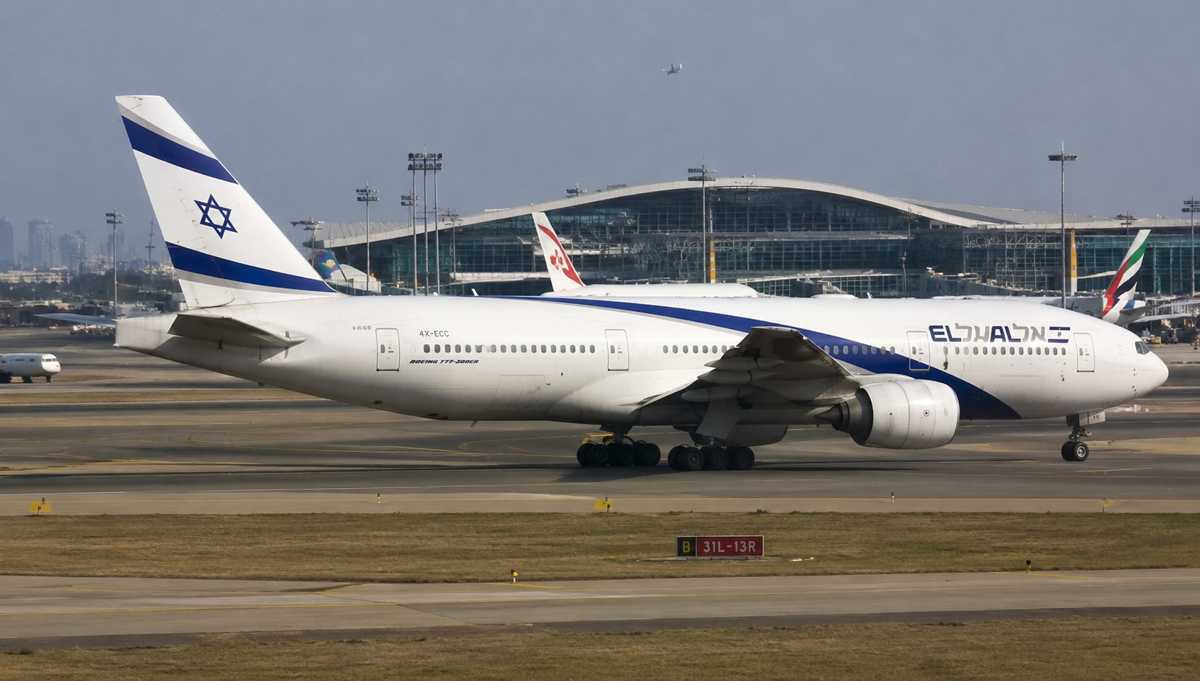
Boeing 777 Arrival Into JFK Draws Attention After Late Fuel-Related Communication
TEL AVIV — An arrival into New York’s busy airspace by an EL AL Boeing 777-200ER has prompted discussion within aviation circles after the flight crew informed air traffic control during final approach that the aircraft could not perform a go-around because of fuel limitations.
The aircraft, operating Flight LY19 from Ben Gurion Airport to John F. Kennedy International Airport on May 20, 2026, ultimately landed safely without injuries or operational disruptions. However, the timing of the communication has raised questions about fuel management procedures and cockpit coordination during the final stages of flight.
The incident involved an Boeing 777-200ER approaching JFK under routine arrival sequencing. Air traffic controllers cleared the aircraft for an Instrument Landing System approach to runway 31R as traffic volume remained heavy at one of the nation’s busiest international gateways.
Controllers initially instructed the crew to maintain a speed of 170 knots before later reducing the requirement to 160 knots. The aircraft remained third in the arrival sequence while transitioning toward landing clearance.
Controllers Noticed Aircraft Slowing During Final Approach
During the latter portion of the approach, tower controllers observed the aircraft reducing speed unexpectedly. According to air traffic control communications, controllers instructed the crew to increase speed and warned that resequencing could become necessary if the aircraft could not maintain the assigned approach profile.
It was during this phase that the crew advised controllers the aircraft was unable to conduct a go-around because of fuel constraints.
The Boeing 777 continued the approach and landed safely on runway 31R without additional complications. The aircraft later taxied normally to its assigned gate at JFK.
According to OMAAT, the communication became a focal point of discussion because the fuel-related concern was not raised earlier in the approach sequence, when controllers potentially would have had more flexibility to provide priority handling or modify traffic flow.
Understanding Fuel Emergency Procedures
Minimum Fuel Versus Fuel Emergency
Commercial aviation relies on standardized terminology to communicate fuel conditions between pilots and air traffic controllers. Aviation regulators, including the Federal Aviation Administration, distinguish between a “minimum fuel” advisory and a formal fuel emergency declaration.
According to Federal Aviation Administration guidance, “minimum fuel” indicates an aircraft has reached a state where little or no additional delay can be accepted. While serious, the designation does not itself constitute an emergency. Instead, it serves as notice that unexpected delays could create a more critical situation.
A fuel emergency, by contrast, signals that the pilot requires immediate priority handling because fuel reserves have reached a critical threshold. Such declarations typically result in direct routing and operational priority from air traffic control.
The distinction carries operational significance at airports such as JFK, where controllers routinely manage tightly coordinated arrival streams involving multiple international and domestic carriers.
Go-Arounds Remain Routine in Busy Airspace
Industry experts note that go-arounds are a normal part of airline operations, particularly at congested airports and during periods of high traffic volume or changing weather conditions. Pilots may be instructed to abandon an approach and reposition for another landing attempt for reasons ranging from unstable approach parameters to runway occupancy conflicts.
Because of that operational reality, airlines typically plan fuel loads that account for contingencies, including alternate airports and potential missed approaches.
The incident involving Flight LY19 has therefore prompted broader discussion among aviation observers about the timing of cockpit communication and whether earlier notification to controllers could have provided greater operational flexibility during the approach.
Neither EL AL nor the Federal Aviation Administration had publicly announced an investigation into the incident as of Wednesday. However, the event has already attracted attention within aviation safety discussions because it highlights the importance of timely communication and fuel planning during long-haul international operations.
Despite the concerns raised by the radio exchange, the flight concluded safely, with no reported injuries to passengers or crew.
