


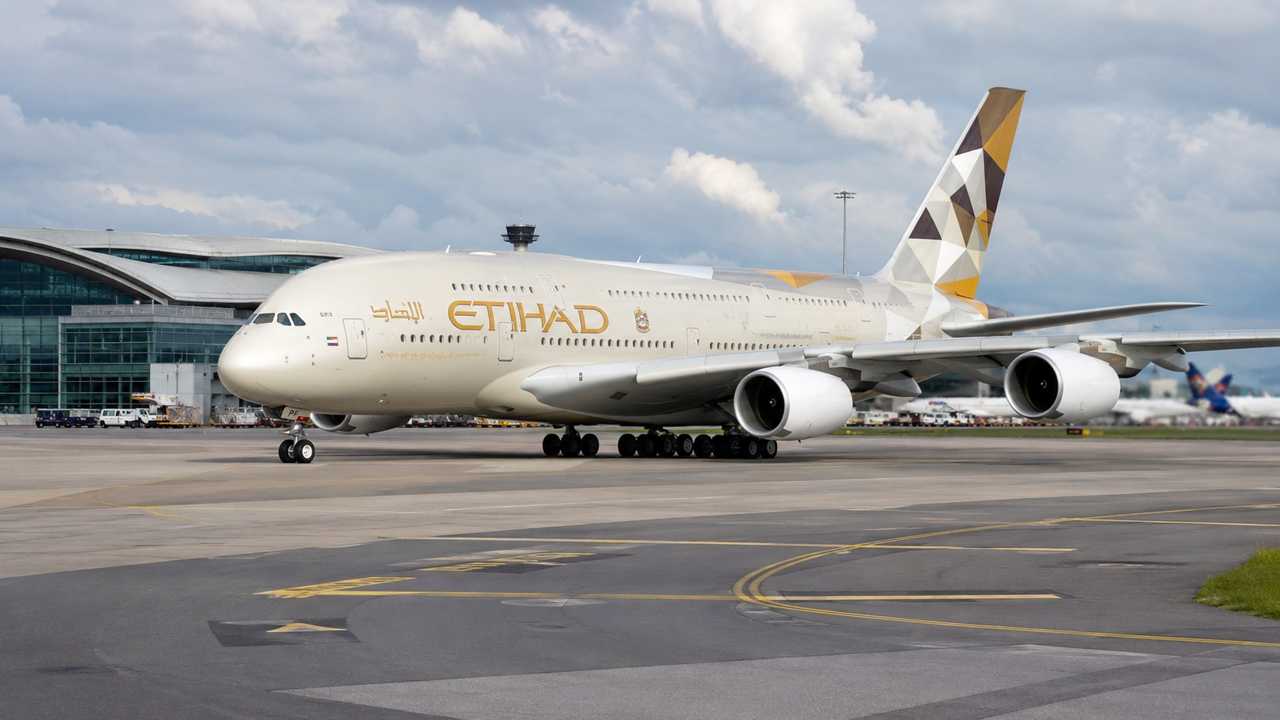
Etihad Flight EY061 Returned Shortly After Departure From Abu Dhabi
ABU DHABI — Etihad Airways confirmed that one of its scheduled long-haul services to London was forced to return to Abu Dhabi shortly after departure on May 20 following the detection of a technical issue onboard.
The affected flight, EY061, departed from Zayed International Airport and was en route to London Heathrow Airport when the crew decided to turn the aircraft around as a precautionary measure.
According to the airline, the aircraft landed safely back in Abu Dhabi after the issue was identified during the early stage of the flight. Etihad stated that passengers would continue their journey to London on a replacement aircraft arranged by the carrier.
The incident also disrupted the airline’s return service, flight EY062 from London Heathrow to Abu Dhabi, resulting in delays for passengers scheduled to travel later that day.
Airline Confirms Technical Problem Prompted Return
Etihad issued an official statement confirming the incident and emphasizing that the decision to return to Abu Dhabi was made in accordance with standard safety procedures.
According to the airline, the aircraft operating flight EY061 turned back “shortly after take-off” after the crew detected a technical irregularity requiring further assessment.
The carrier did not disclose the specific nature of the technical issue and did not identify the aircraft involved in the incident. However, Etihad stressed that safety remained its highest operational priority throughout the event.
Passengers onboard were accommodated after the aircraft’s safe landing, and alternative travel arrangements were put in place to reduce disruption to travelers heading to London.
Industry analysts note that precautionary returns are not uncommon in commercial aviation and are often carried out even when technical concerns are minor. Airlines typically choose to return aircraft to the departure airport when crews identify any issue that requires additional inspection by maintenance teams.
London Heathrow Return Service Also Delayed
The operational impact of the incident extended beyond the outbound Abu Dhabi-to-London service.
Etihad confirmed that EY062, the scheduled return flight from Heathrow back to Abu Dhabi, would also experience delays because of the aircraft rotation change caused by the earlier disruption.
Long-haul international routes frequently rely on tightly coordinated aircraft scheduling, meaning delays involving one aircraft can affect multiple services throughout the day. Aviation carriers often deploy substitute aircraft or adjust schedules to restore normal operations as quickly as possible.
The Abu Dhabi–London Heathrow route is considered one of Etihad’s significant international connections, linking business and leisure travelers between the United Arab Emirates and the United Kingdom. The airline currently operates multiple weekly services on the route using widebody aircraft designed for long-haul operations.
Aviation Safety Procedures Remain Standard Practice
Aviation experts say precautionary diversions or returns are part of globally accepted airline safety protocols and do not necessarily indicate a serious mechanical failure.
Modern commercial aircraft are equipped with advanced onboard monitoring systems that allow pilots and maintenance teams to identify abnormalities quickly during flight operations. When irregularities are detected, flight crews may choose to return to the departure airport or divert to another nearby airport to allow engineers to conduct detailed inspections.
Such decisions are typically made out of caution to ensure passenger safety and maintain operational reliability.
Etihad has not announced whether the aircraft involved will undergo extended maintenance checks before returning to service. The airline also did not provide a timeline for the delays affecting passengers traveling between Abu Dhabi and London at the time of its statement.
The incident comes as airlines worldwide continue to prioritize operational safety amid heavy demand on international long-haul networks and increasing aircraft utilization across major global routes.
