


Cabin Crews Describe the High-Pressure Situations Passengers Rarely See
UNITED STATES — Flight attendants say some of the most demanding moments in commercial aviation happen far from passengers’ view, with emergency evacuations, onboard medical incidents, and disruptive travelers ranking among the most stressful aspects of the profession.
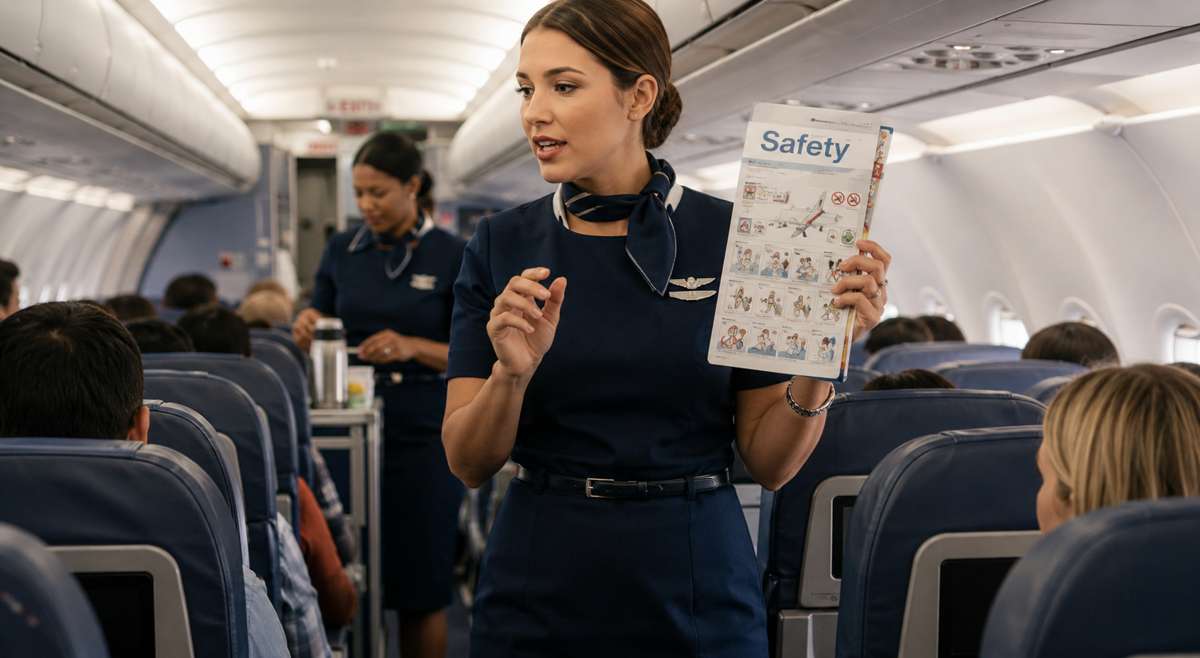
While passengers flying on carriers such as American Airlines, Delta Air Lines, and United Airlines often associate cabin crews with meal service and customer assistance, aviation professionals say their primary role is centered on safety and emergency response.
The insights emerged through interviews with active flight attendants and pilots who described the realities of handling inflight emergencies, including medical situations, evacuations, severe turbulence, and passenger disturbances.
Crew members operating flights from cities including New York City said they are trained to react immediately during emergencies while maintaining calm inside the cabin, even when situations become critical.
Flight Attendants Train for Emergencies Before Entering Service
Evacuation Drills Remain One of the Toughest Exercises
Flight attendants undergo extensive safety instruction before they are permitted to work aboard commercial aircraft. Federal aviation regulations require crews to complete emergency response training that includes evacuation procedures, firefighting techniques, decompression response, and medical emergency management.
Several crew members explained that airline crews are trained to evacuate an aircraft in less than 90 seconds, even in low-visibility conditions or under intense pressure.
The exercises are designed to simulate real-world emergency situations where cabin crews must direct passengers quickly while coordinating with pilots in the cockpit.
Pilots interviewed said flight attendants spend months preparing for situations many may never encounter during their careers. However, aviation professionals emphasized that when emergencies occur at cruising altitude, crews are expected to respond instantly and without hesitation.
Flight attendants also said they are trained to suppress emotional reactions during emergencies in order to focus entirely on passenger safety and operational procedures.
Many passengers, they noted, remain unaware of how serious some inflight incidents can become because crews intentionally maintain calm behavior throughout the event.
Medical Emergencies Are Among the Most Common Inflight Incidents
Cabin Crews Coordinate With Pilots and Ground Medical Teams
Medical emergencies continue to be among the most frequent situations faced by cabin crews worldwide. Flight attendants are trained to identify symptoms quickly, communicate with fellow crew members, and relay information directly to pilots.
When necessary, crews make public announcements requesting assistance from doctors, nurses, or other medically trained passengers onboard.
At the same time, pilots and flight attendants can establish communication with medical experts on the ground to receive real-time guidance on treatment and operational decisions.
Flight attendants explained that commercial aircraft are equipped with emergency medical kits, oxygen systems, and automated external defibrillators designed to stabilize passengers until the aircraft can land safely.
Pilots often rely on recommendations from ground-based medical professionals when deciding whether a flight should continue to its destination or divert to another airport. Those decisions can become especially complex during long-haul flights operating over oceans or remote regions where diversion options may be limited.
Industry experts say the ability of cabin crews to manage medical situations efficiently has become increasingly important as global passenger traffic continues to grow.
Cabin Crews Also Handle Passenger Disruptions and Severe Turbulence
Beyond medical incidents, flight attendants regularly manage disruptive passenger behavior, onboard conflicts, and severe turbulence events that can quickly escalate inside crowded cabins.
Industry analysts say cabin crews are expected to maintain professionalism and authority even during highly stressful conditions.
Several attendants described how passengers rarely witness the pressure crews experience during emergencies because maintaining calm behavior is considered essential to preventing panic onboard.
Aviation experts also noted that the public often underestimates the safety responsibilities associated with the flight attendant profession. While inflight service remains the most visible aspect of the role, emergency preparedness and passenger protection form the foundation of cabin crew operations.
As airlines continue expanding long-haul international routes and passenger numbers rise globally, aviation professionals say flight attendants will play an increasingly important role in commercial aviation safety.
Industry observers added that the extensive emergency training required of cabin crews remains one of the most critical layers of protection in modern air travel.
