


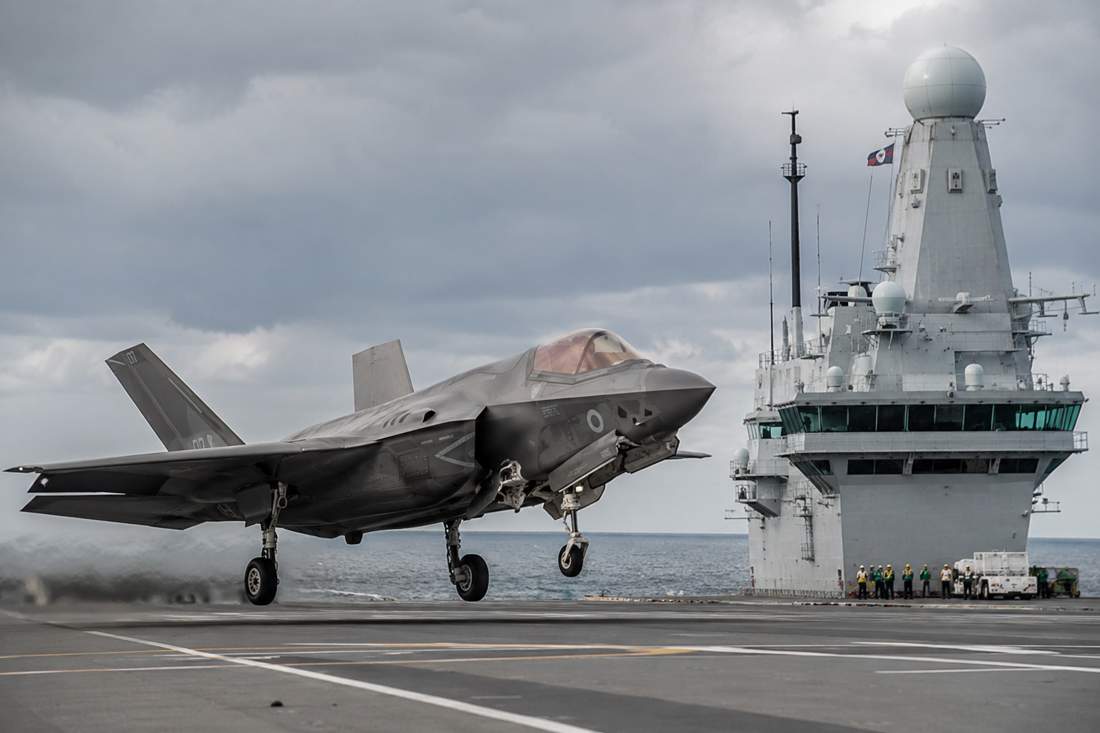
Britain Moves to Arm F-35B Fleet With Boeing StormBreaker Weapons Amid Missile Delays
LONDON — The United Kingdom is moving to strengthen the combat capability of its Lockheed Martin F-35B Lightning II fleet by procuring Boeing’s Small Diameter Bomb II (SDB-II) precision-guided weapon, as delays continue to affect Europe’s MBDA Spear 3 missile integration program.
The decision, confirmed by the UK Ministry of Defence (MoD), comes at a critical moment for Britain’s fifth-generation fighter program as the country also grapples with maintenance and corrosion challenges tied to extended carrier-based deployments.
The acquisition is intended to close what British defense planners have identified as a growing operational capability gap within the Royal Air Force and Royal Navy’s F-35B force, particularly following lessons learned during the 2025 Operation Highmast deployment aboard the aircraft carrier HMS Prince of Wales.
UK Turns to Boeing Weapon as Spear 3 Timeline Slips
Interim Capability to Fill Strike Gap
The UK Ministry of Defence said the acquisition of Boeing’s SDB-II precision-guided weapon will provide the F-35B with an interim stand-off strike capability until MBDA’s Spear 3 missile enters operational service.
The Spear 3 integration effort, once expected to be delivered through the F-35 Block 3 modernization program, has now been pushed into the delayed Block 4 roadmap, extending uncertainty around deployment timelines.
British officials now expect both the Spear 3 missile and MBDA’s Meteor beyond-visual-range air-to-air missile to become operational on UK F-35 aircraft only in the early 2030s.
Italy, another major European operator of the F-35 program, is also expected to integrate the same European weapon systems across its F-35A and F-35B fleets.
The interim move highlights increasing pressure on Western defense ministries to maintain operational readiness while large multinational weapons integration programs continue to face delays and rising costs.
StormBreaker Expands Strike Flexibility
The procurement addresses shortcomings previously identified in British defense reviews regarding the current weapons carried by the UK’s F-35Bs.
At present, British F-35 aircraft primarily operate with the Raytheon Paveway IV guided bomb, a weapon auditors have criticized for lacking sufficient stand-off range in heavily contested combat environments.
The Boeing SDB-II, also known as the GBU-53/B StormBreaker, offers advanced multi-mode targeting capability and is designed to strike moving targets in poor weather and contested conditions.
The weapon combines radar, infrared, and laser guidance systems, significantly improving targeting flexibility and survivability during modern high-threat operations.
The enhanced capability is viewed as especially important for carrier-based deployments where aircraft may be required to operate at greater distances from hostile air defense systems.
Flight Global previously noted that the StormBreaker would substantially expand the UK F-35 fleet’s precision strike options compared with existing British inventories.
Corrosion Problems Add Pressure to UK F-35 Program
Maritime Deployments Expose Maintenance Challenges
Alongside weapons modernization efforts, the MoD disclosed that corrosion has become a growing operational concern for Britain’s F-35B fleet following prolonged maritime operations.
During Operation Highmast, up to 26 British F-35Bs were deployed aboard HMS Prince of Wales, placing considerable strain on support infrastructure, spare parts inventories, and maintenance systems.
Officials stated that the deployment exceeded the capacity of the carrier’s afloat spares packages, forcing additional resources and logistical support to be sourced from RAF Marham, the UK’s primary F-35 operating base.
Although mission-capable rates reportedly remained close to the global F-35B fleet average during peak deployment periods, aircraft availability later declined due to extensive post-deployment maintenance and corrosion remediation work.
British defense officials acknowledged that continuous exposure to saltwater environments accelerated corrosion-related wear across several aircraft systems.
The MoD warned that corrosion would remain a persistent challenge throughout the life cycle of the F-35 program, particularly as the UK expands its carrier strike operations.
UK Expands Inspection and Maintenance Programs
In response, Britain is increasing corrosion inspection efforts, improving frontline maintenance procedures, and working closely with US industry partners to identify more durable protective measures for the stealth fighter fleet.
The issue reflects broader sustainment concerns that have affected portions of the global F-35 program, particularly among naval operators deploying aircraft in harsh maritime conditions.
Despite the maintenance hurdles, Britain continues to expand its long-term Lightning II program.
Britain Maintains Long-Term F-35 Expansion Plans
The UK has already received all 48 F-35Bs included in its initial procurement order from Lockheed Martin.
The government also plans to acquire an additional 27 aircraft, including a proposed purchase of 12 nuclear-capable F-35A variants intended to support NATO’s dual-capable aircraft mission.
Britain’s overall long-term requirement remains fixed at 138 F-35 aircraft, although future procurement schedules remain dependent on the delayed Defence Investment Plan and broader government budget decisions.
Officials confirmed that a third operational UK F-35 squadron is currently scheduled for 2033, with supporting infrastructure expected to be completed by 2032.
The MoD said future investment decisions would balance modernization priorities for the Lightning II fleet against wider defense spending pressures facing the British government.
Stay tuned with us. Further, follow us on social media for the latest updates.
