


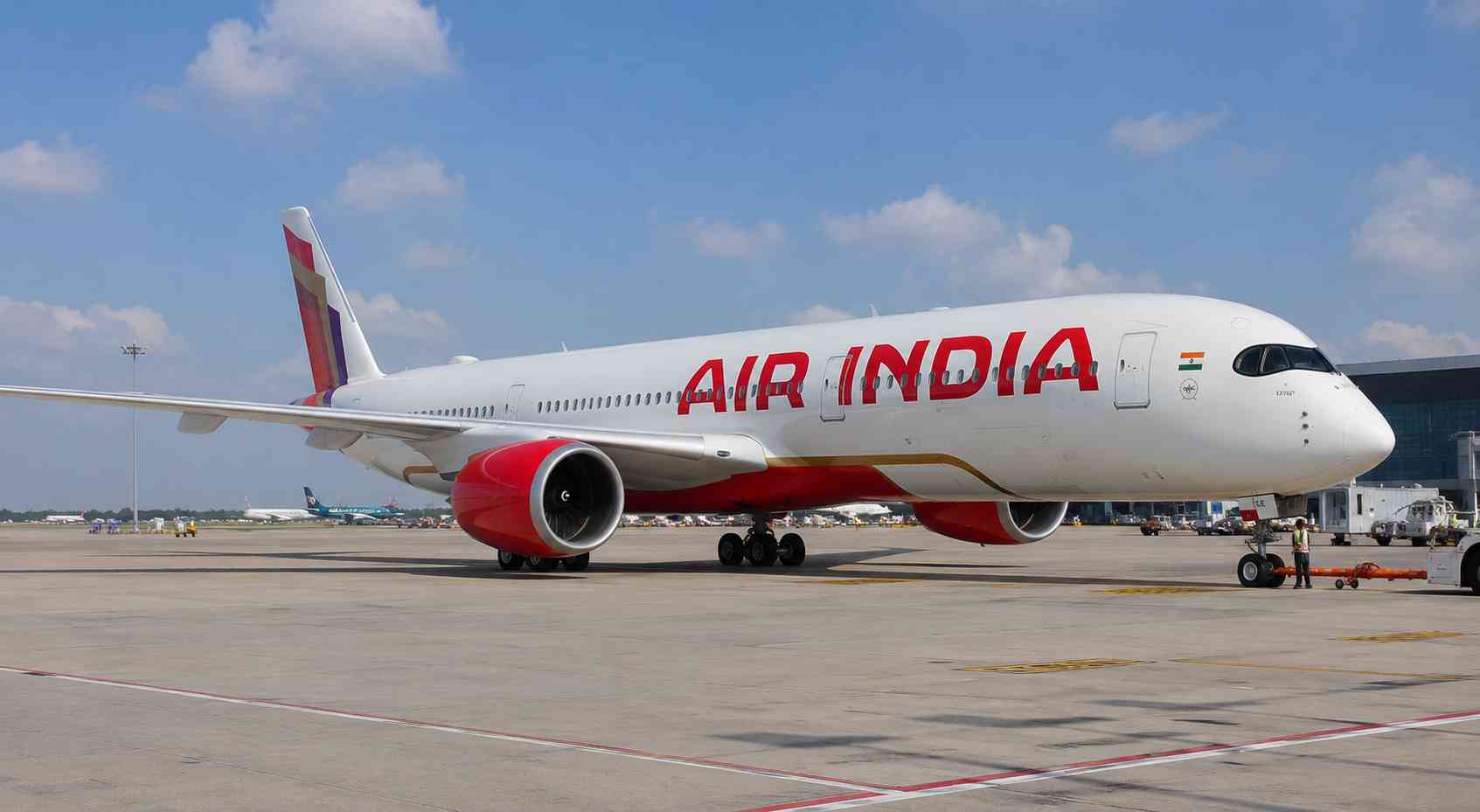
Tata Group-Owned Carrier Eyes Growth in Germany, Switzerland, and Austria
NEW DELHI — Air India is accelerating its European expansion strategy as the Tata Group-owned carrier positions the continent as a key pillar of its international network growth. The airline plans to increase frequencies on existing routes and potentially launch new destinations across Central Europe as additional aircraft join its fleet.
The airline sees Europe as a strategic bridge connecting India to global markets, particularly North America, while also serving the large Indian diaspora across the region. Demand from major European hubs such as Frankfurt, Zurich, and Vienna has encouraged the carrier to explore additional capacity and new route opportunities.
Sachin Verma, CEO for Central Europe at Air India, said Germany, Switzerland, and Austria remain among the airline’s top priority markets as it seeks to strengthen its presence in the region.
Europe Becomes Central to Air India’s Long-Haul Ambitions
Air India plans to use nonstop flights from European cities to Indian gateways including Delhi and Mumbai to compete more aggressively with both European network carriers and Gulf airlines.
The carrier believes its direct connectivity gives it a competitive advantage over airlines that rely heavily on connecting passengers through hub airports in the Middle East or Europe. According to Verma, demand from Frankfurt and Zurich has been “developing very encouragingly,” prompting the airline to assess higher frequencies and possible new European destinations as aircraft availability improves.
The expansion is part of the broader transformation underway since the Tata Group reacquired Air India in 2022. The airline is investing heavily in fleet modernization, customer experience, and network development in an effort to rebuild its position in the global aviation market.
Competing With Lufthansa and Gulf Carriers
In nonstop markets, Air India primarily competes with European carriers such as Lufthansa, while Gulf operators including Emirates and Etihad Airways dominate the connecting traffic segment.
Verma said Air India’s biggest advantage lies in offering direct and time-saving flights between Europe and India. The airline also sees an opportunity to attract transit passengers traveling between Europe and the Asia-Pacific region, particularly as some Gulf carriers face operational challenges.
Premium travelers remain a critical customer base for the airline, especially in markets such as Germany and Switzerland. To capture that demand, Air India has introduced upgraded cabins, enhanced lounges, and redesigned loyalty programs targeted at higher-yield passengers.
Fleet Modernization Drives Product Consistency
A major component of Air India’s transformation strategy involves standardizing the onboard experience across its fleet.
The airline currently operates aircraft with varying cabin layouts and service standards, an issue executives say does not align with the company’s modernization goals. New cabins introduced on the Airbus A350 and refurbished Boeing 777 aircraft now feature fully flat business class suites, premium economy seating, and redesigned economy cabins.
Service procedures are also being standardized globally to ensure passengers receive a consistent experience whether flying from Frankfurt, London Heathrow, or New York’s John F. Kennedy International Airport.
Customer response to the upgraded cabins has been positive, according to Verma, with travelers highlighting quieter cabins on the Airbus A350, upgraded inflight entertainment systems, and enhanced business class seating. Some passengers, he said, have described the experience as feeling like “a completely new airline.”
Maintaining an Indian Identity
Despite the modernization efforts, Air India says it remains focused on preserving its distinctly Indian identity.
Executives say the airline’s service philosophy continues to emphasize Indian hospitality while aligning with international service expectations. Cabin interiors, food offerings, and service protocols are being designed to reflect Indian culture while appealing to a broader international audience.
The airline is also increasingly focused on connecting passengers traveling between Europe and destinations across Southeast Asia and Australia. With an expanding international network, Air India believes hubs in Delhi and Mumbai can emerge as attractive alternatives for transit travelers.
Expansion Challenges Remain
Air India acknowledged that several obstacles could complicate its European growth plans, including limited airport slots, regulatory requirements, and intense competition.
Even so, the airline remains committed to long-term expansion across the region and has identified Vienna and Zurich as particularly promising markets due to growing business and leisure demand.
Partnerships and Workforce Investments
The carrier also remains open to partnerships that could strengthen its European footprint, including expanded interline and codeshare agreements. However, the immediate focus remains on expanding its own network and improving service quality.
Within India, the airline continues to face infrastructure constraints, high fuel costs, and capacity limitations. Still, executives believe the country’s growing middle class, rising incomes, and increasing international connectivity provide strong long-term growth potential.
To support its expansion plans, Air India is investing heavily in workforce training and recruitment. The airline is also seeking international talent as part of its effort to build a service-oriented corporate culture capable of supporting its rapidly evolving global operations.
