


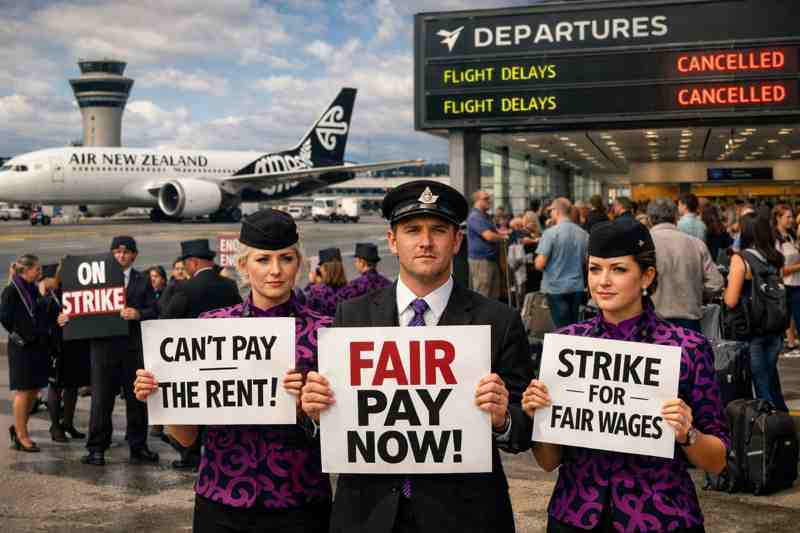
AUCKLAND, New Zealand — Air New Zealand cancelled 46 flights this week after cabin crew operating long-haul, wide-body aircraft began strike action, citing an inability to keep pace with rising living costs and stalled pay negotiations. The industrial action, which took place on Thursday and Friday, disrupted travel plans for nearly 9,500 passengers and forced the airline to adjust schedules, rebook travelers, and deploy alternative aircraft where possible.
The cancellations primarily affected long-distance international services, while most Tasman and Pacific routes were protected through operational changes. The strike marks a significant escalation in a labor dispute that has stretched nearly ten months without resolution.
Strike Action Hits Long-Haul Operations
The strike involved cabin crew assigned to wide-body aircraft, halting services on select long-range routes during peak travel periods. Air New Zealand said its operational teams worked continuously to minimize disruptions, emphasizing efforts to rebook affected passengers on alternative flights or provide refunds and travel credits.
According to the airline, customers impacted by cancellations were offered several options, including ticket refunds or conversion to travel credits for future trips. Passengers were encouraged to monitor airline communications for updates to their itineraries as adjustments continued throughout the disruption.
Despite the scale of the cancellations, Air New Zealand reported success in limiting broader network impacts by reallocating aircraft and adjusting flight schedules. Most short-haul services across the Tasman Sea and the Pacific Islands continued to operate as planned.
Union Says Financial Pressures Forced Action
The cabin crew are represented by the E tū union, which described the strike as a last resort after months of negotiations failed to produce an agreement on pay and working conditions.
Union leaders underscored that cabin crew responsibilities extend far beyond customer service. Their roles include passenger safety oversight, crisis response, conflict management, and handling in-flight medical and operational emergencies—functions that are critical to airline operations but often invisible to passengers.
According to the union, base pay remains a central issue. Flight attendants reportedly earn less than NZ$60,000 annually in guaranteed income, with additional earnings dependent on flight rosters and destinations. The lack of predictable income, union representatives said, makes it difficult for workers to secure mortgages or personal loans, compounding financial stress amid rising housing and living costs in New Zealand.
Airline Defends Pay Offer and Operations
Air New Zealand confirmed it has proposed base salary increases ranging from 4.14 percent to 6.41 percent and said further negotiations are scheduled later in the month. The airline maintains that it has taken all practical steps to reduce the impact on customers while continuing discussions with employee representatives.
Jeremy O’Brien, Air New Zealand’s Chief Customer and Digital Officer, said the airline prioritized rebooking affected travelers and limiting cancellations where possible, according to reporting by RNZ.
The carrier also pushed back against criticism over its capital investments. Union leaders have questioned airline spending on infrastructure projects such as hangar development, fleet expansion, and uniform redesigns at a time when employees report difficulty meeting basic living expenses.
Broader Implications for the Airline
The strike highlights ongoing labor challenges facing airlines globally as inflation and housing costs outpace wage growth, particularly in high-cost cities such as Auckland. For Air New Zealand, the dispute raises operational and reputational risks as it works to maintain service reliability while balancing cost pressures.
Industry analysts note that prolonged labor unrest could increase operational complexity and affect customer confidence, especially as international travel demand remains strong. The airline has indicated it aims to avoid further disruptions as talks continue.
What Passengers Should Know
Air New Zealand advised customers affected by cancellations to review their options, which include requesting ticket refunds or converting tickets into travel credits for future travel. Travelers are encouraged to check official airline communications for the latest information regarding rebookings and schedule changes.
Negotiations between Air New Zealand and the cabin crew union are expected to continue later this month as both sides seek a resolution that avoids further disruption to long-haul operations.
