


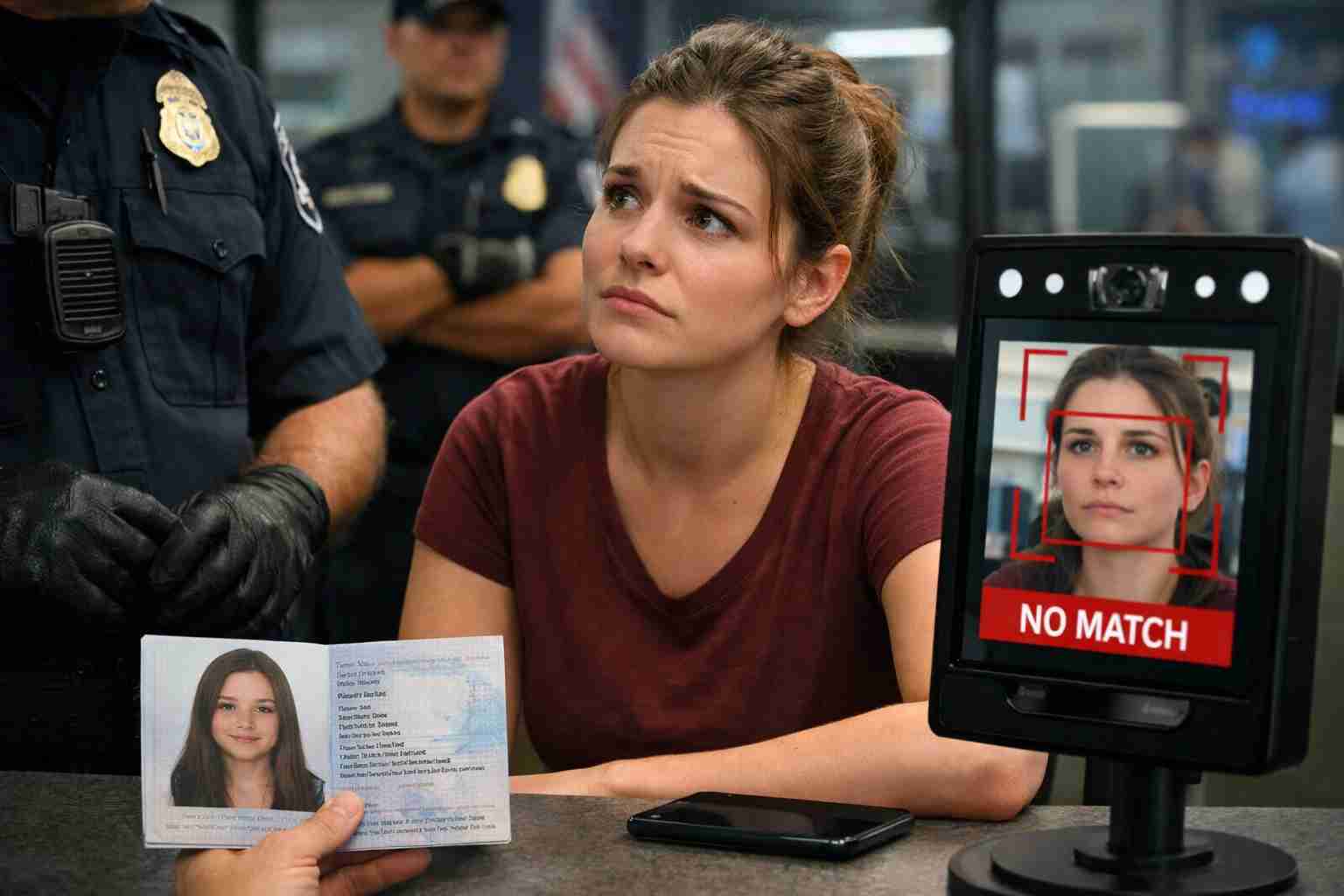
A routine return trip to the United States turned into a tense and unexpected detention for a California woman after border officers questioned whether her passport photo matched her appearance, highlighting growing concerns around biometric screening and identity verification at busy ports of entry.
The incident occurred during a cross-border travel process involving Tijuana International Airport and San Diego, where U.S. authorities briefly detained traveler Julia Buckley after automated systems repeatedly failed to verify her identity. Buckley was held for approximately 40 minutes before being cleared to continue her journey.
A Standard Entry That Quickly Escalated
Buckley said she was returning home after a short trip when she presented her U.S. passport during routine inspection. According to her account, what began as a standard document scan quickly escalated when officers informed her that the passport photo did not appear to match her face.
After multiple attempts to scan and photograph her at the checkpoint, officers reportedly remained unable to confirm her identity through biometric systems. Buckley said the repeated failures triggered secondary screening procedures, a common protocol when automated verification does not succeed.
Secondary Screening and Restricted Access
Buckley was escorted to a separate secured area used for additional screening. She said the room was locked and included other travelers undergoing similar checks. During this time, her personal belongings were held by officers, and her access to her phone was restricted.
Inside the room, Buckley said officers asked her a series of questions, repeatedly verifying the same personal information. The questioning, she explained, continued until officials determined that the issue stemmed from perceived differences between her current appearance and the passport photo on file.
Despite the stressful circumstances, Buckley said the officers remained professional and non-aggressive throughout the encounter.
“It Was My Eyes,” Buckley Says
According to Buckley, officers attempted more than 20 photo captures before concluding that the biometric system could not reconcile her face with the image stored in her passport. She said officers ultimately told her the issue was her eyes.
Buckley explained that her passport photo was taken when she was 18 years old, while she is now 29. Over that time, she said, her appearance has naturally changed. She pointed to differences in her hair, eyebrows, and overall facial maturity, but said officers dismissed those explanations.
According to Buckley, officials maintained that biometric systems prioritize fixed facial features rather than elements affected by styling or aging, an explanation she later said was consistent with reporting by People.com.
Stress and Repeated Questioning
As the questioning continued, Buckley said she became increasingly anxious, which affected her ability to recall routine details such as previous addresses. She added that officers declined to review alternative forms of identification that she offered, relying instead on the passport and biometric checks.
Eventually, officials cleared her to proceed without issuing formal documentation or providing follow-up guidance regarding the incident.
A Viral Warning to Other Travelers
After her release, Buckley shared her experience on social media, where the video quickly gained traction. Viewers debated whether her passport photo resembled her current appearance, while many commenters shared similar experiences.
Several travelers reported being delayed or flagged after significant weight changes, medical treatments, or aging altered their appearance. The online discussion underscored how infrequently updated passport photos can lead to secondary screening, particularly as automated systems play a larger role in border security.
Taking Preventive Action
With another international trip approaching, Buckley decided to renew her passport proactively. She obtained a new document within two weeks and said her subsequent travel experience was smooth, with no additional screening issues.
She now advises travelers to update their passport photos if their appearance has changed significantly, arguing that the inconvenience and stress of detention outweigh the cost and time involved in renewing travel documents.
Broader Implications for Travelers
U.S. border security agencies continue to emphasize the importance of accurate and up-to-date travel documentation. While biometric systems are designed to enhance efficiency and security, Buckley’s experience illustrates how those technologies can create challenges for travelers whose appearance evolves over time.
As international travel volumes remain high, the incident serves as a reminder that even routine border crossings can be disrupted by automated verification failures, placing renewed focus on how technology and human judgment intersect at modern ports of entry.
