


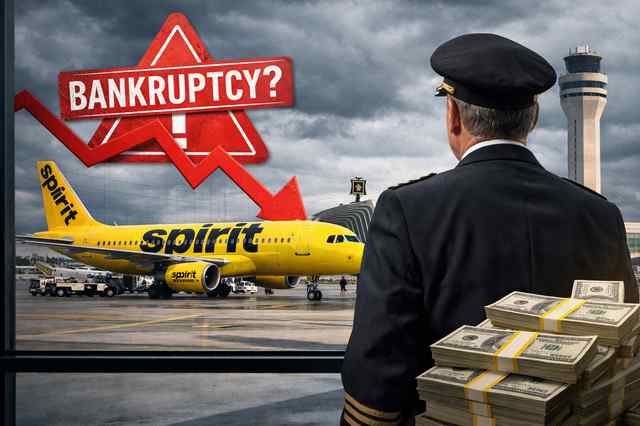
WASHINGTON, D.C. — A veteran airline pilot is warning that Spirit Airlines (NYSE: NK) could be approaching a critical inflection point in its Chapter 11 restructuring, raising concerns that the carrier may be headed toward the same liquidation outcome that has ended other airline bankruptcies in the past.
The warning follows a public appeal from the Air Line Pilots Association, International (ALPA), which urged Spirit’s bondholders to continue financing the airline’s restructuring efforts as it navigates bankruptcy proceedings. Spirit, headquartered in Fort Lauderdale, Florida, now faces heightened scrutiny from labor groups, creditors, and employees who are waiting for clearer signals on whether the airline will secure the funding needed to keep operating.
With Spirit’s future tied closely to creditor confidence, the pilot’s caution reflects a broader reality in airline restructurings: even with public messaging focused on recovery, the outcome often depends on whether investors believe the business can return to sustainable profitability.
ALPA’s Bondholder Appeal Raises the Stakes
ALPA released a statement this week directed at Spirit’s bondholders, emphasizing the stakes of continued financial support.
The letter framed the decision as a choice between funding the airline’s exit from bankruptcy or forcing a shutdown that would eliminate thousands of jobs and disrupt the South Florida economy.
Spirit has long played a role in the region’s aviation market, with operations tied closely to Fort Lauderdale–Hollywood International Airport (FLL). That local footprint has made the restructuring more than just a corporate finance story, as it also carries implications for employment, airport activity, and the broader travel economy.
Still, the veteran pilot argues that public appeals to bondholders can sometimes signal deeper concern about the viability of a restructuring plan, especially when creditor patience is already under pressure.
A Veteran Pilot Sees a Familiar Pattern
According to the veteran pilot, such statements often appear only when confidence behind the scenes has already eroded.
In past airline failures, similar appeals were made when management lacked a realistic plan that could satisfy investors. The pilot described the letter as a last-resort effort rather than a sign of stability.
While ALPA’s message focuses on the human and economic costs of a potential shutdown, the pilot warned that bondholders typically make decisions based on projected returns and recovery prospects, not broader community impacts. In that context, the letter may reflect a growing urgency to keep financial backers engaged at a time when Spirit’s long-term path remains uncertain.
Lessons From Earlier Airline Bankruptcies
Drawing from earlier industry experience, the pilot recalled serving in union leadership during another airline’s bankruptcy.
Management presented a recovery plan built on optimistic assumptions about fuel prices and revenue growth, despite clear evidence that large parts of the fleet would remain unprofitable.
When questioned privately, senior executives admitted there was no alternative strategy. That admission convinced labor leaders that liquidation was likely, even as public messaging remained hopeful.
According to Live and Let’s Fly, the pilot argues that Spirit’s situation shows troubling parallels, especially if bondholders hesitate to release additional funds.
The pilot’s comparison highlights how airline restructurings can unravel when the numbers behind a turnaround plan fail to persuade investors. Even if a carrier maintains flight schedules and continues operating through Chapter 11, liquidity concerns can quickly intensify if creditors decide the risks outweigh the potential upside.
Spirit Pilots Brace for Potential Job Losses
The pilot emphasized that bondholders ultimately act to protect financial returns, not employment levels.
While labor groups appeal to economic and social consequences, creditors typically decide based on balance sheets and recovery prospects.
Spirit pilots, according to the account, are already preparing for the possibility of job losses by seeking employment elsewhere. The ALPA letter has been interpreted internally as bad news rather than reassurance.
Although the pilot stressed there is no inside knowledge of Spirit’s finances, the emotional and professional toll on flight crews is already visible.
For Spirit employees, the uncertainty adds pressure to make personal and career decisions in real time. In the airline industry, where hiring cycles and seniority systems can shape long-term earnings, even the possibility of liquidation can prompt pilots and other workers to explore alternative options before the situation becomes irreversible.
What Happens Next for Spirit Airlines
Spirit’s Chapter 11 process now appears increasingly tied to whether bondholders remain willing to provide the financial support needed to execute a restructuring plan. If creditors conclude that Spirit’s path to profitability is too narrow—or that the airline’s assets are worth more in liquidation than in continued operations—the company could face escalating risk despite ongoing flights.
At the same time, Spirit’s management and labor groups continue to push for a recovery outcome that preserves jobs and stabilizes the airline. The next stage of the restructuring will likely center on whether the company can demonstrate enough progress, cost discipline, and revenue potential to convince financial backers that the airline has a viable future.
Bottom Line
A veteran pilot’s warning highlights growing concern that Spirit Airlines may be approaching a critical point in its bankruptcy process.
Past airline collapses suggest that public appeals to creditors often signal deep internal uncertainty.
While hope remains that management can secure funding and stabilize operations, industry experience suggests the outcome may depend entirely on whether bondholders still believe in Spirit’s long-term viability.
