


A Political Dispute Reaches Asia’s Aviation Hub
Incheon International Airport, South Korea’s primary international gateway and one of Asia’s busiest aviation hubs, has been thrust into the spotlight following a public dispute between President Lee Jae-myung and the airport’s top executive. The disagreement centers on a proposed security measure that would require manual inspections of all passenger baggage, a move that has alarmed airlines, airport operators, and aviation experts concerned about operational disruption and regulatory overreach.
The clash is unusual in its visibility and its potential consequences. Incheon International Airport (ICN) handles tens of millions of passengers annually and serves as a critical transfer hub for long-haul routes linking Asia with North America and Europe. Even minor changes to its security processes can have far-reaching effects across global airline networks.
Origins of the Controversy
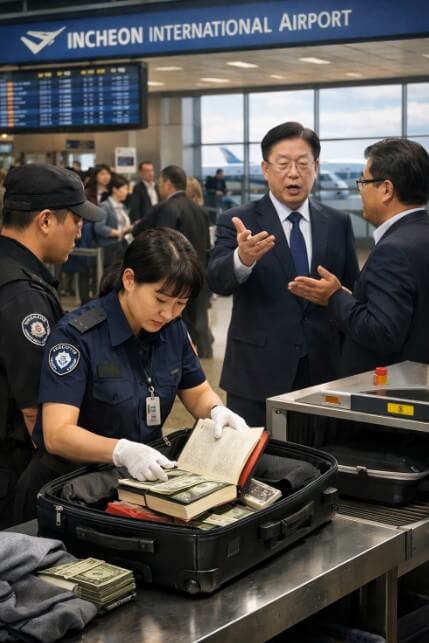
The issue emerged on December 12, 2025, during a Ministry of Land, Infrastructure, and Transport work report attended by President Lee. During the meeting, the president raised concerns about alleged cases of cash smuggling involving money hidden inside books placed in passenger luggage.
In response, he urged Incheon International Airport Corporation to instruct security staff to manually search all passenger bags, specifically identifying books and physically checking them for concealed cash during security screening. The proposal marked a significant departure from standard airport security procedures, which typically rely on imaging technology and targeted secondary screening.
Airport Leadership Pushes Back
Airport leadership responded swiftly, warning that such a policy would be impractical and disruptive. Executives argued that airport security screening is designed to prevent prohibited or dangerous items from being brought onto aircraft, not to enforce financial or customs regulations.
Currency controls and investigations into illegal cash movement are traditionally handled by customs authorities, not airport security personnel. Shifting that responsibility to security checkpoints, airport officials said, would blur regulatory boundaries and create confusion for both staff and passengers.
Operational Risks and Passenger Impact
From an operational standpoint, the implications are significant. Manually inspecting 100 percent of passenger baggage at a high-volume airport like Incheon would dramatically slow screening throughput. Airport officials warned that security checkpoints could quickly become overwhelmed, leading to long queues, missed connections, and cascading flight delays.
As a major transfer hub, Incheon is particularly sensitive to bottlenecks. Delays at security screening can ripple through airline schedules, affecting aircraft rotations and crew assignments across multiple continents. Airlines operating long-haul routes, including home carriers Korean Air and Asiana Airlines, would face increased operational risk and potential financial losses.
Global Standards and Industry Concerns
Aviation security experts have also questioned the proposal’s alignment with international best practices. Global aviation regulations emphasize risk-based screening, intelligence sharing, and selective inspections rather than universal manual searches.
Introducing blanket baggage inspections would require substantial increases in staffing, training, and physical space, all while delivering uncertain benefits. Industry analysts note that few, if any, major international airports rely on full manual inspections due to their cost and inefficiency.
Political Fallout and Public Exchange
The disagreement escalated into a public exchange when the president criticized the airport chief for questioning the feasibility of the directive. In response, the airport president clarified that his remarks were based on operational realities, not political resistance.
He also cautioned that publicly detailing specific smuggling methods could unintentionally expose vulnerabilities rather than resolve them. According to airport officials, customs agencies already maintain systems designed to detect and deter illegal outbound currency movements.
Implications for the Aviation Sector
While the dispute has sparked political commentary, its implications for the aviation industry are more immediate. Airlines and airport operators are closely watching the situation, concerned that policy decisions driven by political pressure could undermine efficiency at a time when global travel demand remains strong.
For now, no changes to baggage screening procedures have been implemented. Industry observers expect existing security and customs frameworks to remain in place, arguing that any drastic alteration would face strong resistance from airlines, airport operators, and international aviation bodies.
The controversy underscores a broader challenge facing major airports worldwide: balancing legitimate security concerns with the need to maintain smooth, predictable operations in an increasingly interconnected global aviation system.
