


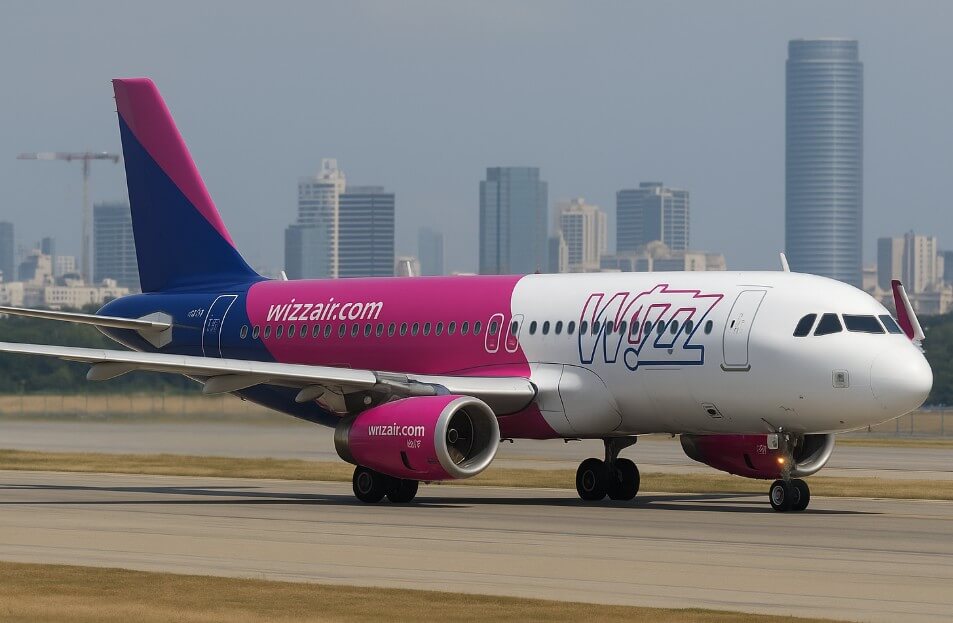
Hungarian low-cost airline Wizz Air is accelerating negotiations to open a full operational base in Israel by spring 2026, a move that could dramatically reshape the country’s competitive aviation landscape. The plan comes as other European budget carriers—most notably Ryanair and easyJet—continue to pull back from the Israeli market, leaving travelers with fewer low-cost options and persistently high fares.
Momentum Builds Following CEO Visit to Israel
Wizz Air confirmed its commitment after CEO József Váradi met with Israeli government officials in Tel Aviv, including Transportation Minister Miri Regev. The airline is now targeting March or April 2026 for the launch of a full-scale base.
During these meetings, Wizz Air presented a proposal designed to significantly expand travel options through Ben Gurion Airport (TLV). The carrier says the project aims to lower fares, increase seat supply, and enhance connectivity for Israeli travelers who have faced sharply rising prices in recent years.
Váradi characterized the initiative as a long-term strategic step. As he outlined, the airline aims to complete regulatory talks within weeks. Both sides are currently working through technical and operational items that remain under review, with expectations to finalize agreements by the end of January.
According to Wizz Air, the decision reflects a major investment in the Israeli market—one that will “benefit passengers through competitive pricing and expanded access to European destinations.”
Planned Network Growth: Up to 50 Routes and 4 Million Seats
Wizz Air currently operates 21 routes connecting Israel to European destinations. Under the proposed Tel Aviv base, that network could grow to nearly 50 routes in the coming years.
The airline also expects to introduce around 4 million seats over the next three years, placing Israel among its most strategically important markets across Europe and the Middle East.
Industry analysts say such an expansion would represent one of the largest post-pandemic increases in capacity by any foreign carrier operating in Israel. Much of the impact will depend on how many aircraft are permanently stationed in the country and whether the base ultimately operates from Ben Gurion Airport or from Ramon Airport (ETM) near Eilat.
Local Airlines Push Back Against Foreign Competition
Israel’s aviation sector has not universally welcomed Wizz Air’s ambitions. Domestic carriers—including El Al, Arkia, and Israir—have voiced opposition, arguing that the base could undermine national resilience and place pressure on strategic airport slots.
These airlines warn that expanding access to foreign operators may weaken the position of Israel’s own carriers amid a still-recovering market environment.
Government officials, however, have taken a different approach. They argue that increasing competition is essential to lowering prices, especially after a two-year period marked by conflict, flight cancellations, and limited foreign airline participation. Officials maintain that Israeli carriers kept fares elevated during this period and that bringing in a major low-cost competitor could help stabilize the market.
Ryanair and easyJet Withdraw, Opening Space for Wizz Air
The timing of Wizz Air’s proposal coincides with a broader pullback from Israel by other low-cost carriers. Ryanair has suspended all flights indefinitely, while easyJet has extended its suspension until at least March 28, 2026.
Their departures have reduced capacity and allowed fares to climb on high-demand European routes, particularly those connecting to major cities such as London, Rome, and Berlin.
Transportation officials say the absence of foreign competition has contributed to travel becoming “unaffordable for many Israeli families.” As a result, the ministry supports efforts to diversify the airline market and attract new entrants.
Pricing Pressure and Market Transformation Ahead
If approved, the Wizz Air base would introduce substantial competitive pressure on incumbent carriers. Analysts project that the increased supply alone could force fares downward—though the extent of the impact will depend on additional traffic rights, including possible seventh-freedom permissions.
Wizz Air’s expansion would also provide Israeli travelers with more year-round route choices, particularly to secondary European cities that are underserved by local airlines.
Next Steps: Negotiations Continue Into Early 2026
The government and Wizz Air appear aligned in their desire to finalize the agreement. Negotiations are expected to continue through January, with officials indicating that a decision could follow soon afterward.
If implemented as planned, the base stands to “introduce more routes, increase seat supply, and apply sustained pricing pressure on incumbents,” potentially marking one of the most significant shifts in Israel’s aviation market in years.
