


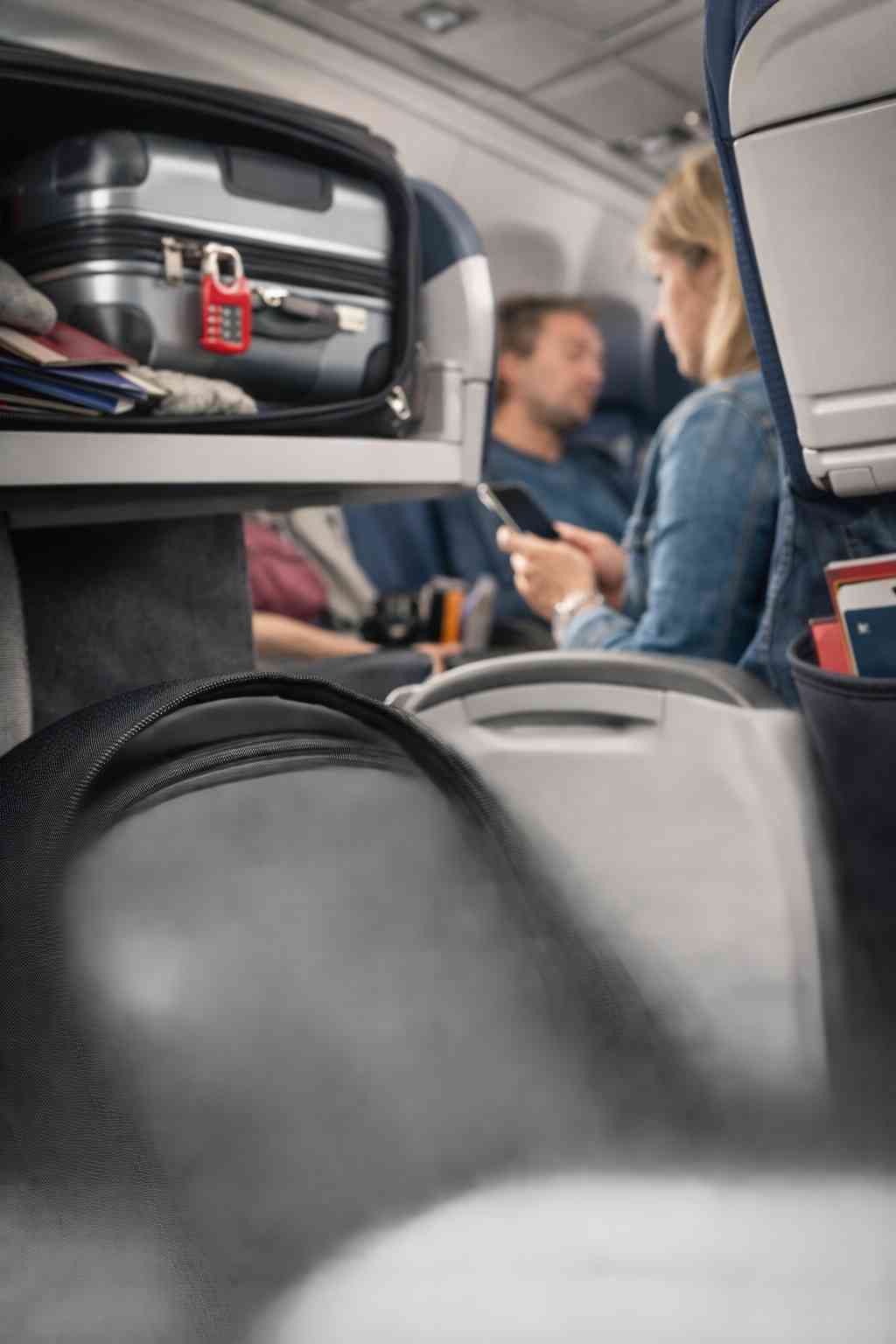
In-flight theft remains a largely overlooked issue in commercial aviation, but for airline crews and seasoned travelers, it is a known and persistent risk. The problem is most common on long-haul flights, where passengers sleep for extended periods and personal belongings are left unattended. A recent account shared by a travel writer, whose father spent decades flying for Delta Air Lines, has renewed attention on how pilots approach this quiet security concern—and why they rarely trust overhead bins with valuables.
Drawing from cockpit conversations and real-world experience across major U.S. aviation hubs, the account highlights a preventive mindset rooted in awareness, habit, and simple tools rather than expensive security gear.
Lessons Learned From the Flight Deck
Growing up in a pilot household meant discussions about aviation safety went far beyond turbulence or weather patterns. According to the travel writer, her father regularly shared stories exchanged among flight crews—stories that often involved opportunistic theft occurring mid-flight.
These incidents were more likely to happen when passengers relied on overhead bins or seatback pockets to store essential items. In busy cabins, especially during overnight flights, it is difficult for travelers to monitor who is accessing shared storage spaces.
The pilot’s advice was consistent throughout his career: anything irreplaceable should stay in a personal item kept under the seat, where it remains visible and within arm’s reach. This guidance was shaped by years of flying through high-traffic airports such as Atlanta Hartsfield-Jackson International Airport, where large passenger volumes can create both efficiency and security challenges.
A Pilot’s Preventive Safety Mindset
The pilot’s approach to in-flight security focused on prevention rather than recovery. Items such as passports, wallets, electronics, and jewelry were never placed in carry-on suitcases stored overhead. Once the aircraft reached cruising altitude, visibility into overhead bins was limited, and monitoring access became nearly impossible.
Instead, underseat personal bags were prioritized because they allowed constant awareness of belongings. Even brief moments—standing up to stretch or visiting the lavatory—were viewed as potential vulnerabilities if valuables were left behind.
That mindset carried into adulthood for the travel writer, who continues to keep her personal bag with her when moving around the cabin. The philosophy remains simple: minor inconvenience is far preferable to the permanent loss of critical or sentimental items.
Low-Cost Anti-Theft Essentials
Rather than relying on high-end travel gear, the pilot-backed strategy emphasizes inexpensive, practical tools. Small locking carabiners can be used to secure zipper pulls together, making silent access more difficult and discouraging casual attempts at theft.
TSA-approved combination locks serve as another visible deterrent on both overhead and underseat bags. While they are not foolproof, they can slow down opportunistic access and redirect attention toward easier targets.
Tracking devices, such as compact Bluetooth tags, provide an added layer of accountability. Although in-flight tracking capabilities are limited, their presence can deter theft once the aircraft has landed and baggage movement resumes.
Understanding Cabin Storage Risks
Certain areas of the cabin pose higher risks than others. Seatback pockets are among the most common places for items to be lost or stolen. Phones, wallets, and earbuds placed there are easily forgotten or accessed by others during boarding, mid-flight movement, or deplaning.
Travel organizers designed for electronics help mitigate this risk by keeping items grouped and less accessible. Privacy screen filters on laptops also reduce the chance of visual data theft, particularly on crowded flights.
Hard-shell carry-on luggage with locking zippers adds protection for items that must be stored overhead. However, pilot guidance consistently emphasizes that high-value belongings should remain in personal items kept under the seat.
The Bottom Line for Business and Leisure Travelers
The insights shared through a pilot’s family experience underscore that in-flight theft prevention relies more on habits than on expensive equipment. Awareness, consistency, and simple deterrents can significantly reduce risk.
With tools costing as little as five dollars and a mindset focused on prevention, travelers can better protect themselves across domestic and long-haul routes. In an industry where safety culture is paramount, these small, practical steps reflect how pilots think about risk—and why overhead bins are never trusted with what matters most.
