


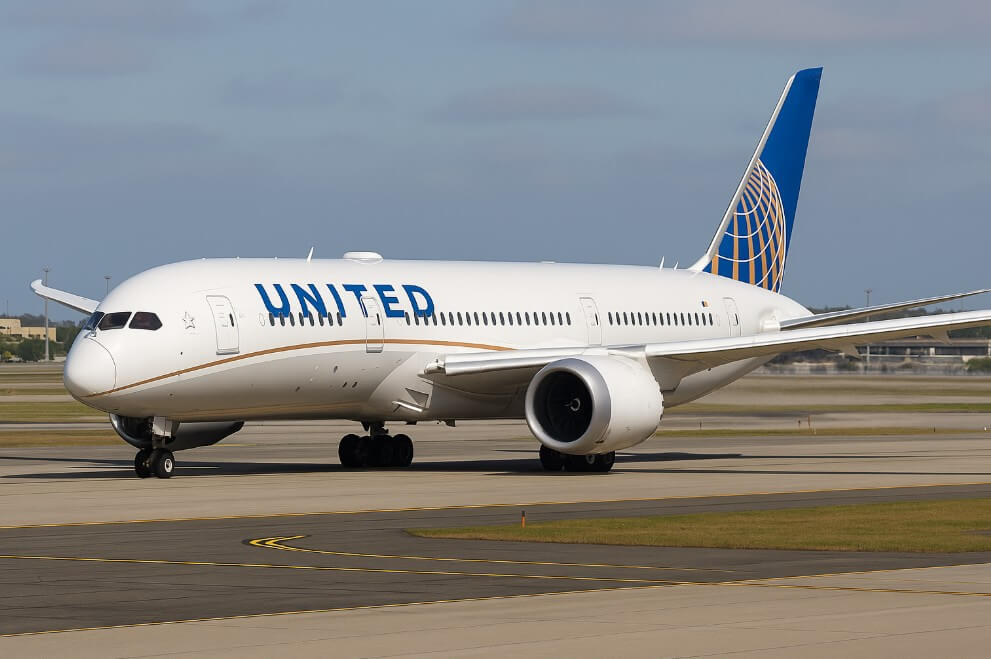
United Airlines is making significant adjustments to its international and domestic networks, withdrawing two long-haul routes while adding several seasonal domestic services aimed at strengthening peak-summer connectivity. The changes reflect shifting competitive pressures, evolving demand patterns, and the carrier’s ongoing effort to channel capacity into higher-performing markets.
United has removed Washington Dulles–Dakar and Newark–Stockholm from future schedules, effectively ending two niche transatlantic offerings that struggled to build long-term momentum. Bookings for Dakar disappear after early March, while Stockholm flights are now unavailable for all of 2026, signaling an end to United’s Scandinavian presence.
The moves come as United works to refine its global footprint. Even with the eliminations, the airline continues adding unconventional European markets such as Bari, Santiago de Compostela, and Split in 2026, along with restoring flights to Glasgow.
Dakar Launch Fades After Underperformance
United’s service from Washington Dulles to Dakar, launched in May 2025, marked its first entry into Senegal. The 3,481-nautical-mile route relied on a Boeing 767-300ER and was intended to operate three times weekly year-round in 2026. But early demand disappointed.
The final flight is set for March 4. U.S. Department of Transportation data for May through July 2025 showed a 65 percent seat load factor—well below typical expectations for long-haul routes, even in early development. A company planner had previously indicated the service might not last a full year.
Competition in Senegal remains active, particularly from Delta Air Lines, which flies up to five weekly frequencies from New York JFK using a 767-300ER. Air Transat also plans to enter the market next June with a Montreal–Dakar service operated by the A321LR. Montreal was United’s second-largest connecting market for Dakar but accounted for only about six percent of connecting traffic.
Stockholm Route Ends After Years of Contraction
United’s Newark–Stockholm route, inherited from the former Continental Airlines network, also faces retirement. The 3,415-nautical-mile service has long been tied to Newark, United’s busiest transatlantic hub, and was traditionally operated seasonally. SAS continues to serve Stockholm with an A330-300, though its shift from Star Alliance to SkyTeam could eventually prompt a move toward JFK—if slot constraints and Delta’s presence allow.
United’s seasonal commitment to Stockholm shrank steadily over the past decade. In 2019, the airline operated 128 flights between late April and early September. By 2025, that total had fallen to 88 flights between June and August. United had planned a slight expansion in 2026, offering daily service from June 4 through September 6 using a 176-seat Boeing 757-200. Those flights have now been removed in their entirety.
U.S. DOT figures for June and July 2025 show an 88 percent load factor—consistent with past years—but overall traffic declined because the operating window had narrowed to just peak summer. Stronger seat occupancy did not translate to a sustainable annual market. If the cancellation is permanent, United will have no remaining service to Scandinavia.
Broader Competitive Context
Dakar and Stockholm have historically seen significant churn among long-haul operators. South African Airways linked Johannesburg, Dakar, and Dulles between 2006 and 2019, while Air Senegal considered a Dakar–Dulles route via JFK before shifting its U.S. focus to Baltimore. Neither African carrier currently serves the United States.
Stockholm has likewise experienced rotating operators. Malaysia Airlines once connected Kuala Lumpur to Newark via Stockholm with 777s and 747s. American Airlines re-entered Northern Europe in 2024 with Philadelphia–Copenhagen, further reshaping U.S.–Scandinavia competition.
United’s pullback highlights a broader industry pattern: long-haul markets often require time to mature, but airlines cannot maintain underperforming routes indefinitely. United’s growing emphasis on leisure-oriented European points suggests a strategy built around more durable demand pools.
New Domestic Routes Target Summer Peaks
United is also introducing three seasonal Saturday-only domestic routes in 2025 and 2026, while discontinuing one domestic link. The carrier confirmed the updates following a Cirium Diio schedule change.
A new Newark–Kalispell route begins June 13, operated by a Boeing 737 MAX 8. Two more Saturday-only services launch May 23, 2026: Houston–Rapid City, returning after last operating in August 2024, and Los Angeles–Montrose, which has been extended through summer 2026 after originally being slated to end in April. Both will use Embraer E175 aircraft.
At the same time, United will end flights between Greensboro and Denver on January 6. The route began in 2023 but did not achieve the performance needed to continue. A spokesperson noted that ongoing adjustments are routine as the airline evaluates demand across its domestic network.
Operational Outlook
The updates underscore United’s strategy of pairing mainline and regional aircraft to match demand more precisely. The 737 MAX 8 offers the range and capacity needed for longer domestic leisure markets, while the E175 provides flexibility for smaller, seasonal destinations.
As summer travel demand continues shifting toward outdoor and mountain markets, United’s network changes reflect a targeted effort to optimize aircraft utilization and reinforce peak-season connectivity.
