


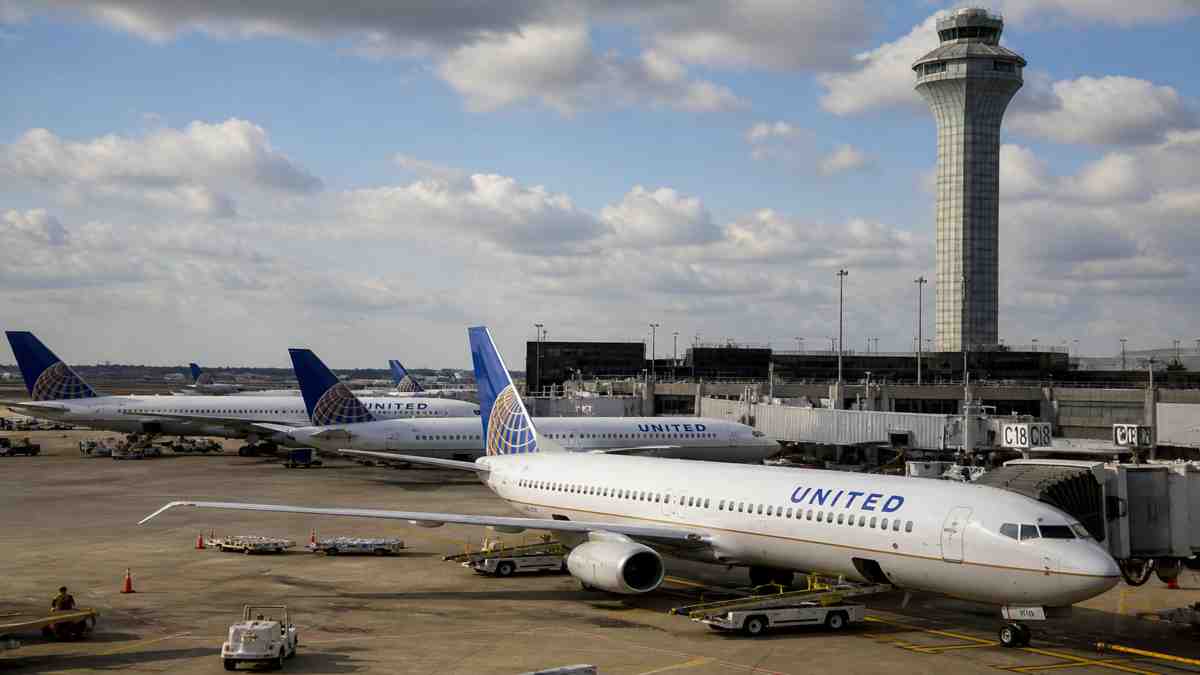
Regulatory Pressure Forces Major Schedule Reductions at O’Hare
CHICAGO — United Airlines has cut more than 22,000 flights from its summer and fall schedule at Chicago O’Hare International Airport after the Federal Aviation Administration imposed strict capacity limits at the congested hub.
The sweeping changes include the cancellation of 11 routes, the permanent removal of one destination, and widespread frequency reductions across United’s O’Hare network. The cuts follow regulatory intervention aimed at preventing operational strain at one of the nation’s busiest airports.
Despite the reductions, United’s revised schedule still exceeds its 2025 flight levels at O’Hare by a significant margin, raising questions about whether further cuts may be required.
Expansion Plans Curtailed by Infrastructure Constraints
United had initially planned a 30% increase in flights at O’Hare for summer 2026, part of a broader strategy to strengthen its Chicago hub. However, airport infrastructure limitations prompted the FAA to step in during May, imposing flight caps that forced the airline to scale back.
The airline began trimming flights earlier in May, but the impact has deepened as reductions extended into June. Several routes that were scheduled to launch this summer have now been delayed, with 10 of the 11 canceled routes pushed to near-November start dates. One route has been permanently dropped.
Most of the affected routes were new markets, reflecting United’s halted expansion ambitions in Chicago. In addition to route cancellations, the airline reduced flight frequencies across existing services, significantly shrinking overall capacity.
The combined effect of these changes amounts to approximately 22,000 fewer flights compared with United’s original schedule, measured across both departures and arrivals.
Revised Schedule Still Shows Strong Growth
Even after the cuts, United’s schedule at O’Hare remains well above last year’s levels. In June, the airline now plans 19,107 flights, down from 22,727 originally scheduled but still 13% higher than the 16,866 flights operated in June 2025.
July follows a similar pattern, with 19,948 flights planned compared to 17,321 last year, representing a 15% increase. August shows an even larger jump, with 21,899 flights scheduled versus 17,496 in 2025 — a 25% rise.
Growth continues into the fall months, with September and October also posting double-digit increases year over year.
These figures suggest that while the FAA intended to align operations more closely with 2025 levels, United’s current schedule still exceeds that benchmark across every month.
Disparity With Industry Peers Raises Questions
United’s remaining growth stands in contrast to actions taken by American Airlines, which had proposed an 11% increase at its constrained hubs before being required by the FAA to scale back.
United’s post-cut growth at O’Hare surpasses that 11% level in every month from June through October. This discrepancy has led industry observers to question whether the FAA will push for additional reductions.
With June approaching rapidly, there is limited time for further adjustments, but analysts expect more cuts could still be announced for peak summer months, particularly July and August. Fall schedules may also face additional trimming as regulators continue to monitor capacity levels.
Operational Uncertainty Around Aircraft and Staffing
The scale of United’s schedule reduction introduces operational challenges beyond flight planning. Eliminating 22,000 flights frees up a substantial number of aircraft and crew resources.
So far, the airline has not disclosed how it plans to redeploy these assets. There have been no announcements regarding shifting aircraft to other hubs, adjusting fleet utilization, or implementing workforce changes.
This lack of clarity adds uncertainty for both employees and industry stakeholders. Airlines typically reassign capacity to other markets when faced with constraints at a major hub, but United has yet to outline its strategy.
What Comes Next for United at O’Hare
The situation at O’Hare remains fluid as United navigates regulatory pressure and operational realities. The airline’s current schedule suggests it may be testing the limits of the FAA’s enforcement, but further intervention appears likely.
Passengers booked on affected routes are advised to monitor their itineraries closely, as additional cancellations or schedule changes may occur in the coming weeks.
The FAA’s response to United’s revised schedule will be closely watched across the industry, as it may set a precedent for how capacity limits are enforced at other congested airports in the United States.
