


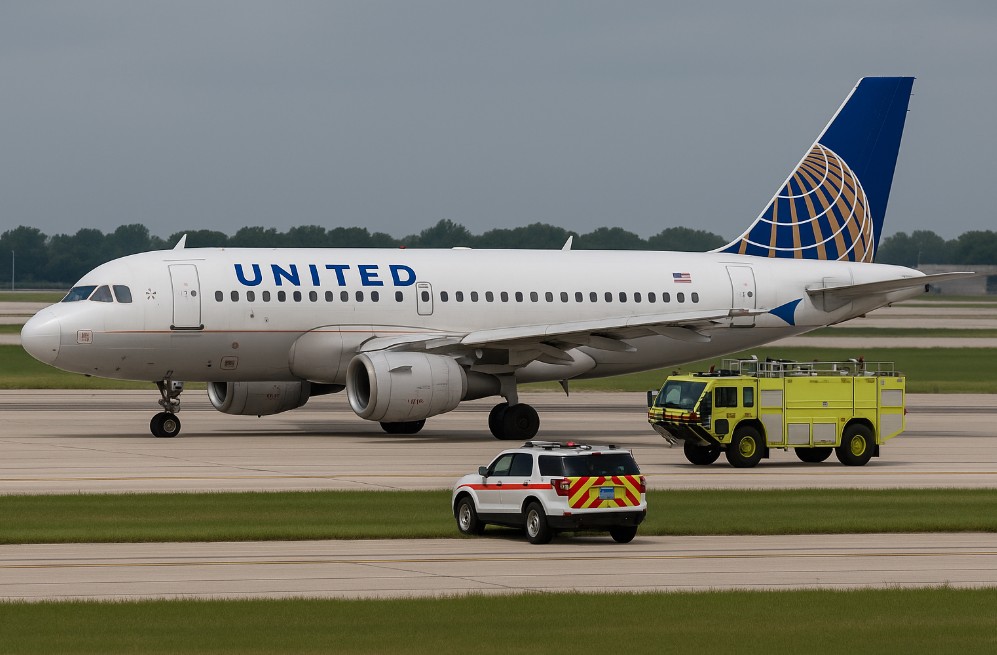
Chicago, Aug. 25, 2025 — A United Airlines flight bound for Indianapolis was forced to return to Chicago O’Hare International Airport on Sunday after the flight crew reported an electrical burning odor in the cockpit shortly after takeoff.
United Airlines flight UA1250, an Airbus A319-100 operating a scheduled service from Chicago to Indianapolis International Airport, departed O’Hare’s runway 02L at 11:36 a.m. local time on August 24. According to flight data, the aircraft began its initial climb but leveled off at 8,000 feet after the crew detected the unusual odor.
The decision was made to discontinue the departure procedure and return directly to O’Hare. The flight landed safely on runway 28C, where it was met by airport emergency services. The aircraft then vacated the active runway and stopped on a parallel taxiway for inspection.
Emergency ground crews conducted an external inspection of the aircraft before it was moved to an apron hardstand for further evaluation. No injuries were reported among passengers or crew, and the situation was handled without incident.
Suspected Cause
According to aviation safety outlet The Aviation Herald, the flight crew suspected that the odor may have originated from one of the aircraft’s cockpit displays. The Airbus A319 uses Thin Film Transistor (TFT) liquid crystal displays as part of its glass cockpit design. These screens, which make up the Electronic Flight Instrument System (EFIS), include the Primary Flight Display and Navigation Display, both of which provide pilots with essential flight and system information.
While no formal cause has been confirmed, the preliminary suspicion highlights how sensitive electronic components in aging aircraft can become potential points of concern.
Aircraft Background
The aircraft involved, tail number N849UA, is a 23.6-year-old Airbus A319-100 that has been in continuous service with United Airlines since its delivery in February 2002. The A319, a member of the Airbus A320 family, is widely used for short- and medium-haul flights. United operates dozens of the type across its domestic network, including frequent service between Chicago and Indianapolis.
Though considered reliable, aircraft of this age often undergo extensive maintenance cycles to ensure operational safety. Industry analysts note that cockpit display systems such as the TFT units are integral to flight operations and must be closely monitored for faults.
Flight UA1250 Details
Flight tracking data confirms that UA1250’s climb was interrupted just minutes into the journey, with the return procedure initiated promptly after the cockpit crew reported the issue. After the landing, passengers remained onboard while ground crews conducted the precautionary inspection.
A spokesperson for United Airlines was not immediately available for comment regarding whether passengers were rebooked on another aircraft or how long the service disruption lasted. The airline has not yet released details about whether the aircraft has since returned to service.
Industry Context
Diversions and returns due to unusual odors or suspected smoke are not uncommon in commercial aviation, particularly with older fleets. Safety protocols require flight crews to treat any smell of burning or electrical malfunction as potentially serious until proven otherwise.
Airline analyst David Harris explained that such actions reflect standard precautionary measures. “Even if it turns out to be something minor, the flight crew cannot take chances. An electrical burning odor could indicate anything from a faulty display to wiring insulation issues, and those are not risks to manage in the air,” Harris said.
Though disruptive to schedules, experts say these types of incidents demonstrate the system working as intended. “The goal is always to prioritize passenger safety, and a safe return to the departure airport is the safest course of action when in doubt,” Harris added.
Looking Ahead
United Airlines has not confirmed whether the aircraft has been taken out of service for further maintenance or whether its flight crew’s suspicion about the display will lead to additional inspections across its A319 fleet. Aviation regulators typically require reports of cockpit smoke or odor events, which are then assessed to determine if further safety directives are needed.
As one of the major U.S. carriers, United operates a mixed fleet of Airbus and Boeing aircraft. The A319, though no longer in production, remains a backbone of its shorter domestic routes. Analysts expect the airline to continue phasing in newer aircraft over the next several years as part of its broader fleet renewal program.
For passengers aboard UA1250, the incident ended safely, but it underscores the complexities of operating aging aircraft in a high-demand travel market. While investigations continue, the prompt response by the crew ensured that what could have been a more serious emergency was resolved without harm.
