


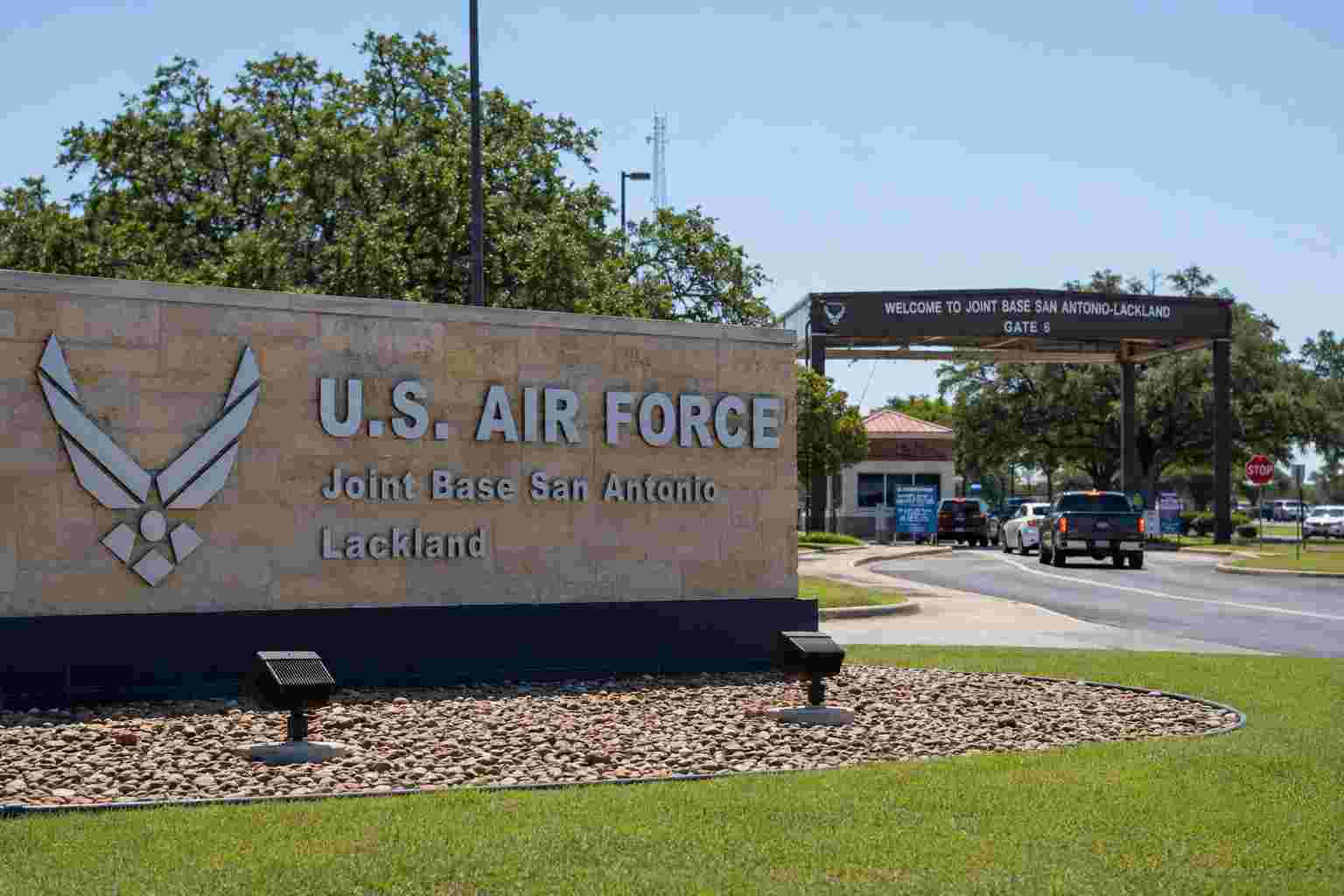
Outbreak at Lackland Raises Concerns Over Health Measures for Military Recruits
JOINT BASE SAN ANTONIO, Texas — A significant influenza outbreak at the U.S. Air Force’s Basic Military Training program has left one trainee dead, sickened hundreds of recruits, and renewed debate over military vaccination policies following a recent shift that made flu shots voluntary.
According to Rep. Joaquin Castro (D-Texas), whose congressional district includes Joint Base San Antonio-Lackland, the outbreak has resulted in 284 confirmed flu cases and four hospitalizations among trainees. The outbreak occurred at the Air Force’s primary enlisted training center, one of the largest military training operations in the country.
The Air Force has since reinstated mandatory influenza vaccinations for trainees after infection rates climbed sharply at the San Antonio installation.
Death of Trainee Brings National Attention to Outbreak
Medical Emergency During Sixth Week of Training
The outbreak first gained public attention in mid-June when the 37th Training Wing announced the death of trainee Keon McDaniel following what officials initially described as a medical emergency.
McDaniel was serving with the 737th Training Support Squadron and was in his sixth week of Basic Military Training. According to Air Force officials, he suffered a medical emergency on June 12 and was transported to Brooke Army Medical Center, where he died on June 16.
On June 30, Castro stated that the Air Force had confirmed McDaniel’s death was related to influenza. During a subsequent press briefing, the congressman said Air Force officials informed his office that 284 trainees had contracted the illness and four required hospitalization.
Air Education and Training Command, which oversees the 37th Training Wing and Basic Military Training operations, has not publicly confirmed the total number of cases or hospitalizations and has not formally linked McDaniel’s death to influenza.
An Air Force spokesperson said the 37th Training Wing has been responding to a localized influenza outbreak in coordination with the 59th Medical Wing, the service’s largest medical organization.
Officials said public health teams implemented measures to isolate infected trainees, provide treatment, and reduce further transmission throughout the training population.
Medical staff continue monitoring recruits who had close contact with infected individuals. Symptomatic trainees are being treated with antiviral medications, including Tamiflu, and may return to training after receiving medical clearance.
Vaccination Policy Change Under Increased Examination
Flu Shot Requirement Was Lifted Earlier This Year
The outbreak has intensified scrutiny of a policy change announced in April by Defense Secretary Pete Hegseth, who rescinded the requirement that active-duty personnel and military trainees receive annual influenza vaccinations.
At the time, Hegseth argued in a social media video that requiring flu vaccinations for all service members under every circumstance was too broad and lacked sufficient justification.
The policy change was followed by a sharp decline in vaccination rates among Air Force trainees.
According to reporting by The Associated Press, only about 40% of Air Force recruits chose to receive the flu vaccine after it became optional. That figure was slightly below the 46.5% vaccination rate reported among U.S. adults during the most recent flu season, according to data from the Centers for Disease Control and Prevention.
The decrease was particularly significant at Lackland. ABC News reported that vaccination rates among recruits fell from nearly universal participation under the previous mandate to roughly 40% after the requirement was lifted.
Military Reinstates Mandatory Flu Vaccinations
Pentagon Grants Exceptions Following Outbreak
Following the outbreak, the Air Force reinstated mandatory influenza vaccinations for trainees.
According to Air & Space Forces Magazine, Chief Pentagon Spokesman Sean Parnell confirmed that the Air Force, Army, Navy, National Security Agency, and Defense Health Agency requested and received exemptions allowing them to continue requiring flu vaccinations in specific circumstances.
Anthony Tata, the undersecretary of defense for personnel and readiness, was tasked with reviewing and consolidating those exemption requests.
The Pentagon has historically supported vaccination requirements, citing their effectiveness in limiting the spread of contagious diseases within military environments where personnel often live and work in close proximity.
Close Living Conditions Increase Transmission Risk
Basic Military Training presents unique challenges for disease prevention because recruits live in shared open-bay dormitories and spend most of their time training in groups.
According to an Air Force fact sheet, the 37th Training Wing trains more than 36,000 recruits annually and conducts initial military training for all enlisted personnel entering the Air Force, Space Force, Air Force Reserve, and Air National Guard.
The military has maintained influenza vaccination requirements for decades. Historical records from the U.S. Army Medical Department indicate that annual flu vaccinations were first required during the 1940s. While the policy has evolved over time, Pentagon guidance dating back to at least 1995 generally required active-duty personnel and trainees to receive annual influenza immunizations.
Congressional Lawmakers Seek Investigation
The outbreak has prompted calls for additional oversight from lawmakers.
Castro has requested a full Pentagon review of the outbreak and an investigation into the circumstances surrounding McDaniel’s death. He also joined Rep. Chrissy Houlahan (D-Pa.) in sponsoring an amendment to the National Defense Authorization Act that would have required influenza vaccinations for service members.
The proposal was ultimately rejected by House Republicans.
The debate comes amid broader discussions about vaccine requirements within the military. Vaccine hesitancy has increased in recent years, particularly after the Pentagon’s COVID-19 vaccination mandate sparked political and legal challenges.
Approximately 8,000 service members were separated from military service for refusing the COVID-19 vaccine requirement. The Defense Department has since implemented measures allowing some of those individuals to return to service.
As health officials continue monitoring the outbreak at Joint Base San Antonio-Lackland, military leaders face renewed questions about balancing individual choice with force readiness and public health protections in one of the nation’s largest military training environments.
