


Carrier doubles down on extended-range strategy to strengthen global connectivity
DUBAI — Emirates Airlines is significantly expanding its ultra-long-haul operations in 2026, scheduling 10 flights that exceed 16 hours, including its longest service reaching 22 hours and 25 minutes. The move underscores the airline’s continued investment in long-range connectivity as it strengthens its position in the global aviation market.
Operating primarily from Dubai International Airport, Emirates is leveraging its widebody fleet to connect distant international markets through a combination of nonstop and one-stop routes. The strategy reflects a balance between operational efficiency and network growth, targeting high-demand corridors across the Americas, Europe, and Oceania.
Longest Routes Highlight Network Strategy
Emirates’ longest scheduled journey in 2026 is the Dubai–Miami–Bogotá service, which reaches a total block time of 22 hours and 25 minutes. The route connects Miami International Airport with El Dorado International Airport, enabling passengers to travel across multiple continents on a single itinerary.
This one-stop route combines long-haul connectivity with fifth freedom rights, allowing the airline to carry passengers between Miami and Bogotá.
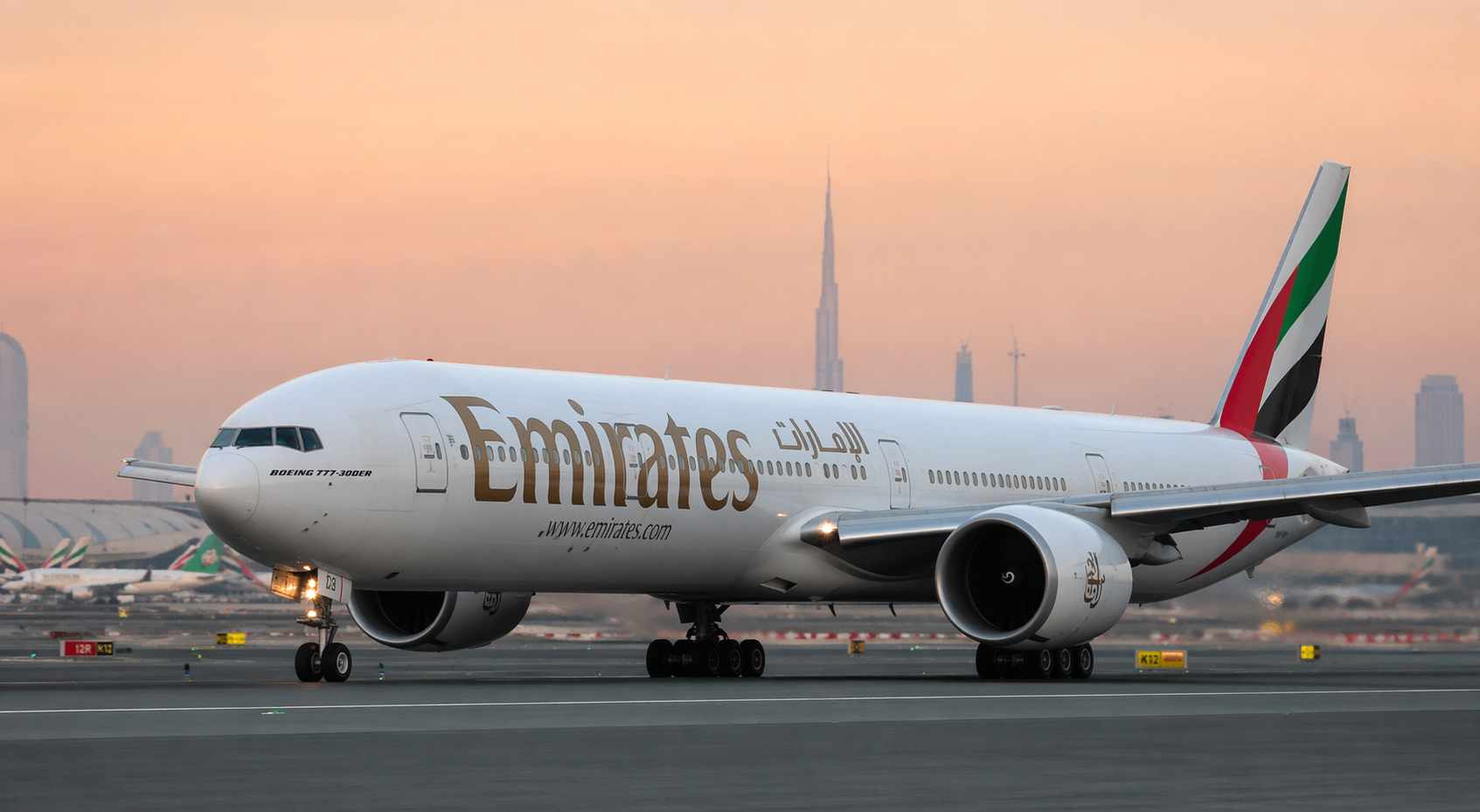
The flight structure improves load factors on the Dubai–Miami segment while enabling Emirates to participate in the competitive Americas market. Despite temporary suspensions earlier in the year, the route is scheduled to resume full operations, supported by Boeing 777-300ER aircraft.
Closely following is the Dubai–Barcelona–Mexico City service, clocking up to 22 hours and 15 minutes. The route links Europe and Latin America via Mexico City International Airport, with a technical stop in Barcelona.
The Barcelona stop helps address performance limitations caused by Mexico City’s high altitude, while also capturing strong passenger demand between Spain and Mexico.
Key Ultra-Long-Haul Connections
Other prominent ultra-long services include Dubai to Buenos Aires via Rio de Janeiro, with a block time exceeding 20 hours. This route continues to serve a niche but important market due to limited direct connectivity between the Middle East and South America.
The Christchurch–Sydney–Dubai rotation ranks among the longest return journeys, nearing 20 hours. Similarly, the Dubai–Milan–New York JFK route demonstrates Emirates’ continued focus on transatlantic fifth freedom operations, allowing it to carry passengers between Europe and the United States.
Flights such as Dubai–Athens–Newark further illustrate the airline’s hybrid approach, combining long-haul efficiency with regional passenger flows. These routes enable Emirates to maximize aircraft utilization while tapping into multiple revenue streams across different markets.
US Market Remains Central to Growth
Emirates continues to expand its footprint in the United States with several long-haul services exceeding 16 hours. Routes to major cities including Houston, Los Angeles, Dallas/Fort Worth, and Orlando remain integral to its network strategy.
The Dubai–Auckland nonstop service, lasting over 17 hours, stands as the airline’s longest direct flight, highlighting its capability to operate some of the world’s most demanding routes without intermediate stops.
Meanwhile, US-bound services benefit from consistent demand, although some routes, such as Orlando, have faced lower seat occupancy in recent years.
Despite operational challenges, including geopolitical disruptions and fluctuating fuel costs, Emirates is maintaining or increasing frequencies on key routes. This reflects confidence in long-haul demand recovery and sustained passenger interest in ultra-long travel.
Outlook for 2026
Emirates’ expansion into ultra-long-haul flying signals a broader industry trend toward fewer stops and more direct global connections. By combining strategic stopovers with nonstop services, the airline is positioning itself to capture both premium and economy traffic across long-distance markets.
With its growing network and continued reliance on high-capacity aircraft, Emirates is reinforcing its role as a leading player in intercontinental aviation, particularly as global travel demand stabilizes and expands in the post-pandemic era.
