


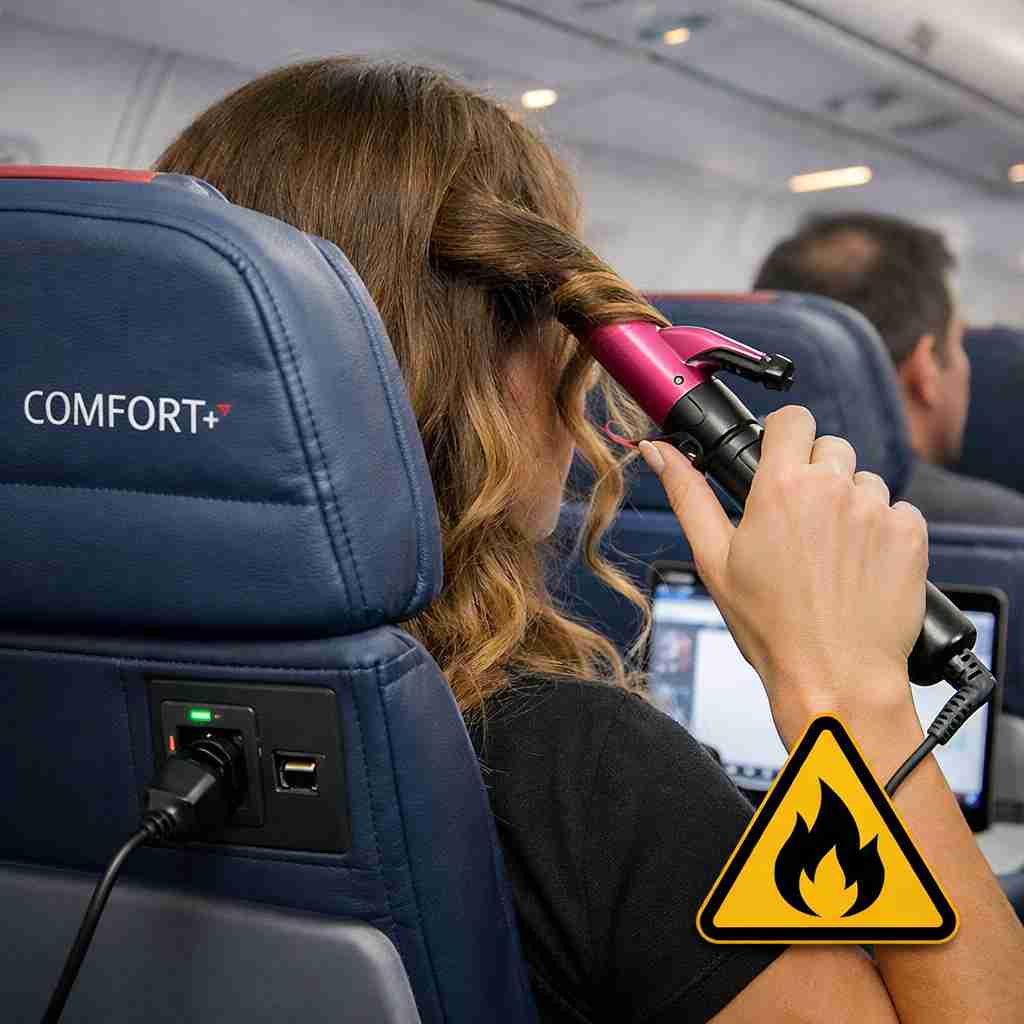
A viral moment raises questions about device use onboard commercial aircraft
ATLANTA — A video showing a Delta Air Lines passenger using a plug-in curling iron during a flight has reignited debate over what personal devices travelers are permitted to use once airborne. The incident occurred in the Comfort+ cabin on a Delta flight, where most mainline aircraft are equipped with in-seat AC power outlets intended for charging small electronic devices.
The short clip, widely circulated on social media, shows the passenger curling her hair section by section while the styling tool is plugged into the aircraft’s power outlet. While the setup appeared technically feasible, the incident highlights a gray area between what passengers are allowed to carry onboard and what they are allowed to operate during flight.
Power Availability Does Not Mean Unlimited Use
Delta Air Lines, which operates its largest hub at Hartsfield-Jackson Atlanta International Airport, equips most of its mainline fleet with seat power. These outlets are primarily intended for phones, laptops, and tablets, reflecting modern traveler expectations of constant connectivity. However, the presence of onboard power does not automatically authorize the use of all plug-in devices.
The Transportation Security Administration permits plug-in curling irons in both carry-on and checked baggage. Cordless versions, particularly those powered by lithium batteries or butane cartridges, are subject to additional restrictions depending on fuel type and capacity. While these rules govern transport through airport security, they do not address inflight use.
Airlines maintain independent policies regarding what devices may be operated onboard. Heating appliances, even when legally transported, introduce potential burn and fire hazards in the confined aircraft cabin, particularly during turbulence.
Crew Authority and Airline Policy
Delta’s publicly available policy does not specifically list curling irons among prohibited inflight devices. The airline does, however, address hair dryers and straighteners in the context of packing and safety considerations. Ultimately, cabin crew retain final authority over device usage.
Under Delta’s Contract of Carriage, flight attendants are empowered to intervene if passenger behavior creates a safety hazard, disrupts the flight, or unreasonably disturbs others. In situations such as this, crew discretion determines whether a device must be unplugged and stowed.
Safety and Cabin Etiquette Concerns
Using a heated styling tool while seated poses several risks. Hot surfaces can cause burns, damage seat materials, or alarm nearby passengers. Sudden turbulence could exacerbate these dangers, increasing the likelihood of injury.
The incident also underscores a broader trend among travelers who attempt to power unconventional devices once they see an available outlet. Reports have included passengers plugging in desktop computers, power strips, and even sewing machines. Airlines continue to balance evolving passenger expectations with the need to maintain a safe and orderly cabin environment.
While passengers are generally allowed to transport a wide range of personal items that meet TSA requirements, approval for use during flight is not guaranteed. Industry experts advise limiting outlet use to low-risk electronics and complying immediately with crew instructions.
A Similar Case: Desktop Computing at 30,000 Feet
The curling iron episode follows another recent viral moment involving a United Airlines passenger who set up a full-sized Apple iMac during a domestic flight. The traveler was seated in an exit row with an empty middle seat, allowing sufficient space to operate the desktop computer without interfering with others.
Standard economy seating typically offers around 30 inches of seat pitch, making the use of large devices impractical. In this case, additional legroom and available seat power made the unusual setup possible. Still, the spectacle drew attention precisely because such usage remains rare.
Technology, Travel, and Common Sense
Decades ago, inflight power was virtually nonexistent, and portable computers were bulky and impractical for onboard use. Today, lightweight laptops and tablets dominate business travel, making the appearance of full desktops or heated appliances notable exceptions rather than emerging norms.
As aircraft cabins become increasingly connected, airlines may face growing pressure to clarify what constitutes acceptable use of onboard power. Until then, safety, courtesy, and crew judgment remain the guiding principles at cruising altitude.
