


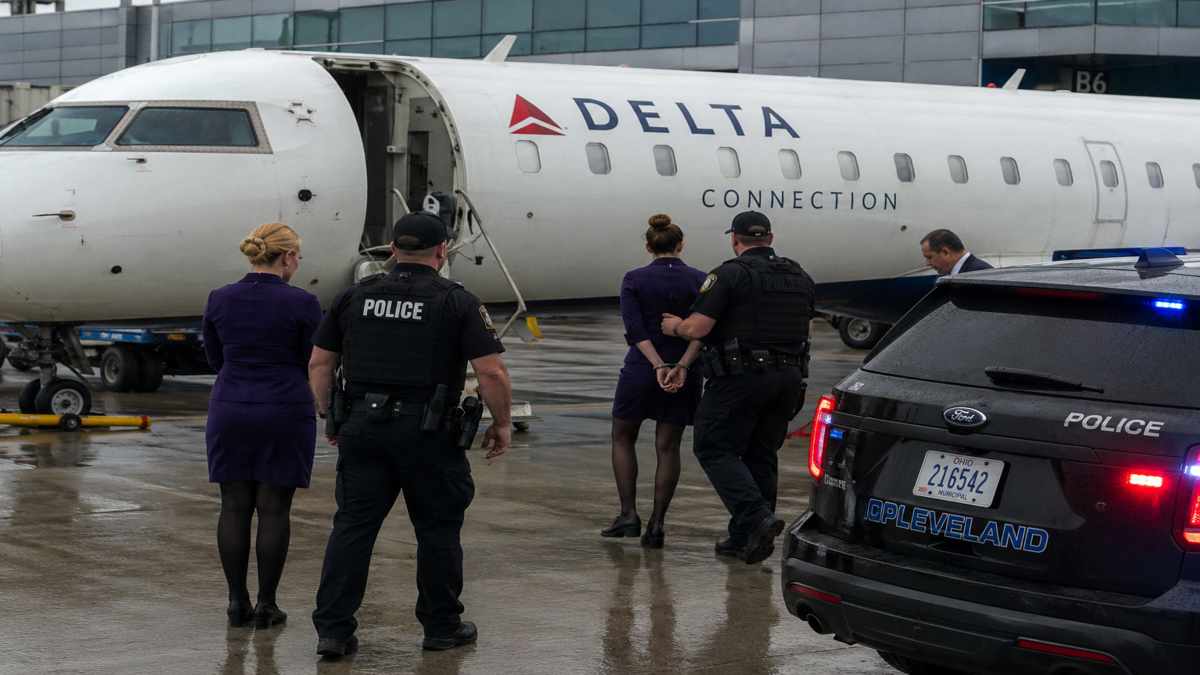
Crew Shortage Forces Cancellation of Delta Connection Service
ATLANTA — Delta Air Lines cancelled a regional flight from Cleveland Hopkins International Airport to Detroit Metropolitan Wayne County Airport after police removed two flight attendants from the aircraft following an alleged physical altercation between the crew members.
Delta Flight 4854, operated by regional subsidiary Endeavor Air under the Delta Connection brand, was scheduled to depart Cleveland for Detroit on May 27, 2026. The airline cited insufficient crew as the official reason for the cancellation after law enforcement detained the two cabin crew members involved in the incident.
Passengers traveling on the route were later rebooked onto flights departing the following day after Delta was unable to secure replacement staff in time to operate the service.
Police Responded to Incident at Cleveland Gate
According to reports, officers boarded the regional jet shortly after it arrived at the gate in Cleveland and escorted one visibly distressed flight attendant off the aircraft. The crew member then provided a statement to police.
Authorities subsequently returned to the plane and removed a second flight attendant, who was detained in connection with the incident.
Reports indicate that one flight attendant had assaulted the other during the inbound flight, and that visible scratches were present. The disagreement reportedly continued after the aircraft arrived at the gate area.
Independent airport incident records referenced by aviation publication View from the Wing described the event as an assault involving two crew members at Gate B6 inside Cleveland Hopkins International Airport.
Officers were dispatched after reports of a fight between the two flight attendants assigned to the Delta Connection service.
Staffing Rules Left Flight Unable to Operate
The removal of the two working crew members left the aircraft below federally mandated staffing requirements needed for departure.
Under U.S. aviation regulations, airlines must maintain minimum numbers of flight attendants based on aircraft seating capacity and operational safety standards. Once the flight fell below that threshold, the aircraft could no longer legally depart.
Delta did not have another scheduled Cleveland-to-Detroit service available later in the day that could absorb displaced passengers, forcing the carrier to move customers to flights the next day.
While the airline’s explanation of “insufficient crew” was technically accurate, the description did not disclose that the staffing shortage stemmed from an alleged altercation between employees rather than a routine scheduling or operational issue.
Airline Industry Faces Challenges Managing Employee Misconduct
The incident also underscores the different procedures airlines follow when misconduct involves employees instead of passengers.
Major carriers have increasingly adopted aggressive enforcement measures against disruptive travelers in recent years, including placing passengers on no-fly lists or issuing permanent bans following onboard disturbances.
Employee-related incidents, however, typically move through more formal internal processes involving union representation, human resources investigations, disciplinary reviews, and law enforcement documentation before termination or suspension decisions are finalized.
That framework can result in longer resolution timelines compared with the immediate consequences often imposed on passengers.
Crew Pairings Can Create Operational Tensions
Cabin crew conflicts remain relatively uncommon given the operational structure of modern airlines, where flight attendants frequently work with colleagues they have never previously met.
Large carriers manage thousands of daily crew pairings across extensive route networks, increasing the likelihood that unfamiliar employees will be assigned together on short notice.
To reduce repeat conflicts, many airlines maintain internal systems that allow crew scheduling departments to prevent certain employees from being paired together again following workplace disputes.
Industry observers note that such systems help minimize recurring problems but cannot eliminate the possibility of first-time incidents.
Similar crew disputes have surfaced at other U.S. airlines in recent years. In one case involving SkyWest Airlines operating flights for American Airlines, two flight attendants reportedly refused to continue working together after disagreeing over passenger seat-trading policies.
Another incident involved a United Airlines flight stranded in Des Moines after the airline removed an entire crew following a dispute involving cabin staff.
Pilot Disputes Have Also Disrupted Flights
Operational conflicts are not limited to flight attendants.
An incident involving Alaska Airlines reportedly saw a captain walk off a flight after an argument with a first officer, later informing passengers that the dispute made it impossible to continue operating together.
In a more serious historical case involving Delta, a first officer allegedly pulled a gun on a captain and threatened to shoot him if the aircraft diverted for a sick passenger.
The Cleveland incident adds to a growing list of workplace disputes within the airline industry that have disrupted operations, delayed passengers, and drawn attention to the pressures facing frontline aviation employees.
