


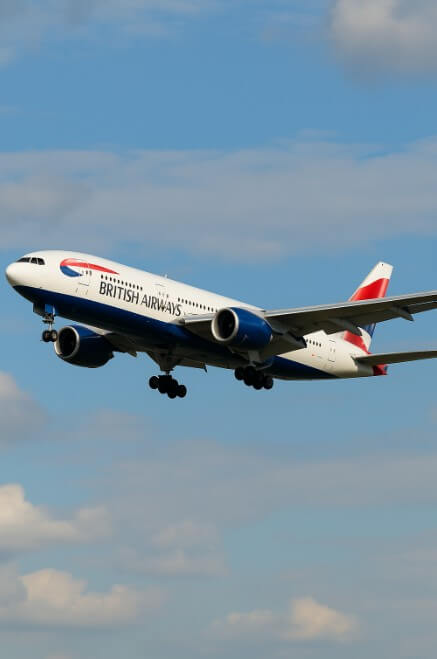
London, Sept. 4, 2025 — A British Airways flight bound for Toronto was forced to make a precautionary return to London Heathrow Airport on Wednesday evening after the crew reported a technical problem involving the aircraft’s oxygen system.
Flight BA99, operated by a Boeing 777-200, departed Heathrow at 6:38 p.m. local time on September 3, more than an hour behind its scheduled departure of 5:15 p.m. The service was en route to Toronto Pearson International Airport when the flight crew halted its climb through Welsh airspace at 15,000 feet, according to data from online aviation tracker Flight Emergency.
“The issue was an oxygen system problem,” Flight Emergency reported. The crew elected to discontinue the climb and return to Heathrow as a precautionary measure.
Flight Path Altered Mid-Route
After leaving London, the widebody aircraft initially followed its standard transatlantic track toward Canada, climbing normally through the early stages of the journey. At flight level FL150—roughly 15,000 feet—the crew made the decision to level off and abandon the ascent. The aircraft then turned back toward its departure airport.
Data shows that BA99 touched down safely at Heathrow at 8:10 p.m., less than two hours after takeoff. No injuries or onboard emergencies were reported.
Aircraft and Service Details
The aircraft involved was a Boeing 777-200 registered as G-YMMJ. The jet has been in service with British Airways since December 2000, making it nearly 25 years old. As one of the carrier’s long-haul workhorses, the 777-200 type is frequently deployed on transatlantic and other intercontinental routes.
Despite its age, the aircraft remains a core part of British Airways’ fleet. Aviation databases show that G-YMMJ has been maintained in operational service since its delivery from the Boeing factory. Like many airlines, British Airways continues to use older widebody aircraft alongside newer models such as the Boeing 787 Dreamliner and Airbus A350.
Impact on Operations
The precautionary diversion disrupted Wednesday’s scheduled London–Toronto service, though British Airways has not released details on passenger accommodations or whether a replacement aircraft was dispatched later in the evening. The airline has also not issued an official public statement regarding the technical issue, beyond confirming the return.
Oxygen system problems can be considered significant in modern commercial aviation, as they are directly related to passenger and crew safety at cruising altitudes where cabin pressurization is essential. Industry experts note that precautionary returns such as BA99’s are not uncommon, particularly for transatlantic services where diversion options can become limited once aircraft begin oceanic crossings.
Industry Context
British Airways, a unit of International Airlines Group (IAG), is one of the largest carriers operating across the North Atlantic, with multiple daily departures from London Heathrow to Canadian and U.S. cities. The airline has invested heavily in renewing parts of its long-haul fleet but still relies on the Boeing 777-200, which forms the backbone of its Toronto service.
While flight delays and diversions inevitably cause inconvenience for passengers, aviation safety analysts emphasize that precautionary landings reflect adherence to strict safety protocols rather than emergencies in progress. In this case, the crew’s decision to return before crossing into the Atlantic suggests an abundance of caution.
Looking Ahead
It remains unclear whether G-YMMJ will return to service promptly or undergo extended maintenance checks following the incident. Airlines typically conduct thorough inspections after technical returns to identify and correct the root cause before the aircraft is cleared for further operations.
British Airways flight BA99 is scheduled as a daily service from Heathrow to Toronto Pearson, catering to both business and leisure travelers. The airline has not indicated whether Thursday’s scheduled BA99 service will be affected.
