


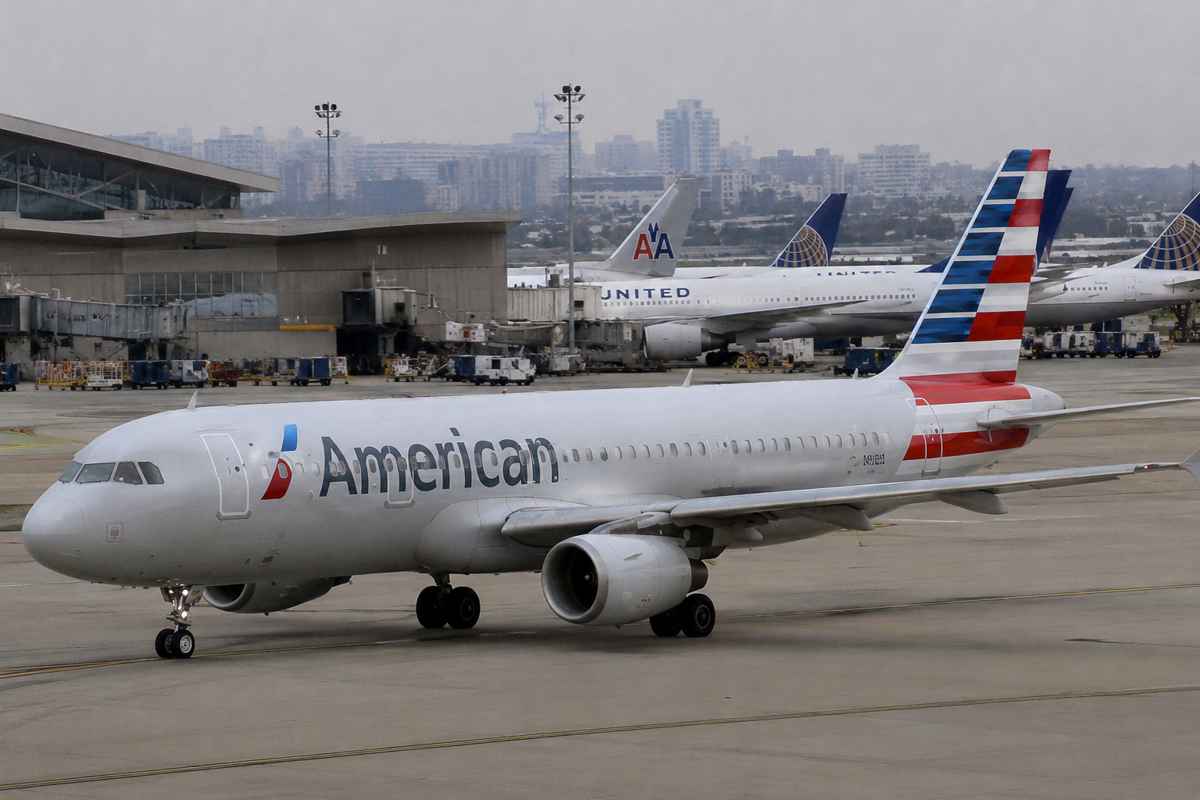
Union leaders challenge management strategy while signaling openness to takeover proposals
FORT WORTH, Texas — American Airlines is facing renewed pressure from its pilots union after labor leaders publicly signaled openness to merger and takeover discussions, escalating tensions with management at a critical moment for the carrier.
The move marks one of the most direct challenges yet to the leadership of Chief Executive Robert Isom, as the Allied Pilots Association intensifies criticism of the airline’s long-term direction and operational performance.
Union leaders have recently met with Wall Street analysts and aviation journalists to argue that the airline lacks a coherent long-term vision, according to people familiar with the discussions. The effort comes after United Airlines Chief Executive Scott Kirby publicly acknowledged that he had previously explored the possibility of a merger involving the two carriers.
Pilots Union Says “Any Path Forward” Is Possible
The president of the Allied Pilots Association has stated that “any path forward” is on the table, including the possibility of another airline acquiring American Airlines.
Union leadership has framed its concerns around three core arguments: that American Airlines management lacks a long-term strategy, that the airline’s current trajectory is unsustainable, and that mergers or other structural changes should be considered if they improve the company’s prospects.
“In the union’s own words, leadership has stated that it has seen little in terms of vision, culture change, and operational improvements to believe that meaningful positive progress can be achieved in an acceptable timeframe.”
The comments represent a notable escalation from earlier this year, when the union stopped short of issuing a formal no-confidence vote against Isom. Instead, union officials sought a meeting with American Airlines’ board of directors, a request that was ultimately declined.
Board Pressure Intensifies Amid Takeover Discussions
According to union leadership, American Airlines executives have repeatedly questioned whether outside parties are approaching the union regarding possible takeover plans.
The union president confirmed that such conversations have taken place and said the board should formally evaluate any credible proposals rather than dismissing them outright.
The campaign has expanded beyond internal labor discussions. As first reported by aviation industry outlet View from the Wing, union leaders have actively shared their concerns with financial analysts and journalists in an apparent effort to increase pressure on the company’s board.
United CEO’s Remarks Add Fuel to Debate
Kirby’s recent comments regarding a potential tie-up between American and United have further intensified speculation across the airline industry.
The United CEO has not only acknowledged past merger discussions but has also encouraged American pilots to review his arguments about how such a combination could strengthen both carriers and potentially withstand antitrust scrutiny.
Union leadership has amplified those remarks among its members, using them to reinforce criticism of American Airlines management and to suggest alternative strategic paths for the company.
Internal Union Politics Shape Confrontational Approach
The increasingly aggressive tone from the Allied Pilots Association is also being shaped by internal union politics.
Financially, many pilots see management changes or broader restructuring as a potential route to improved profitability. Greater profits could lead to larger profit-sharing payouts under the current pilot contract while strengthening pilots’ leverage in future labor negotiations.
At the same time, the union itself is facing internal divisions. A significant portion of members has pushed to merge the independent pilots union with the larger Air Line Pilots Association, commonly known as ALPA.
Roughly 18 months ago, a previous union president who opposed joining ALPA was recalled by members, highlighting deep divisions within the organization. Current leadership is therefore under pressure to maintain a forceful public posture as it navigates that internal political battle.
American Airlines Attempts Strategic Reset
The criticism comes as American Airlines attempts to execute what some industry observers see as its clearest strategic direction in more than a decade.
The airline has been investing heavily in customer experience initiatives aimed at improving passenger loyalty and narrowing the competitive gap with rivals such as Delta Air Lines and United Airlines.
Some analysts believe the strategy arrives at a favorable moment, particularly as Delta’s dominance in the premium travel segment faces increasing competitive pressure.
Still, critics argue that management has struggled to clearly communicate its vision to employees, investors, and customers. That perceived communication gap has allowed union leaders and other critics to shape the narrative surrounding the airline’s future.
Outlook Remains Uncertain
While speculation surrounding leadership changes at American Airlines has eased somewhat compared with earlier this year, the pilots union’s willingness to openly discuss merger possibilities presents a new challenge for the company’s board and executive team.
American Airlines now faces growing pressure to either publicly defend its strategic direction or engage more directly with stakeholders about the company’s future plans.
With United Airlines executives openly discussing consolidation scenarios and the Allied Pilots Association signaling openness to outside proposals, scrutiny of American Airlines’ leadership is likely to remain intense in the months ahead.
