


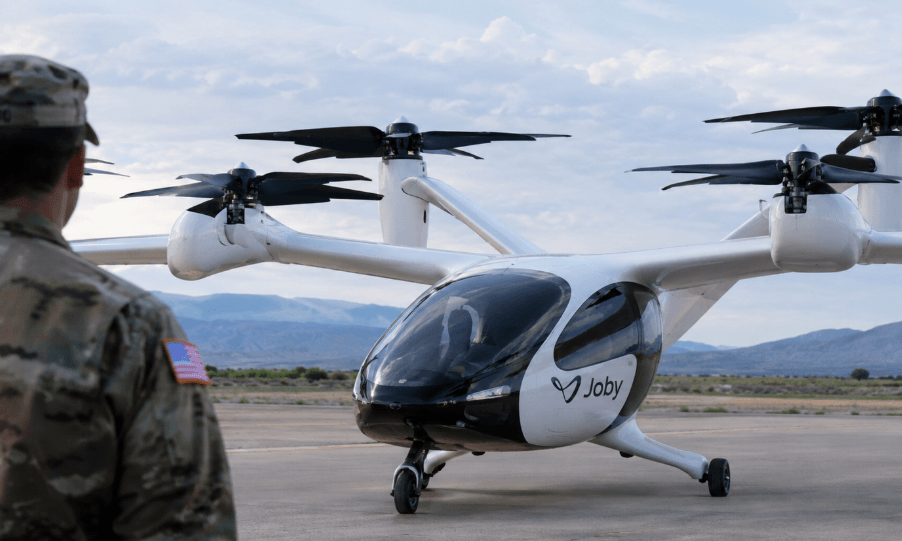
Joby Aviation shares rose more than 4% on November 4, 2026, after the electric aircraft developer announced additional funding from the U.S. Air Force for its autonomous flight technology. The expanded agreement highlights growing military interest in unmanned aviation systems, although investors remain focused on the company’s substantial cash consumption and its ability to scale aircraft production.
U.S. Air Force Increases Investment in Joby Aviation’s Autonomous Technology
Joby Aviation (NYSE: JOBY) gained approximately 4% following an announcement that the U.S. Air Force had increased its total financial commitment to the company’s autonomous aviation programs to nearly $37 million.
The additional funding also raises the maximum value of Joby’s operational testing contract to $50 million, providing an opportunity for further development and evaluation of its autonomous flight capabilities.
The agreement supports ongoing work on autonomous flight software and expanded operational testing in the Pacific region.
Military Focuses on Safer Cargo Operations
The Air Force is exploring autonomous aircraft as a potential solution for transporting supplies in challenging military environments while reducing risks to personnel.
Kate Brown, who leads contested logistics tactical airlift initiatives at AFWERX, explained the program’s objectives in Joby’s announcement.
“Our goal is to sustain cargo operations in contested environments while reducing risk to aircrews and preserving crewed aircraft for missions that require them.”
The initiative reflects the Pentagon’s broader interest in using autonomous aviation technologies to support military logistics, particularly in areas where traditional crewed aircraft may face heightened operational risks.
For Joby, the expanded agreement represents an opportunity to strengthen its position in the defense aviation market while continuing to develop aircraft for commercial operations.
Joby Aviation Expands Defense Business Through Acquisitions
The latest Air Force funding follows Joby’s efforts to diversify its business beyond electric vertical takeoff and landing (eVTOL) aircraft.
In August 2026, the company agreed to acquire Resonant Sciences in a transaction carrying a base purchase price of approximately $500 million, with most of the consideration expected to be paid in cash.
The acquisition is part of Joby’s broader strategy to establish a stronger presence in defense technology and autonomous aviation.
However, expanding into military contracts also introduces additional financial commitments at a time when the company continues investing heavily in aircraft development, manufacturing infrastructure and commercialization.
Cash Burn Remains a Major Concern for Joby Investors
Although the Air Force’s nearly $37 million commitment provides additional financial support, its scale remains relatively modest compared with Joby’s operating expenses and investment requirements.
Analysts expect the company’s annual revenue to reach approximately $121 million in 2026, reflecting substantial growth from its relatively small existing revenue base.
However, Joby’s free cash flow has remained negative, with annual cash outflows increasing since 2021.
Company Recorded $564 Million in Negative Free Cash Flow
Joby reported approximately $564 million in negative free cash flow during 2025, illustrating the substantial capital required to develop and commercialize its aircraft technology.
Management has projected cash use of between $385 million and $415 million during the second half of 2026 alone.
These figures underscore the financial challenges facing the company as it works toward expanding aircraft production and generating sustainable commercial revenue.
While government contracts could provide additional revenue opportunities, investors are closely monitoring whether Joby can control spending without delaying its manufacturing and operational objectives.
Archer Aviation Pursues Competing Defense Strategy
Joby is not the only electric aviation company seeking opportunities in the U.S. defense sector.
Competitor Archer Aviation (NYSE: ACHR) is pursuing a different approach through acquisitions designed to expand its military technology capabilities and revenue base.
In August, Archer announced an agreement involving Boeing’s Wisk Aero, Insitu and SkyGrid businesses, with consideration to be paid in Archer shares.
The company expects the transaction to close before the end of 2026.
Insitu Acquisition Could Strengthen Archer’s Revenue
According to Archer’s second-quarter shareholder letter, Insitu is a profitable drone manufacturer generating more than $200 million in annual revenue.
That revenue base is significantly larger than the total value of Joby’s current Air Force funding commitment.
The companies’ acquisition strategies also differ financially. Archer’s proposed transaction relies on stock consideration, while Joby’s Resonant Sciences acquisition involves a substantial cash payment.
Archer is scheduled to report its quarterly financial results the following week, providing investors with additional insight into its defense expansion strategy.
Joby’s Third-Quarter Earnings Put Production and Spending in Focus
Joby’s expanded Air Force agreement comes ahead of its third-quarter earnings announcement, scheduled for after the U.S. stock market closes on November 4.
Investors are expected to examine the company’s cash position, spending projections and progress toward commercial aircraft production.
Manufacturing capacity remains another important concern.
Barclays has previously expressed doubts about whether Joby’s production facilities can expand quickly enough to support its long-term ambitions.
With Joby shares having lost roughly two-thirds of their value during 2026, the company’s ability to demonstrate operational progress while managing financial pressures remains central to its investment outlook.
Outlook for Joby Aviation
The U.S. Air Force’s expanded commitment strengthens Joby Aviation’s position in autonomous flight technology and demonstrates continued government interest in its defense applications.
However, the additional funding does not eliminate the company’s broader financial challenges.
Joby’s upcoming earnings results, manufacturing progress and future cash requirements will play a significant role in determining whether its expanding defense business can support long-term growth and improve investor confidence.
