


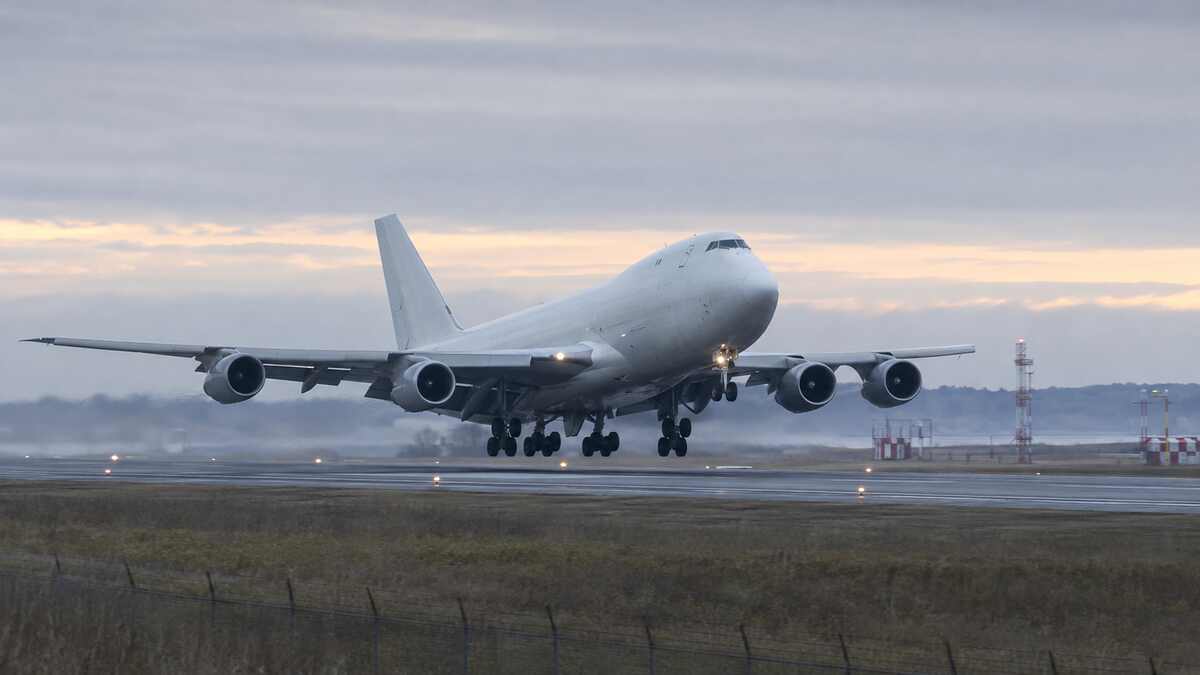
A calculation error that understated a Boeing 747’s takeoff weight by approximately 113,000 kilograms led pilots to use incorrect speeds and inadequate engine thrust before a fatal crash at Halifax International Airport, investigators found.
MK Airlines Flight 1602 was scheduled to fly from Halifax, Canada, to Zaragoza, Spain, on October 14, 2004. The Boeing 747-244SF cargo aircraft failed to climb safely, overran the runway and struck an earthen berm. All seven crew members aboard were killed.
Investigators determined that the aircraft did not have a pre-existing mechanical defect that would have prevented normal operation. Weather conditions were also not identified as the primary cause. Instead, the accident resulted from incorrect takeoff-performance data that went undetected before departure.
Incorrect Weight Produced Unsafe Takeoff Data
The Boeing 747 had arrived in Halifax after completing an earlier flight from Bradley International Airport in Connecticut. During preparations for the next sector, the crew calculated takeoff performance using a weight associated with the previous, significantly lighter flight.
The aircraft’s planned takeoff weight from Halifax was approximately 353,000 kilograms. However, investigators concluded that the weight used in the performance calculation was likely about 240,000 kilograms.
That discrepancy of roughly 113,000 kilograms affected the calculated V-speeds, which tell pilots when to make critical decisions and begin rotating the aircraft for takeoff. It also resulted in a thrust setting that was too low for the heavily loaded freighter.
Boeing Laptop Tool Carried Forward Earlier Data
The crew used the Boeing Laptop Tool, known as the BLT, to determine the required takeoff settings.
Investigators found that the software could retain the weight from an earlier calculation. That feature created an opportunity for outdated information to be carried into a subsequent flight unless the user deliberately entered and verified the new weight.
Because the software processed the incorrect input normally, it generated performance figures that appeared usable but were unsuitable for the aircraft’s actual operating weight.
The accident highlighted a continuing risk in computerized flight planning: software can calculate figures precisely while still producing a dangerous result if the underlying data are wrong.
Required Cross-Checks Did Not Detect Error
The incorrect figures should have been identified through the airline’s verification procedures. However, the Transportation Safety Board of Canada found that the pilots did not complete the required gross-error check.
Without that independent comparison, the inaccurate takeoff speeds and thrust settings remained in use as Flight 1602 began accelerating along Runway 24.
The aircraft’s acceleration was insufficient for its actual weight. Nevertheless, the crew attempted to rotate at the calculated speed.
Aircraft Struck Runway Before Briefly Becoming Airborne
During the attempted rotation, the lower aft fuselage hit the runway twice. The Boeing 747 remained on the ground beyond the runway’s end before becoming airborne for a brief period.
It then struck an earthen berm supporting an instrument landing system localizer antenna. The impact caused the tail section to separate from the aircraft.
The remaining fuselage continued forward, struck terrain and broke apart. A severe post-crash fire followed, killing all seven people aboard.
Investigators found no evidence of a fire before impact or any mechanical condition that would have stopped the aircraft from operating normally.
Fatigue and Training Gaps Increased Risk
The incorrect weight was central to the accident, but investigators identified additional factors that weakened the crew’s ability to prevent or recognize the developing emergency.
Fatigue likely increased the risk of an error during the performance calculation. It may also have reduced the pilots’ ability to recognize that the aircraft was not accelerating as expected during the takeoff roll.
The investigation further found that MK Airlines did not have a formal training and testing program for the Boeing Laptop Tool. As a result, the person completing the calculation may not have been sufficiently familiar with the software and its potential to retain information from an earlier flight.
Accident Underscored Importance of Independent Verification
The combination of fatigue, inadequate training and failure to follow verification procedures allowed a major data-entry error to pass through several layers of operational protection.
The crash demonstrated that sophisticated software cannot replace proper training, procedural compliance and independent review. Computerized tools can improve accuracy and efficiency, but their results remain dependent on the information entered by flight crews.
For commercial aviation operators, the Halifax accident remains a stark example of why unexpected performance figures must be challenged and independently confirmed before an aircraft begins its takeoff roll.
