


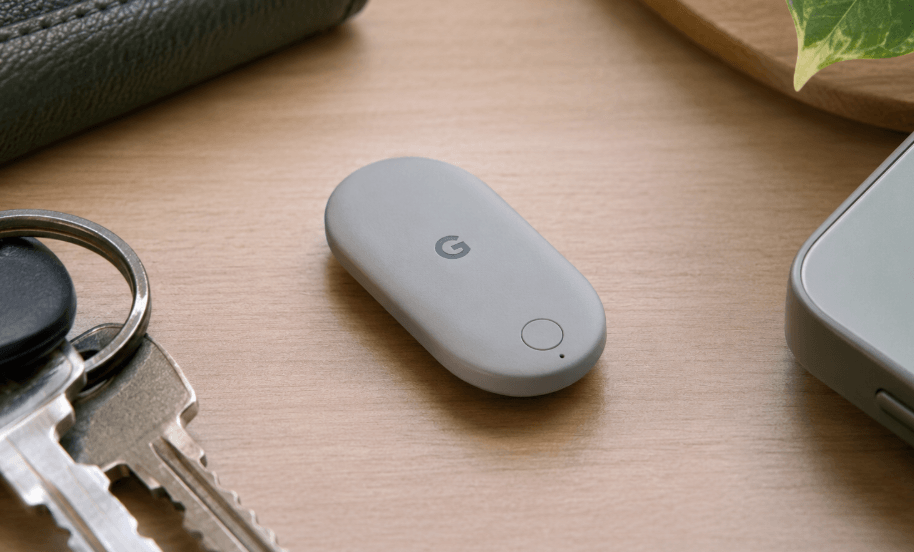
Google is expanding its hardware lineup with the Pixel Tag, a new $29 item tracker designed to help users locate keys, bags and other belongings. Arriving in November, the device combines ultra-wideband technology with Bluetooth 6.0 Channel Sounding, giving Google its most direct competitor yet to Apple’s AirTag.
Google Pixel Tag Launches November 11 for $29
The Pixel Tag will go on sale November 11, later than Google’s newly announced Pixel 11 smartphones and Pixel Watch 5, which are already available for preorder and are scheduled to ship sooner.
Google has priced the Pixel Tag at $29 for a single tracker, while a four-pack will cost $99. Those prices match Apple’s AirTag 2, putting the two products in direct competition for consumers looking for compact tracking devices.
The launch comes more than two years after Google introduced its device-tracking network. Until now, the company has largely relied on compatible trackers from other manufacturers rather than offering its own Pixel-branded hardware.
UWB and Bluetooth 6.0 Offer Two Precision-Finding Options
One of the Pixel Tag’s most notable features is its combination of ultra-wideband, commonly known as UWB, and Bluetooth 6.0 Channel Sounding.
Both technologies are designed to improve close-range location accuracy, giving users more precise guidance when searching for a misplaced item nearby. The inclusion of two precision-tracking technologies could make the Pixel Tag particularly useful in situations where standard Bluetooth tracking provides only a general location.
Slim Design Comes in Google’s Fog Finish
The Pixel Tag has a slim, oblong design and will initially be available in a gray-toned color called Fog. It weighs approximately 12 grams, or 0.4 ounces.
Like Apple’s AirTag, the Pixel Tag does not include a built-in hook, loop or clip. Users who want to attach it to keys, luggage or other items may therefore need a separate accessory or holder.
The device includes a single physical button. Pressing it can trigger a sound on the user’s phone, providing a reverse-finding option for situations in which the Pixel Tag is nearby but the connected smartphone has gone missing.
IP67 Water Resistance and Replaceable Battery
Google has given the Pixel Tag an IP67 rating for dust and water resistance. That should provide protection against everyday exposure to dust, splashes and rain, an important feature for a tracker likely to spend time attached to bags or other frequently carried belongings.
Power comes from a replaceable CR2032 coin-cell battery, a widely available battery type also used in many other small electronic devices. Google says a single battery should provide more than one year of operation before it needs to be replaced.
The replaceable battery design means users will not need to recharge the Pixel Tag regularly, while also allowing the tracker to remain in service after its original battery is depleted.
Pixel Tag Expands Google’s Device-Tracking Ecosystem
The Pixel Tag represents another step in Google’s effort to build a more integrated hardware ecosystem around Android and Pixel devices. With a $29 starting price, precision-finding technology, a compact design and a user-replaceable battery, the tracker is positioned squarely against Apple’s AirTag lineup.
When the Pixel Tag reaches stores on November 11, its combination of UWB and Bluetooth 6.0 Channel Sounding will be one of its key differentiators. For Android users looking for a Google-branded way to keep track of everyday belongings, the Pixel Tag could become an important addition to the company’s expanding Pixel portfolio.
