


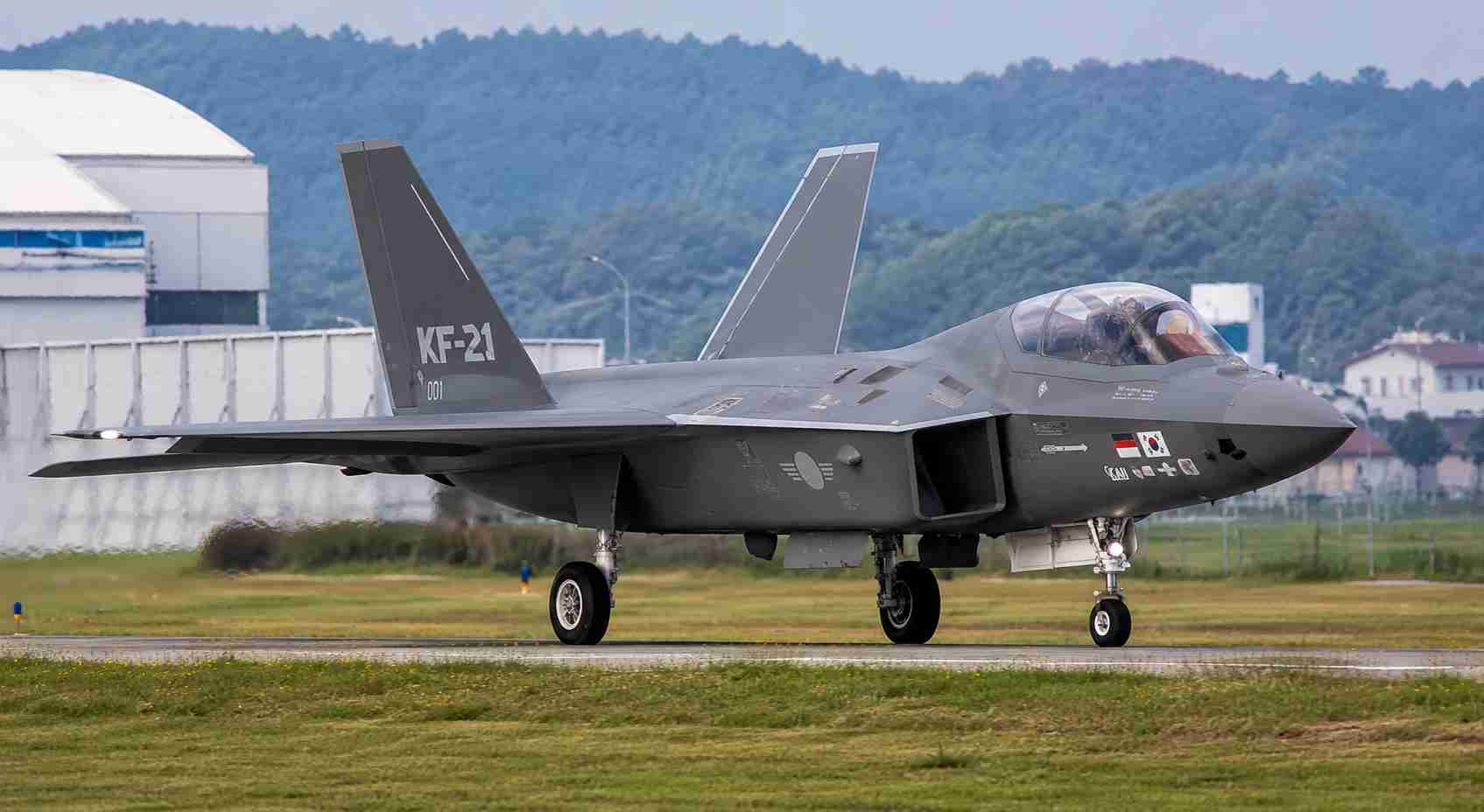
Seoul advances next procurement phase while Indonesia explores an initial order of 16 domestically developed fighter jets
South Korea is preparing to expand its next-generation fighter fleet as Korea Aerospace Industries (KAI) moves closer to delivering the first operational KF-21 Boramae aircraft to the Republic of Korea Air Force (ROKAF). The milestone marks a significant step in Seoul’s long-term effort to strengthen domestic defense manufacturing while positioning the KF-21 as a competitive export platform in the global fighter aircraft market.
KAI expects to secure a follow-on order for 80 additional KF-21 fighters once the initial production batch is completed. The anticipated procurement would build on the South Korean government’s existing order for 40 aircraft and further reinforce the country’s strategy of modernizing its air force with an indigenous combat aircraft.
The development comes as the company advances flight testing for the first production aircraft and continues discussions with Indonesia over what could become the KF-21 program’s first international sale.
KF-21 Deliveries Enter Final Testing Phase
First production aircraft on schedule for operational service
KAI has begun verification flights for the first production KF-21 aircraft ahead of formal acceptance testing scheduled for September. The first two aircraft are expected to be delivered to the Republic of Korea Air Force in October, with additional deliveries continuing through the end of next year.
The company expects to hand over eight KF-21 fighters by the end of 2026, keeping the program aligned with South Korea’s objective of introducing the aircraft into operational military service before the close of the year.
Earlier this month, the KF-21 achieved initial type certification, an important regulatory milestone that clears the way for operational deployment after final acceptance testing.
The South Korean government previously ordered 40 Block 1 aircraft under the first phase of procurement. These aircraft are designed primarily for air-to-air missions and are intended to gradually replace aging fighter platforms currently serving in the ROKAF inventory.
Following completion of the initial production run, KAI expects Seoul to authorize a second procurement phase covering an additional 80 aircraft.
Unlike the first production configuration, the planned Block 2 variant will feature enhanced air-to-ground strike capabilities, expanding the KF-21’s role into a more versatile multirole combat aircraft capable of supporting a broader range of modern military missions.
Indonesia Advances Toward Potential Purchase
Negotiations focus on initial order of 16 aircraft
Indonesia remains one of the KF-21 program’s most important international partners despite several years of uncertainty surrounding its participation.
The two governments restored cooperation in 2025 after resolving disagreements related to financial contributions and technology transfer, allowing negotiations to continue throughout 2026.
According to KAI, Indonesia has now fulfilled its revised financial obligations tied to the fighter’s development program, removing a key obstacle that had slowed progress in previous years.
The company is now engaged in detailed discussions regarding an initial purchase of 16 KF-21 fighters. If negotiations ultimately result in a contract, longer-term procurement could eventually expand to as many as 48 aircraft under future agreements.
Under the current framework, KAI would manufacture the aircraft in South Korea while Indonesia would participate through industrial cooperation rather than domestic assembly.
Earlier concepts envisioned production of an Indonesian IF-X variant within Indonesia. However, more recent discussions have shifted toward aircraft assembled in South Korea alongside broader industrial collaboration involving Indonesian industry.
Industry reports have also suggested that Indonesia is reassessing its long-term industrial participation while continuing to evaluate direct procurement of the KF-21. Although negotiations appear to be progressing, no final purchase agreement has been announced.
Export Strategy Positions KF-21 for Global Growth
Domestic success could strengthen international sales prospects
Beyond meeting South Korea’s military modernization goals, KAI views the KF-21 Boramae as one of the country’s most important long-term defense export programs.
The fighter is attracting increasing attention from nations seeking a modern multirole aircraft positioned between expensive fifth-generation stealth fighters and legacy fourth-generation platforms. That market segment has become increasingly competitive as countries balance advanced capabilities with procurement and operating costs.
Indonesia already has extensive experience operating KAI-built aircraft, including 22 T-50I advanced jet trainers and 20 KT-1 basic trainers. That existing relationship could provide a practical foundation should Jakarta proceed with its first KF-21 acquisition.
For South Korea, securing the expected domestic order for another 80 fighters while completing the program’s first export sale would represent a major milestone for both its defense industry and aerospace sector.
As production accelerates and operational service begins later this year, the KF-21 is expected to play a growing role in strengthening South Korea’s national defense capabilities while supporting the country’s ambitions to expand its presence in the international military aircraft market.
