


Airline Expands Flagship Business Class Experience Across Long-Haul Network
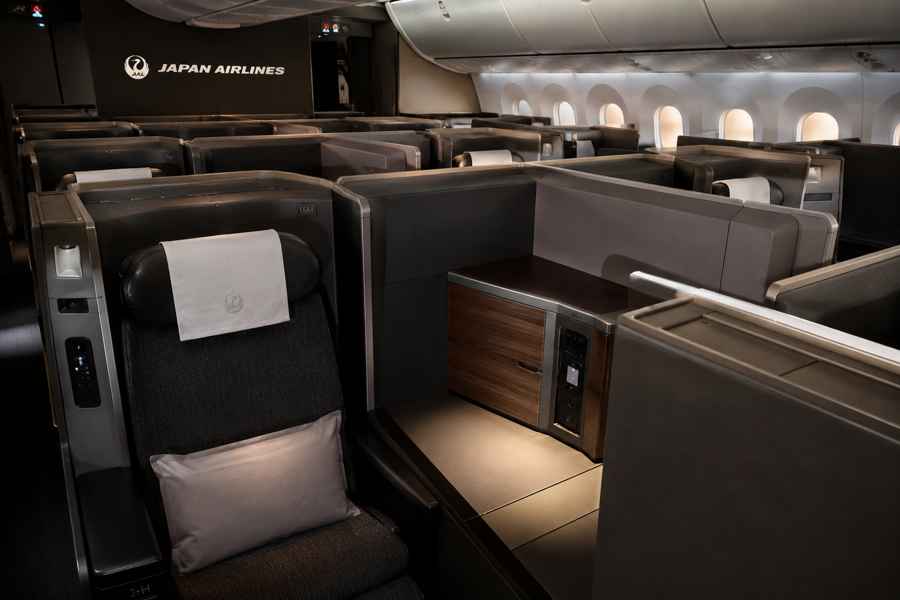
TOKYO — Japan Airlines (JAL) is set to significantly enhance its long-haul premium offering by introducing the same doored business class suites featured on its flagship Airbus A350-1000 aircraft across its Boeing 787-9 fleet, as the carrier moves to standardize its premium cabin experience and strengthen its position in international markets.
The upgrade will cover 11 existing Boeing 787-9 Dreamliners and an additional 10 aircraft scheduled for delivery between 2028 and 2031. The initiative forms part of a broader fleet modernization strategy that will also see the same premium business class product installed on 20 Airbus A350-900 aircraft expected to join the airline between 2027 and 2028.
By deploying a consistent business class product across its long-haul fleet, JAL aims to offer passengers a uniform premium experience on key international routes while supporting future growth in high-yield markets.
Premium Suite Standardization Across the Fleet
According to Executive Traveller, Ross Legget, JAL’s Senior Vice President for Route Marketing, confirmed the cabin plans during a media event in Honolulu marking Hawaiian Airlines’ entry into the Oneworld alliance.
Legget said the Boeing 787-9 interiors will closely resemble the business class cabins currently operating on JAL’s Airbus A350-1000 services to New York and London. While the final configuration may differ slightly due to aircraft-specific constraints, the airline intends to maintain the same enclosed suite concept that has become a defining feature of its flagship product.
Industry observers believe the seats will be based on the Safran Unity platform already installed on the A350-1000. The seat design has also been adapted for use on Boeing 787 aircraft by Riyadh Air, demonstrating its compatibility with the Dreamliner’s narrower cabin layout.
Signature Features Designed for Privacy and Comfort
Each suite is expected to feature privacy walls measuring approximately 1.3 meters, or 52 inches, creating a more secluded environment for travelers on long-haul flights.
A standout feature of the current A350-1000 business class product is its integrated headrest speaker system, which allows passengers to listen to inflight entertainment audio without wearing headphones. The technology is designed to direct sound toward the occupant while minimizing noise leakage into neighboring suites.
JAL intends to replicate much of the A350-1000 experience on the Boeing 787-9 fleet, including these innovative audio features.
Some Design Adjustments May Be Required
One element that may not transfer directly to the Dreamliner is the personal wardrobe integrated into each business class suite on the Airbus A350-1000.
Because the Boeing 787-9 cabin is slightly narrower than that of the A350 family, engineers may need to modify certain suite components to fit within the available space. However, the airline’s forthcoming Airbus A350-900 aircraft are expected to receive the same premium product without significant changes.
Fleet Realignment Supports Premium Growth Strategy
Alongside the cabin upgrade program, JAL plans to transfer 10 Boeing 787-9 aircraft to its low-cost subsidiary Zipair beginning in 2027.
The move reflects the airline group’s broader strategy of separating premium long-haul operations from budget-focused services. By concentrating its most advanced cabin products within the mainline fleet, JAL can better target high-value international travelers while allowing Zipair to continue expanding its low-cost model.
The arrival of 20 Airbus A350-900 aircraft between 2027 and 2028 will further strengthen the airline’s international network. These aircraft will complement the 17 A350s already operating on domestic routes, helping create greater fleet consistency across the organization.
Connectivity Upgrades Prepare Fleet for Next-Generation Internet
The Boeing 787-9 retrofit program will also include enhancements designed to support future low-Earth orbit satellite connectivity systems.
Boeing confirmed that the modifications will make the aircraft compatible with technologies such as Starlink, which is already installed across Zipair’s fleet of Dreamliners.
JAL to Retain Current Connectivity Provider
Despite preparing the aircraft for next-generation connectivity options, JAL is not planning an immediate transition to Starlink.
According to Legget, the airline will continue using its existing Panasonic Ku-band satellite service on the Boeing 787-9 fleet. While traditional geostationary satellite systems generally offer slower speeds than low-Earth orbit alternatives, Panasonic and its partner SES have developed a hybrid multi-orbit solution that combines high-, medium-, and low-Earth orbit satellite networks.
JAL has selected this system for both its future Airbus A350-900s and upgraded Boeing 787-9 aircraft.
International Demand Remains Key Revenue Driver
The investment comes as international travel continues to play a central role in JAL’s financial performance.
Legget said international operations generate the majority of the airline’s revenue, particularly on trans-Pacific and European routes where premium cabin demand remains strong. The expansion of its flagship business class product across both Airbus and Boeing widebody fleets is intended to support continued growth in these lucrative long-haul markets.
At the same time, competition remains intense on shorter regional routes throughout Asia. Services to destinations such as China, South Korea, and Taiwan face increasing pressure from low-cost carriers, prompting JAL to rely on subsidiaries including Zipair and Spring Airlines Japan for budget-focused operations.
By reserving its premium cabin investments for the mainline brand while expanding low-cost offerings through its subsidiaries, JAL is positioning itself to compete across multiple segments of the international travel market while maintaining a consistent high-end experience for long-haul passengers.
