


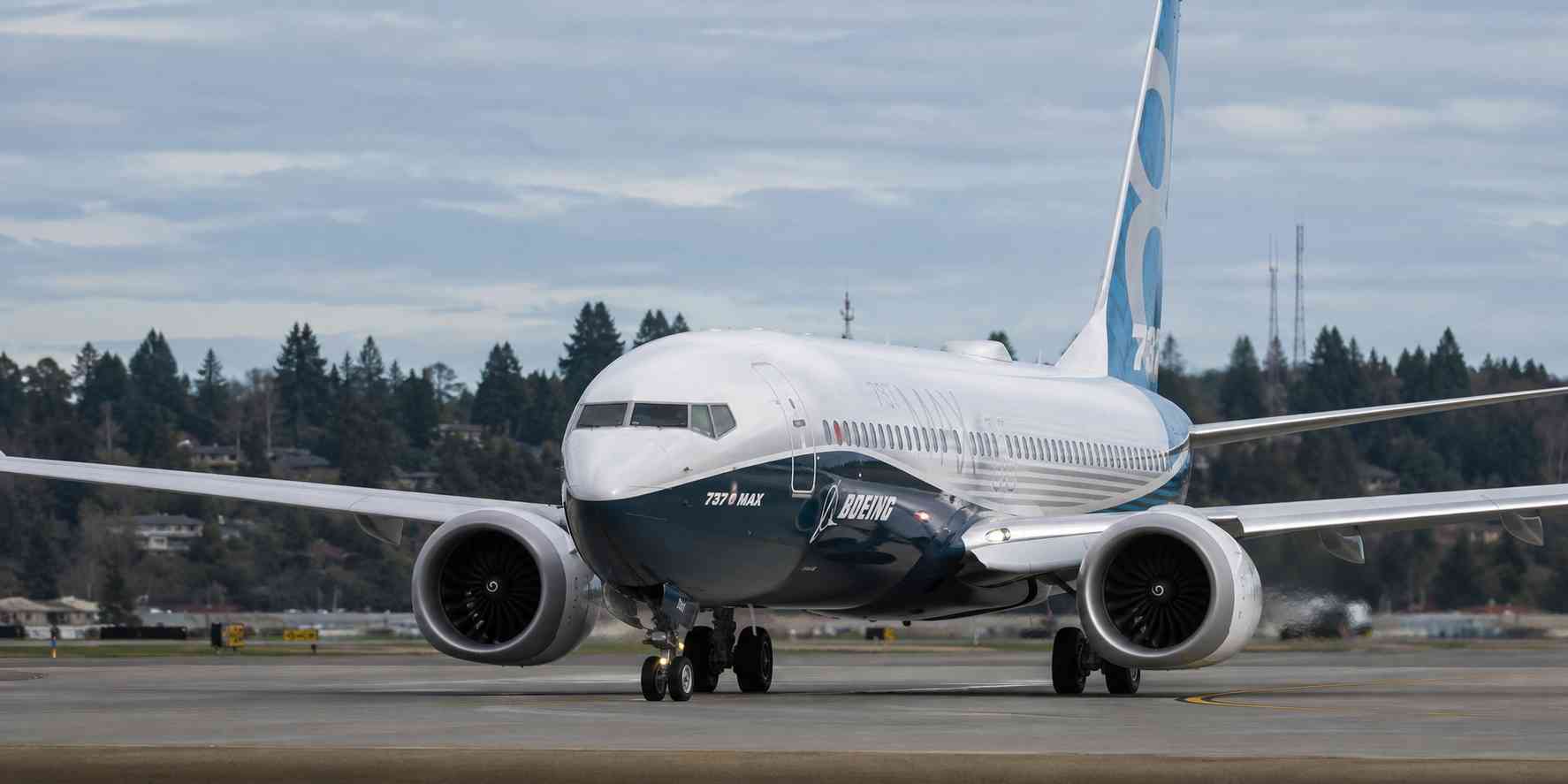
Boeing Advances 737-10 Certification With Successful Extreme Crosswind Landing Campaign
ARLINGTON, Texas — Boeing has completed a key phase in the certification program for its largest 737 MAX aircraft, the 737-10, after successfully conducting extreme crosswind autoland testing designed to validate the aircraft’s performance in some of the most challenging weather conditions encountered during commercial airline operations.
The latest certification campaign focused on proving the aircraft’s ability to perform automatic landings during strong and gusting crosswinds, a critical requirement before the jet can enter commercial service. The results are expected to support ongoing certification efforts with the Federal Aviation Administration (FAA) for both the Boeing 737-10 and the smaller 737-7, with approvals targeted later in 2026.
Testing was carried out at Midland International Air and Space Port in Midland, Texas, using a Boeing 737-10 test aircraft. Unlike many certification programs conducted under controlled environments, the crosswind campaign relied entirely on naturally occurring weather conditions.
Certification Effort Depended on Real-World Weather Conditions
One of the most challenging aspects of the testing campaign was finding suitable weather conditions. Strong crosswinds cannot be artificially generated at the scale required for aircraft certification, forcing Boeing engineers, pilots, and meteorologists to closely monitor weather systems for months before deploying test crews.
According to industry reports, Boeing flight test teams remained on continuous monitoring status for weeks, prepared to travel on short notice whenever weather forecasts indicated the required wind conditions.
Boeing Waited for the Right Conditions
Because suitable crosswinds can only be found in specific weather patterns, Boeing relied heavily on forecasting and rapid deployment capabilities to conduct the tests.
Lauren Auerbach, a Boeing flight test engineer, explained that reliable forecast accuracy for the required conditions often becomes available only a few days in advance. As a result, teams had to remain ready to launch the campaign whenever opportunities emerged.
The approach allowed Boeing to gather certification data in actual operational conditions rather than relying on simulations, providing regulators with evidence of how the aircraft performs in realistic weather scenarios.
Autoland System Put Through Demanding Evaluations
A primary objective of the campaign was to validate the performance of the 737-10’s autoland system during crosswind approaches and landings.
Autoland technology automatically guides an aircraft during the final stages of flight, controlling alignment and descent to the runway while reducing pilot workload. The system is particularly valuable during poor weather conditions and low-visibility operations.
During the certification flights, Boeing engineers evaluated whether the autoland system could make accurate and timely corrections while maintaining runway alignment and keeping the aircraft safely within runway boundaries throughout the landing sequence.
The company also closely monitored how the system responded to rapidly changing wind speeds and shifting wind directions, conditions that can create significant challenges during landing.
Testing Beyond Minimum Requirements
According to Boeing, many of the certification flights were conducted in crosswind conditions that exceeded the minimum thresholds required for certification.
Particular attention was given to gusting winds, which present a greater challenge than steady crosswinds because their strength and direction can change rapidly throughout the approach and landing phases.
Although the 737-10 is substantially longer than other aircraft in the 737 MAX family, Boeing said its autoland software has been specifically tuned to provide handling characteristics similar to those of the 737-8 and 737-9.
Maintaining consistent behavior across different MAX variants is important for airlines operating mixed fleets, as it allows pilots to experience similar aircraft responses during automatic landing operations.
Why Crosswind Certification Is Critical
Crosswind certification plays an important role in determining the maximum wind conditions under which an aircraft can safely operate while using certified autoland capabilities.
Successfully demonstrating performance during demanding crosswind landings helps provide confidence to regulators, airlines, and flight crews that the aircraft can safely conduct automatic approaches and landings at airports worldwide, even during adverse weather conditions.
The crosswind campaign is one component of Boeing’s broader certification effort for the 737-10. Earlier this year, the company completed maximum brake energy testing, which involved accelerating a fully loaded 737-10 to more than 200 mph before performing a rejected takeoff using heavily worn brakes and no thrust reversers.
Boeing has also reinforced the aircraft’s landing gear and installed the highest-capacity brakes ever fitted to a 737 to support the aircraft’s increased maximum takeoff weight.
Boeing Continues Toward FAA Approval
The Boeing 737-10 is the largest member of the 737 MAX family and is capable of carrying up to 230 passengers. Boeing markets the aircraft as offering the lowest seat-mile operating costs within the MAX lineup, making it an attractive option for airlines seeking higher-capacity narrowbody aircraft.
Certification of the 737-10 and 737-7 has faced years of delays as Boeing worked through regulatory requirements introduced following the two fatal 737 MAX accidents and implemented additional safety enhancements across the program.
With the completion of the extreme crosswind autoland campaign, Boeing has cleared another major hurdle in the certification process. The company will use the data collected during the testing program to support remaining FAA certification activities as it works toward securing approval for both aircraft later in 2026.
