


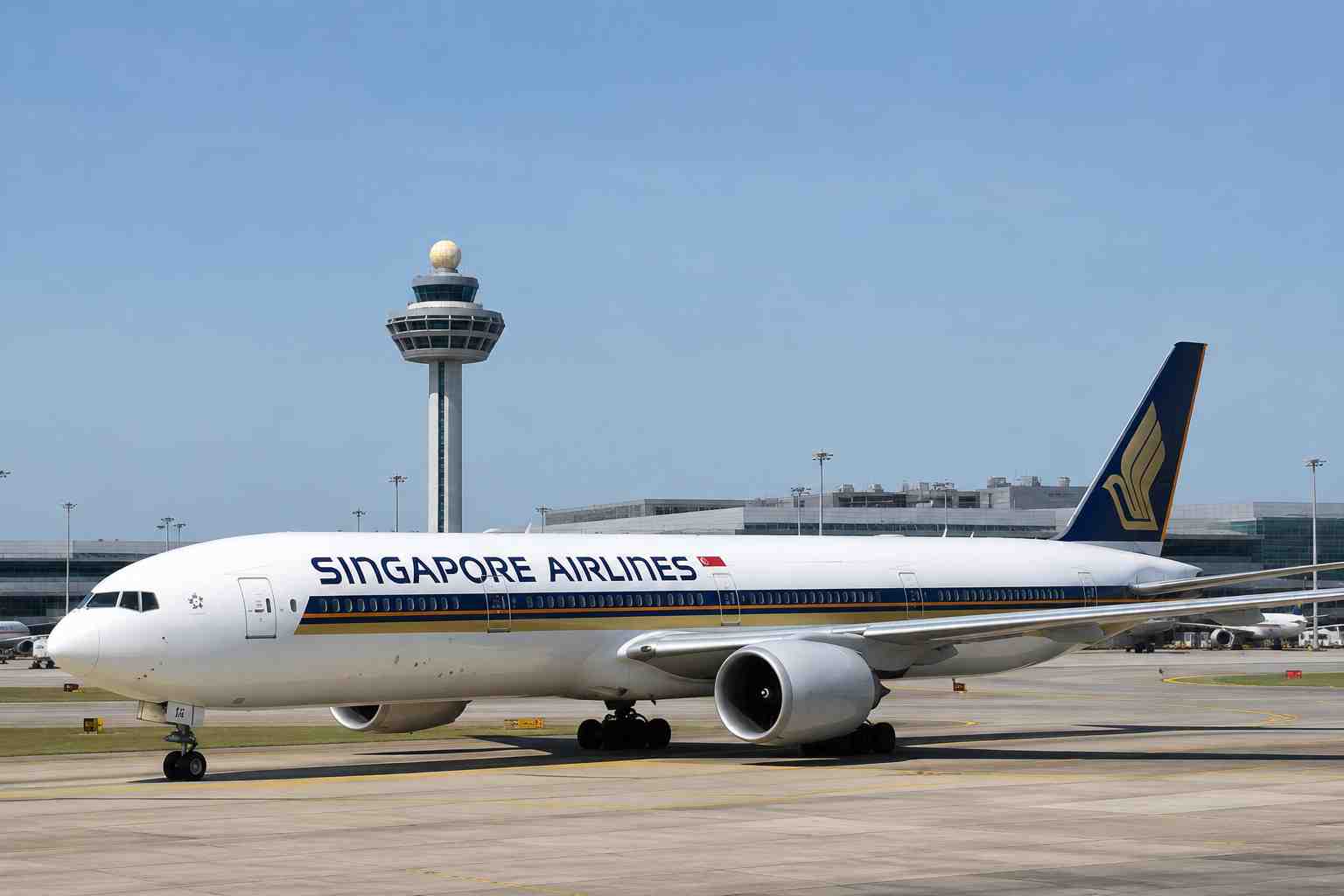
Investor Optimism Grows as Fuel Costs Ease and International Travel Remains Strong
Singapore Airlines saw its shares climb sharply this week as investors responded positively to falling oil prices, easing geopolitical tensions in the Middle East, and sustained demand for long-haul international travel.
The airline’s stock rose 5.8% to close at S$7.65 on June 26, extending a recovery that began in mid-May following the company’s announcement of record annual revenue. Strong global travel demand, combined with improving market conditions, has helped restore confidence in the carrier’s near-term prospects.
Singapore Airlines continues to benefit from its strategic position at Singapore Changi Airport, a major international aviation hub that supports the airline’s extensive global network. Investors have also welcomed new financing arrangements and increased passenger traffic associated with the ongoing 2026 FIFA World Cup.
Despite the recent gains, analysts and investors remain mindful of ongoing risks tied to geopolitical uncertainty and fluctuating fuel prices.
Singapore Airlines Extends Share Price Recovery
Lower Oil Prices Support Airline Stocks
Singapore Airlines’ latest share price rally follows a significant turnaround from earlier concerns about rising fuel costs.
Prior to the release of its financial results on May 14, the airline’s shares traded at S$6.27 amid investor concerns that higher jet fuel prices could pressure profitability. Since then, sentiment has improved considerably.
A major catalyst came on June 22, when peace talks between the United States and Iran in Switzerland concluded with a proposed 60-day roadmap toward a final peace agreement. The development contributed to a decline in crude oil prices, easing concerns about one of the airline industry’s largest operating expenses.
Lower fuel costs generally improve airline margins and profitability, making carriers such as Singapore Airlines more attractive to investors. The diplomatic progress also increased expectations that some airlines could gradually restore services through parts of the Middle East if regional airspace restrictions continue to ease.
FIFA World Cup Drives Long-Haul Travel Demand
Another factor supporting the airline’s recovery has been strong international travel demand linked to the 2026 FIFA World Cup.
The tournament, being held from June 11 through July 19 across 16 host cities in the United States, Canada, and Mexico, has generated increased demand for long-haul travel. Singapore Airlines has seen stronger transpacific passenger traffic as travelers connect through Singapore en route to North America.
The increase in long-haul bookings has provided additional revenue support and reinforced investor confidence in the carrier’s near-term growth outlook.
New Financing Supports Fleet Expansion Plans
Airline Secures Low-Cost Funding
On June 22, Singapore Airlines announced it had secured approximately 1.5 billion Chinese yuan, equivalent to about S$285.5 million, through a five-year financing facility.
According to The Straits Times, the funds will be used to finance aircraft acquisitions, meet aircraft-related payment obligations, and refinance existing borrowings at lower interest rates.
The financing arrangement provides the airline with additional flexibility as it continues investing in fleet modernization while managing borrowing costs in a competitive global aviation market.
CEO Compensation Increases
The airline also disclosed details of executive compensation in its annual report released on June 25 for the fiscal year ended March 31, 2026.
Chief Executive Officer Goh Choon Phong received total remuneration of nearly S$9.7 million, up from S$7 million in the prior fiscal year.
Approximately 49% of the compensation package consisted of share-based awards, while performance bonuses accounted for about 35%. His base salary totaled roughly S$1.5 million.
Fuel Price Volatility Remains a Key Risk
Geopolitical Uncertainty Could Reverse Recent Gains
While investor sentiment has improved, Singapore Airlines continues to face significant risks tied to fuel market volatility.
Military tensions involving Iran and the United States remained a concern during the week, raising questions about the durability of the current ceasefire efforts. Any escalation in conflict could lead to higher oil prices and increase operating expenses for airlines worldwide.
Singapore Airlines has previously warned that volatile jet fuel prices are expected to exert greater pressure on costs and earnings during the FY2026/27 financial year.
Jet fuel remains the airline’s largest operating expense, making energy market movements one of the most important factors affecting future profitability.
Outlook Remains Positive but Cautious
Singapore Airlines enters the second half of the year with momentum supported by lower crude oil prices, resilient international travel demand, and fresh financing for future aircraft investments.
However, the airline’s continued recovery will depend heavily on geopolitical developments, stability in global oil markets, and management’s ability to control fuel-related expenses.
While recent conditions have strengthened the airline’s short-term outlook, investors remain focused on the same fuel-price risks that could determine whether the current rally can be sustained in the months ahead.
