


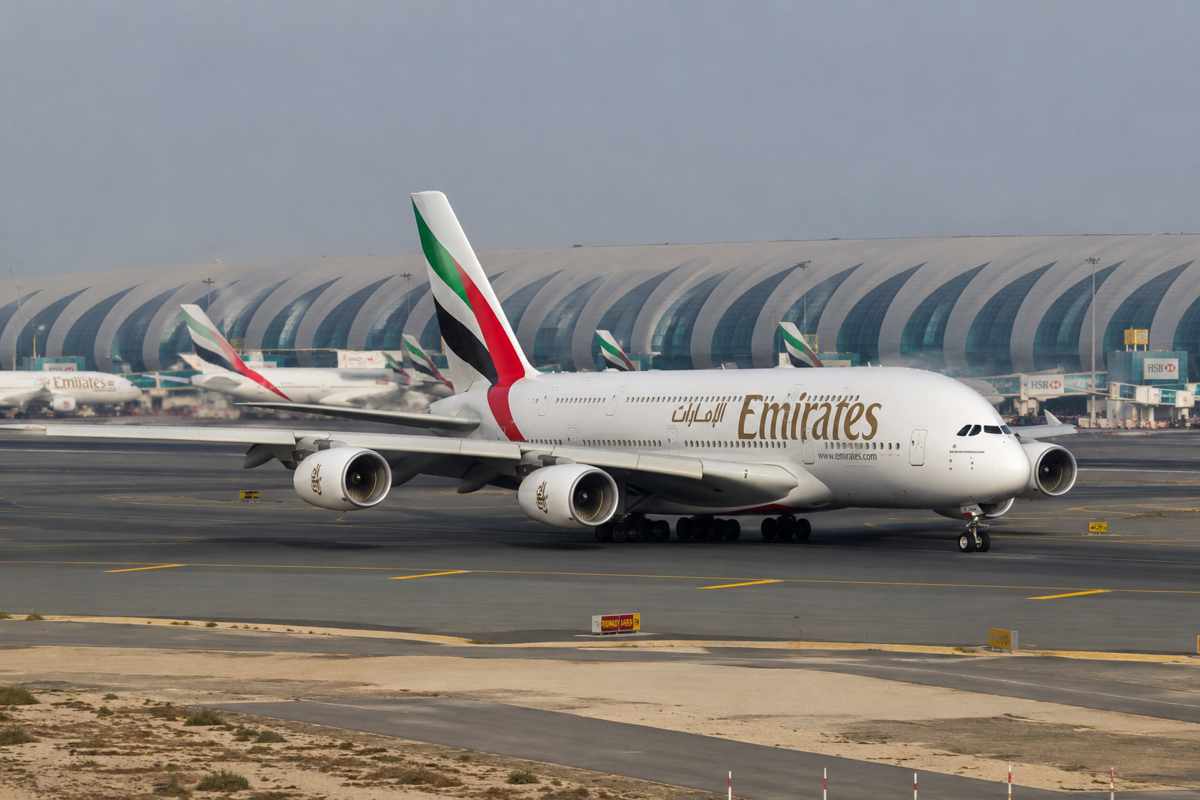
Carrier Plans More Than 2,100 Airbus A380 Flights Despite Ongoing Regional Disruptions
DUBAI — Emirates will deploy its flagship Airbus A380 aircraft to 48 destinations worldwide during July, operating as many as 69 daily departures from its hub at Dubai International Airport despite continued operational challenges linked to instability in the Middle East.
The Dubai-based airline, which remains the world’s largest operator of the Airbus A380, has scheduled 2,139 flights using the double-decker aircraft during the month. The schedule, however, remains subject to change as regional tensions continue to influence airspace availability and network planning.
The carrier is gradually restoring A380 operations on several international routes, including services to Copenhagen Airport, Munich Airport, Manchester Airport and London Gatwick Airport, according to aviation industry data cited by Simple Flying.
Emirates A380 Capacity Remains Below 2025 Levels
Although Emirates is rebuilding portions of its long-haul network, the airline’s A380 deployment for July remains approximately 15% lower than the same period in July 2025.
The reduced schedule reflects the airline’s cautious approach as it adjusts capacity in response to operational conditions and shifting passenger demand. Some routes continue unaffected, while others have seen reduced frequencies or aircraft substitutions involving smaller widebody jets such as the Boeing 777 and Airbus A350-900.
Compared with June operations, Emirates is reintroducing the A380 on four additional routes in July. The aircraft will return to daily services between Dubai and Copenhagen, Munich, Manchester, and London Gatwick.
Despite the restoration, overall seat capacity on certain European routes remains well below historical levels recorded before the recent regional disruptions.
London and Manchester Among Hardest-Hit Markets
The airline’s London and Manchester operations continue to experience the largest reductions in A380 service.
For years, Emirates maintained six daily A380 flights to London Heathrow Airport alongside two daily A380 services to Gatwick. Additional flights were typically operated using Boeing 777 and Airbus A350 aircraft.
In June, the airline had originally planned ten daily London-area services, including eight A380 departures. However, operational adjustments resulted in only eight daily flights operating, with just four using the A380, all serving Heathrow.
For July, Emirates plans to maintain eight daily London flights, though A380 frequencies will increase modestly. Five Heathrow services and one Gatwick service are expected to use the superjumbo aircraft.
Manchester has also seen a sharp reduction in A380 capacity. Emirates previously operated three daily A380 services to the northern England airport and had at one stage secured airport slots for a fourth daily operation that was never launched.
The airline suspended all A380 operations to Manchester during June. In July, Emirates plans to restore one daily A380 flight on the route, while the remaining two daily services will continue using the Boeing 777-300ER.
A380 Operations Concentrated on Key Long-Haul Routes
Most Emirates A380 destinations in July will receive a single daily service, often supplemented by additional flights using smaller aircraft types.
Only a limited number of routes will continue to see double or triple daily A380 operations. Services exceeding three daily A380 frequencies remain concentrated primarily on routes linking Dubai with London Heathrow and Bangkok Suvarnabhumi Airport.
The Airbus A380 remains central to Emirates’ long-haul strategy, particularly on high-demand international corridors where airport slot limitations and passenger volumes support use of the world’s largest passenger aircraft.
Emirates Continues Network Adjustments Amid Regional Uncertainty
Emirates said it continues to monitor passenger demand and operational conditions closely as it adjusts its network from Dubai.
The airline has been regularly revising schedules and aircraft allocations in an effort to maintain operational efficiency while responding to evolving regional developments.
Industry observers note that Emirates has steadily increased deployed capacity in recent months, signaling a gradual return of additional A380 services as operating conditions stabilize.
The airline’s July schedule reflects both the resilience of global long-haul demand and the operational flexibility required as airlines across the region navigate continuing geopolitical uncertainty.
